The Crucifixion by Paolo Veneziano
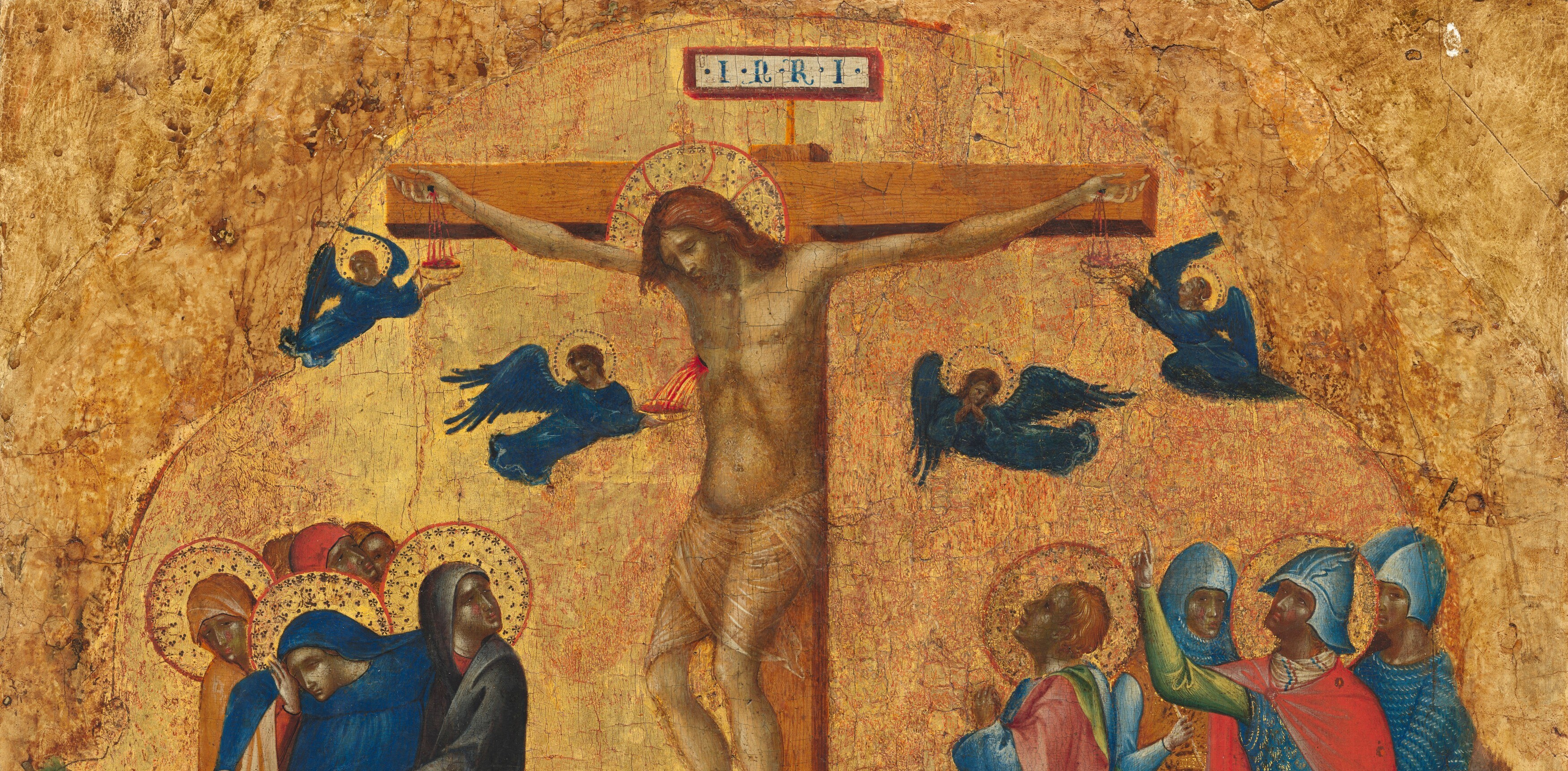
The Crucifixion by Paolo Veneziano, painted around 1340 in tempera and gold leaf on panel, is now in the National Gallery of Art, Washington. It reads almost like an alphabet of symbols, a visual language that every 14th-century Venetian understood immediately. This is a painting where no element is accidental.
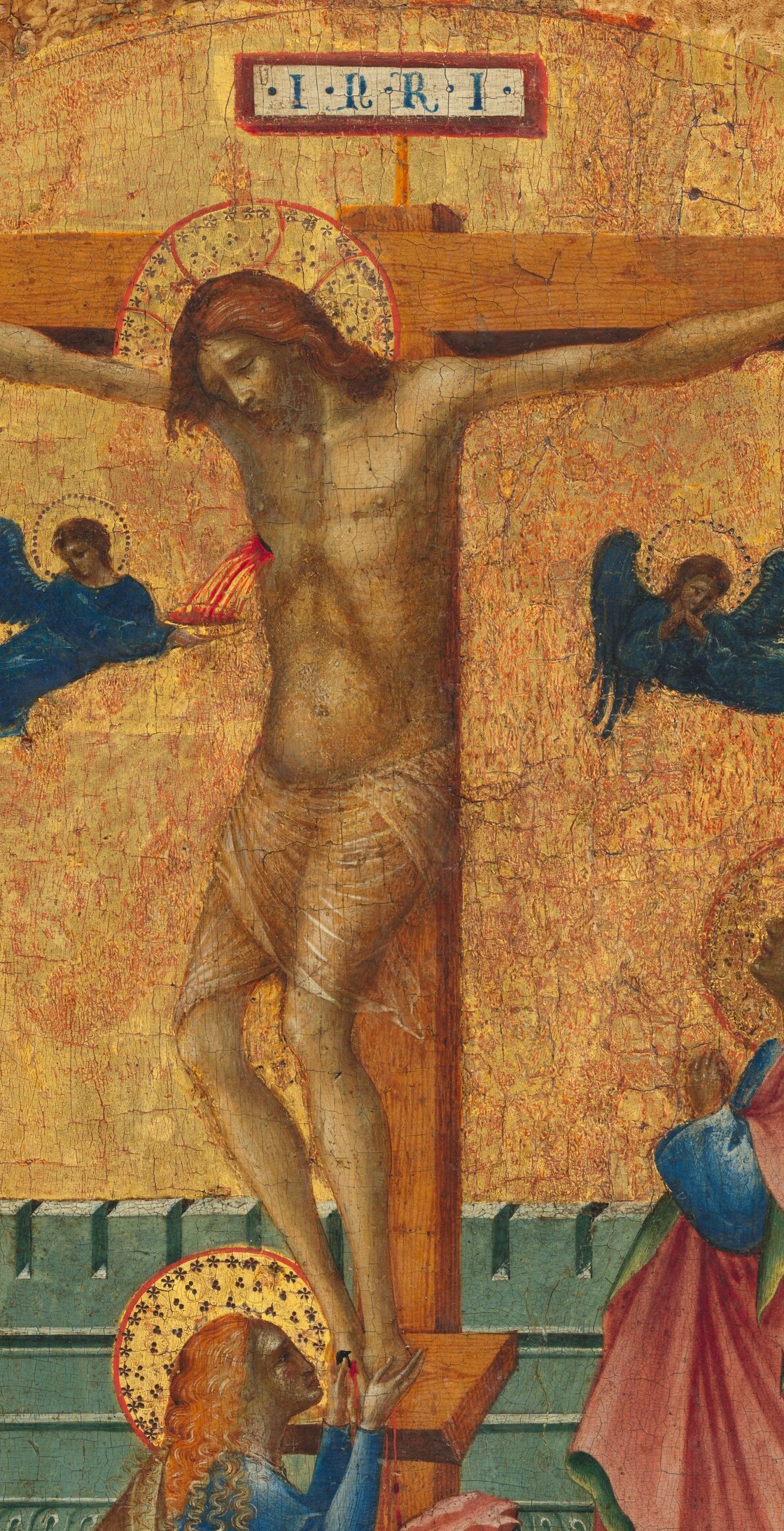
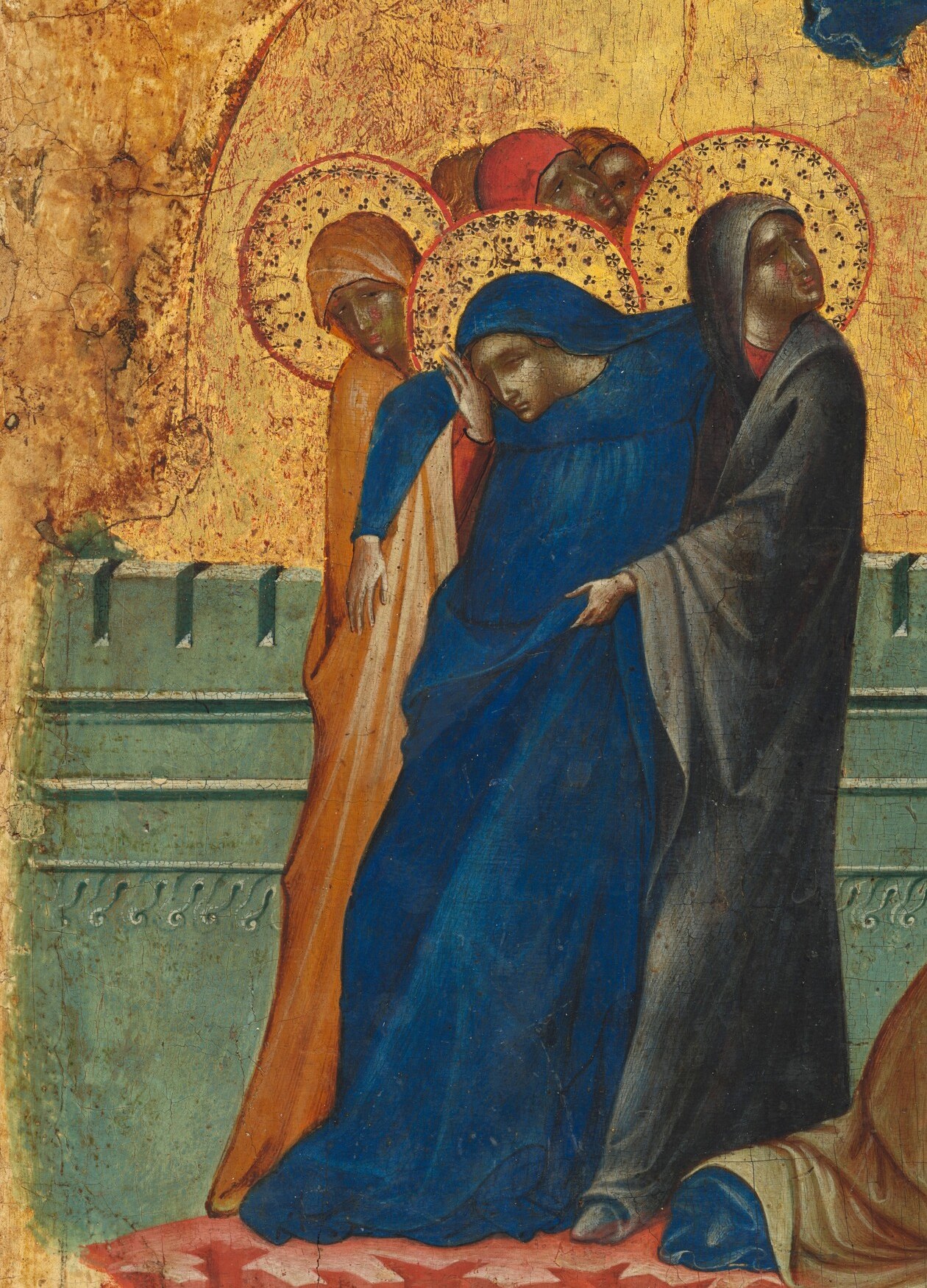
Begin with the gold ground. It is not atmosphere or sunset: it is the timeless, uncreated light of heaven, a Byzantine inheritance that Veneziano maintained even as his Florentine contemporaries started painting blue skies. Below it, the teal-green wall grounds the event in a specific place, the city wall of Jerusalem. The INRI inscription crowning the cross is the only legible text in the whole panel, and it marks Christ as sovereign precisely at the moment of his execution.
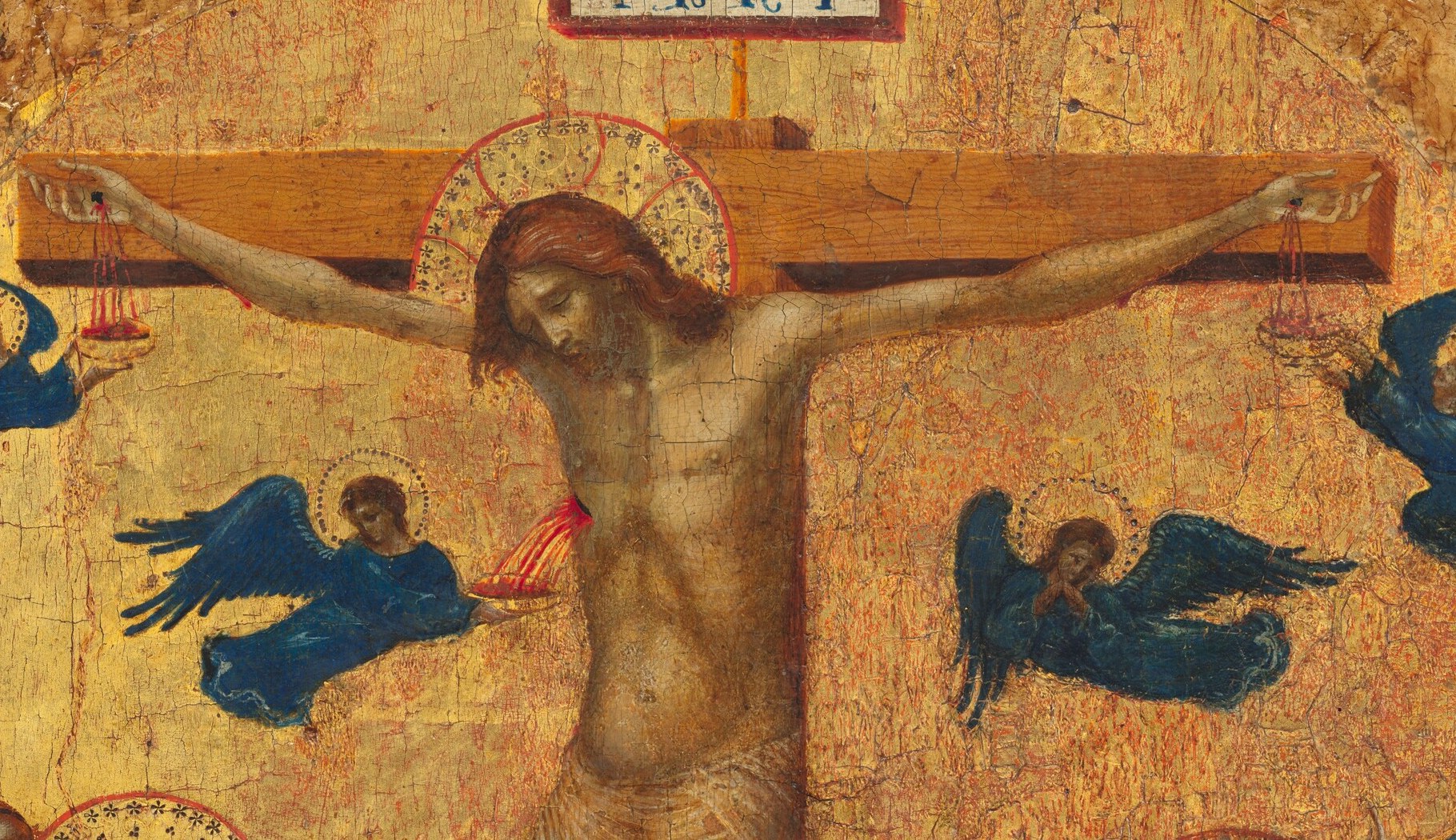
The angels flanking the cross are the most arresting detail. They collect Christ's blood in liturgical chalices, a motif that directly links the Crucifixion to the Eucharist. For a Venetian viewer, this was not a metaphor: it was the wine of the Mass made visible, the altar of the church collapsing into the altar of the cross. Paolo Veneziano was the official painter of the Venetian Republic and the founder of its school, and this panel, intimate but majestic, distills an entire theological worldview into a single, radiant surface.
What detail would you read first?
Details
Transcript
The sky is not sky. It is divine eternity, rendered in hammered gold leaf. Three angels catch his blood in chalices. To a Venetian, this was the wine of the Mass made visible. Read the plaque above him. INRI, the mocking title 'King of the Jews', crowns the scene as God's true ruler. The code adds up to one claim: this is a sacrifice, an altar, and the center of the universe.