Portrait of a Noblewoman, Probably Isabella of Portugal (1397–1472) by http://www.wikidata.org/.well-known/genid/b95cd0926f6c90617c75bc0411713926
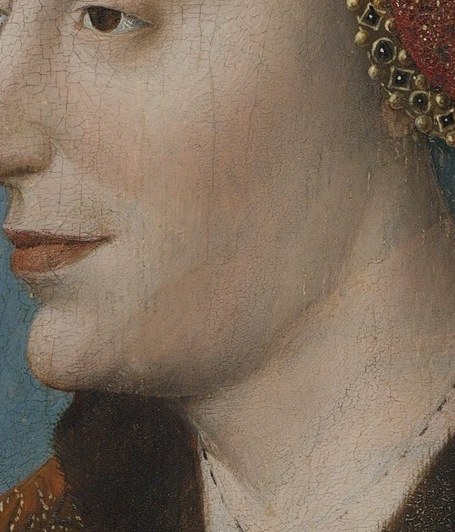
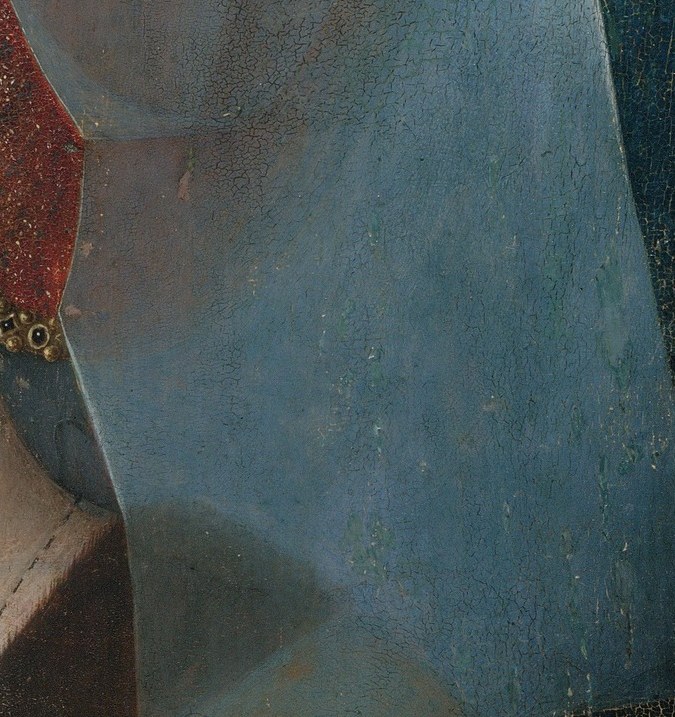
Portrait of a Noblewoman, Probably Isabella of Portugal, by Rogier van der Weyden, circa 1450. The painting hangs in a private collection, which makes it a rare sight, but the technical achievement visible in any photograph is extraordinary: the sheer linen veil.
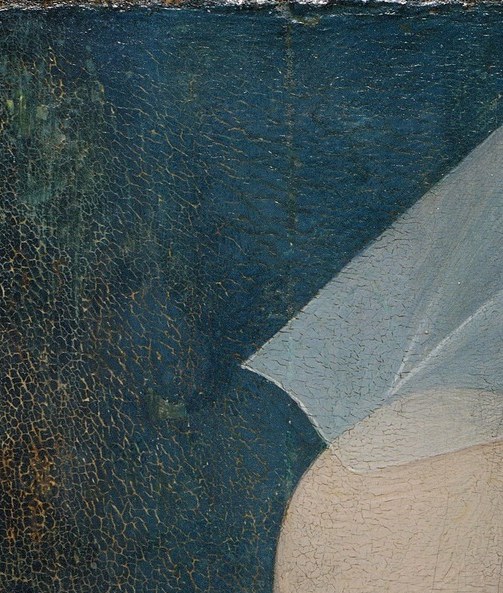
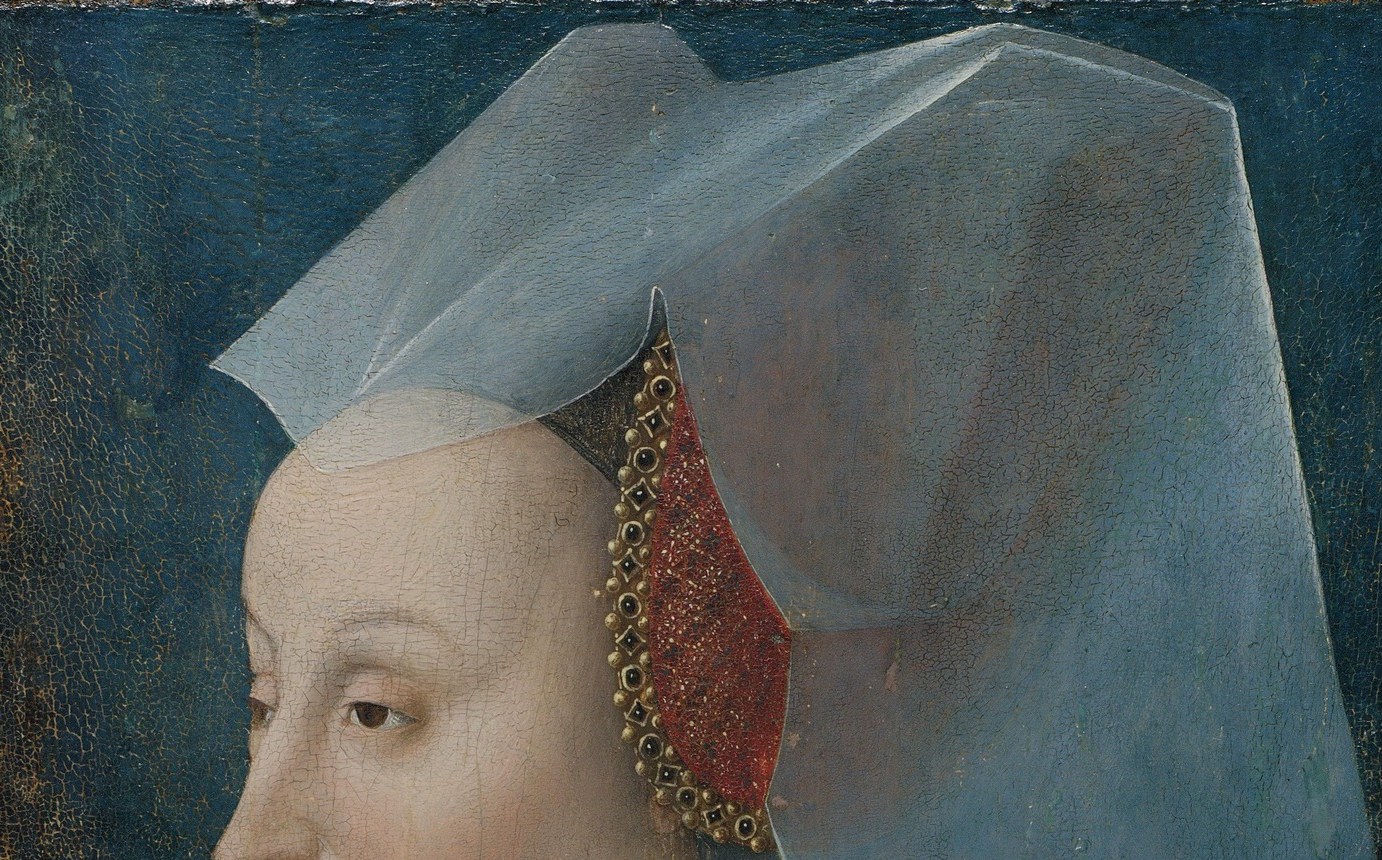
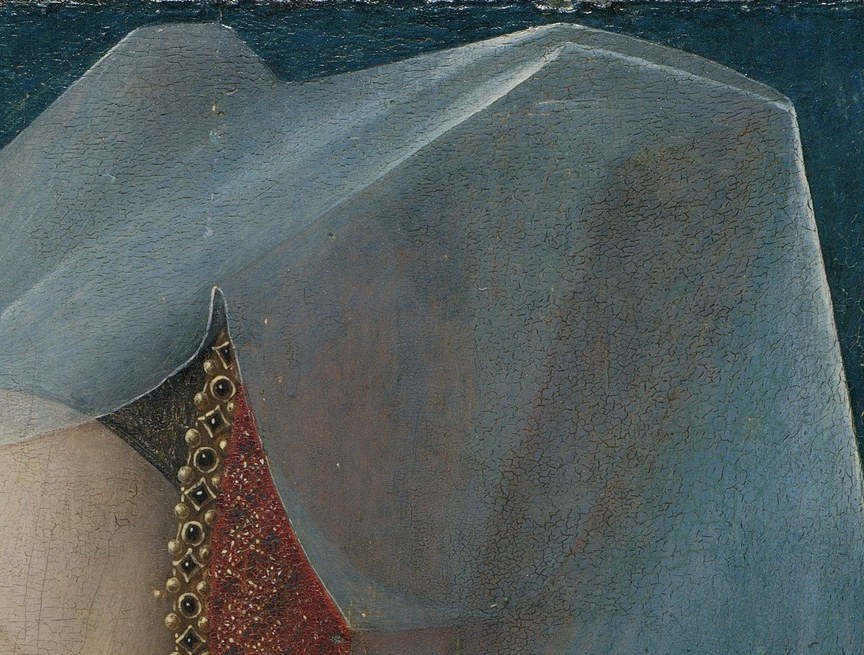
To see the trick, look at the trailing edge of the white veil against the deep blue background. The oil paint is applied so thinly, in such controlled translucent layers, that the blue ground barely dims beneath it. It reads optically as gauze. Beneath the veil sits a latticed red and gold caul headdress, its netting and tiny jeweled ornaments painted with individual hair-fine strokes. The painter builds three distinct planes, veil, headdress, shoulder drape, and keeps every one legible.
Van der Weyden was the leading portraitist in Brussels in the mid-15th century, working for the Burgundian court. Profile portraits like this one functioned almost like painted medallions: the sitter is isolated against a flat ultramarine field, a convention that makes the silhouette the whole point of the image. The sitter is probably Isabella of Portugal, Duchess of Burgundy, who died in 1472. If the identification is correct, this was likely painted as a posthumous likeness, a courtly record of a powerful woman rendered with jewel-like precision.
The whole painting is about restraint. The downcast eyes, the flattened space, the tight profile. And then, right at the edge of the veil, the painter lets his hand become utterly invisible.
Details
Transcript
Start with the background. Not black. Deep blue. A flat ultramarine wall. That flatness makes what sits on it feel solid. But look at the edge of her veil. Where fabric meets the blue. Oil paint. Rendered so thin it reads as actual gauze. The gold net beneath it is painted with a single-hair brush. This is not a portrait. It is a proof of patience. Three separate planes. Veil, headdress, shoulder. All in one passage. Attributed to Rogier van der Weyden. The man who painted silence.