Laban Searching for his Stolen Household Gods by Bartolomé Esteban Murillo
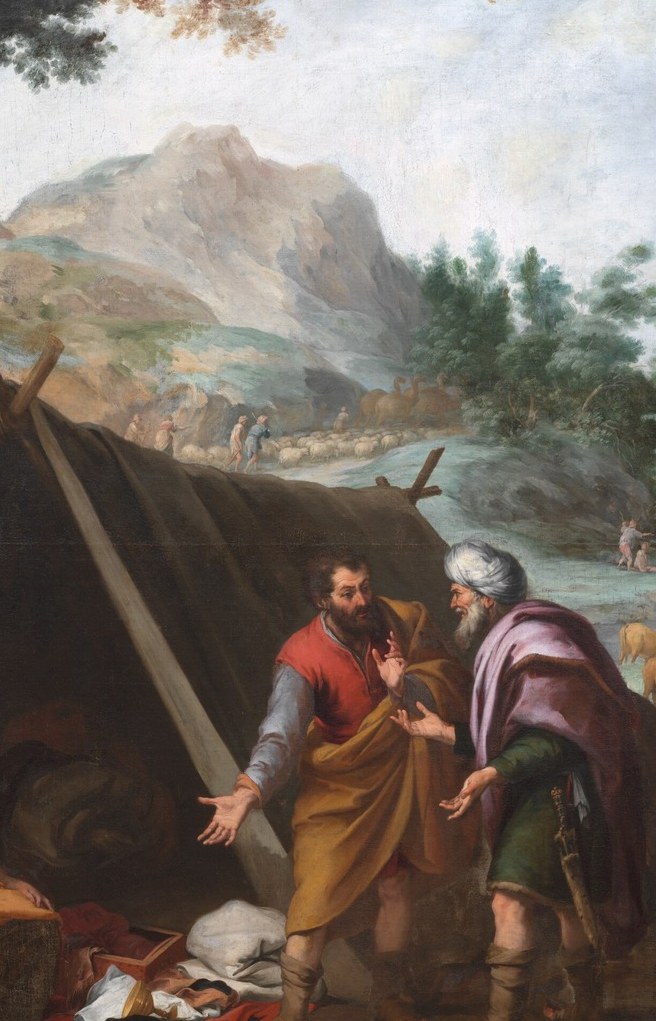
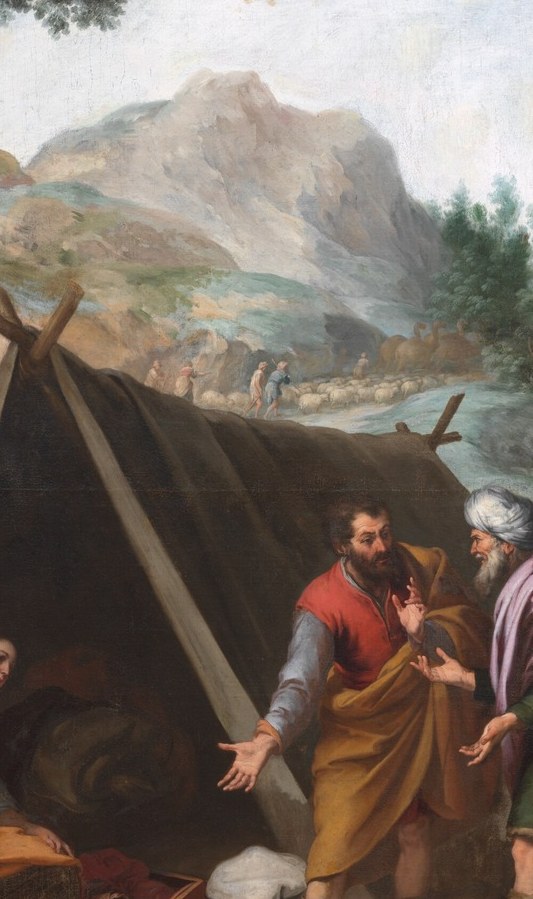
This is Bartolomé Esteban Murillo's "Laban Searching for his Stolen Household Gods" (1665), a Spanish Baroque painting in oil at The Cleveland Museum of Art. The painting freezes a biblical con right at the moment it works. Everyone in the frame is looking for something that is, literally, under the seated woman.
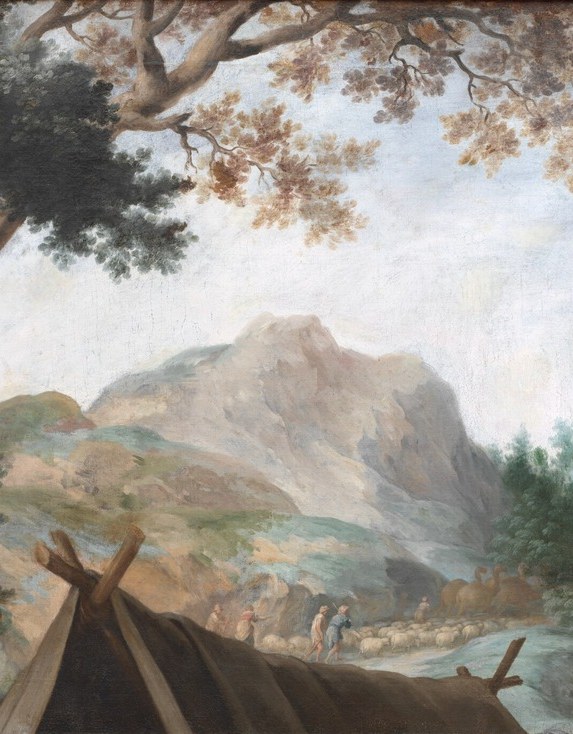
The scene comes from Genesis 31. Laban, the bearded patriarch on the left, has pursued Jacob's caravan across seven days of hard terrain, convinced Jacob has stolen his teraphim, the small household idols that symbolized inheritance and authority. He is tearing through the camp, rifling luggage, questioning everyone. And he stops short at Rachel.
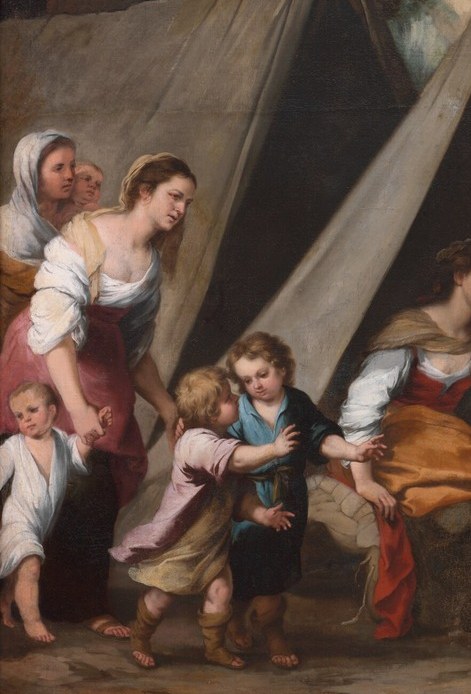
Rachel, seated at center on a camel saddle, tells Laban she cannot stand to greet him. The Bible is blunt about why. She has hidden the stolen idols inside the saddle and is sitting on them. Murillo makes her the calmest figure in the composition. The drama is invisible, and she is the only person who knows.
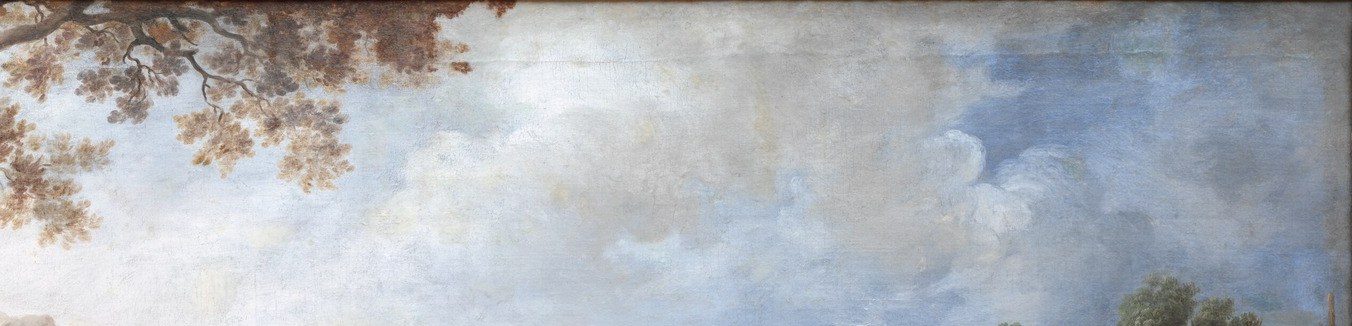
Murillo trained his tenebrism, that dramatic spotlighting of figures against deep shadow, under the influence of the Ribera tradition. Here he uses the dark tent awning and the warm, luminous sky to pull your eye straight to the human confrontation, while the hidden truth stays buried beneath red fabric. What would you say to Laban if you could step into the frame?
Details
Transcript
A furious search is underway. Laban has tracked Jacob's caravan for seven days. He accuses Jacob of stealing his household idols. But Laban never searches the seated woman. She tells him she cannot rise. The missing teraphim are under her, inside the camel saddle.