Head of Saint John the Evangelist by Jean Auguste Dominique Ingres
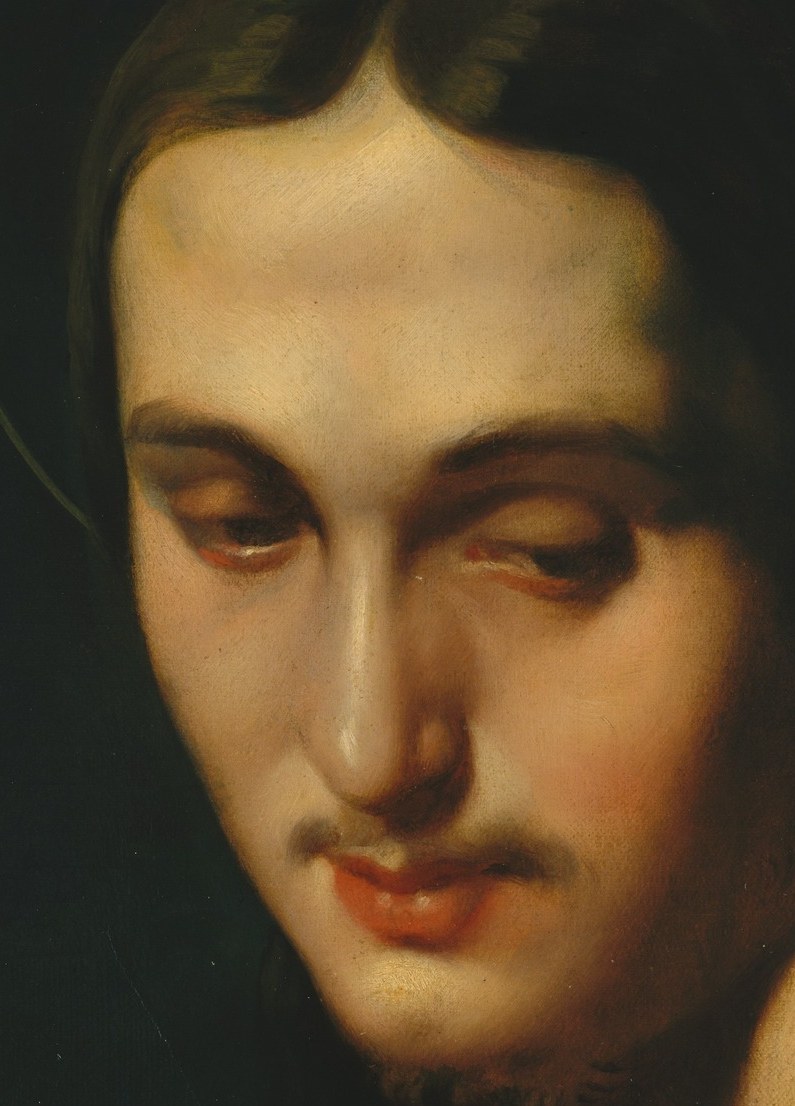
Jean Auguste Dominique Ingres's Head of Saint John the Evangelist (1837, The Metropolitan Museum of Art) was painted during a heated artistic divide. Ingres, a staunch classicist, saw his style as the last defense against the rising tide of Romanticism. This painting, with its controlled emotion and idealized form, was his answer.
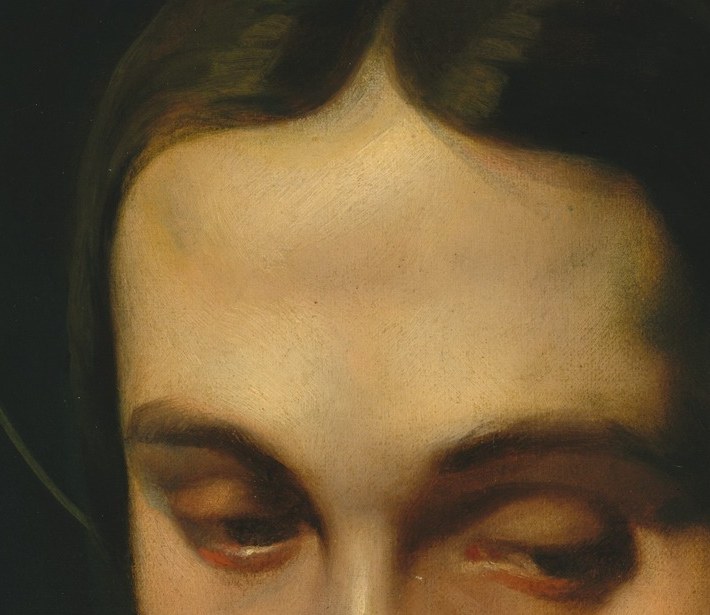
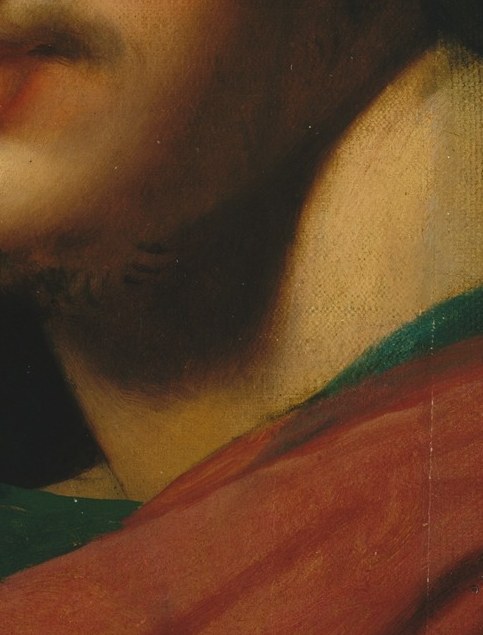
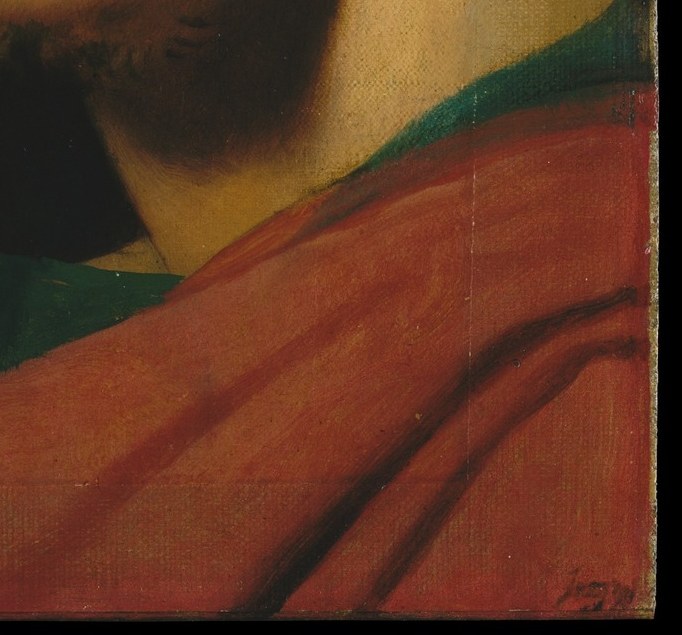
Look at the quiet intensity of Saint John's downcast eyes and the delicate blush on his cheek. His right hand, placed on his chest, is a gesture of piety and internal contemplation, while the rich red robe draws the eye. The deep background makes the figure emerge with dramatic contrast.
Ingres felt academic art was being devalued. He used this painting to champion his adherence to classical principles. His adherence to tradition, while alienating some, also made him a precursor to modern art.
This painting represents Ingres's defense of a dying artistic order. It stands as a testament to his conviction in the enduring power of classical beauty.
Details
Transcript
Ingres painted this Saint John in 1837. His dark hair frames a face of deep thought. A faint blush adds surprising life to his skin. The artist felt this classic style was being lost. This hand gesture shows deep inward reflection. Ingres clung to academic tradition against Romantics. His rich red robe still pops against the dark. His paintings were a statement of classical ideals.