Tulip by Hall, George Henry
George Henry Hall's "Tulip," painted in 1869 and now in various museum collections, is a masterful example of American Realism. This oil on wood painting captures the exquisite detail and fleeting beauty of a single flower.
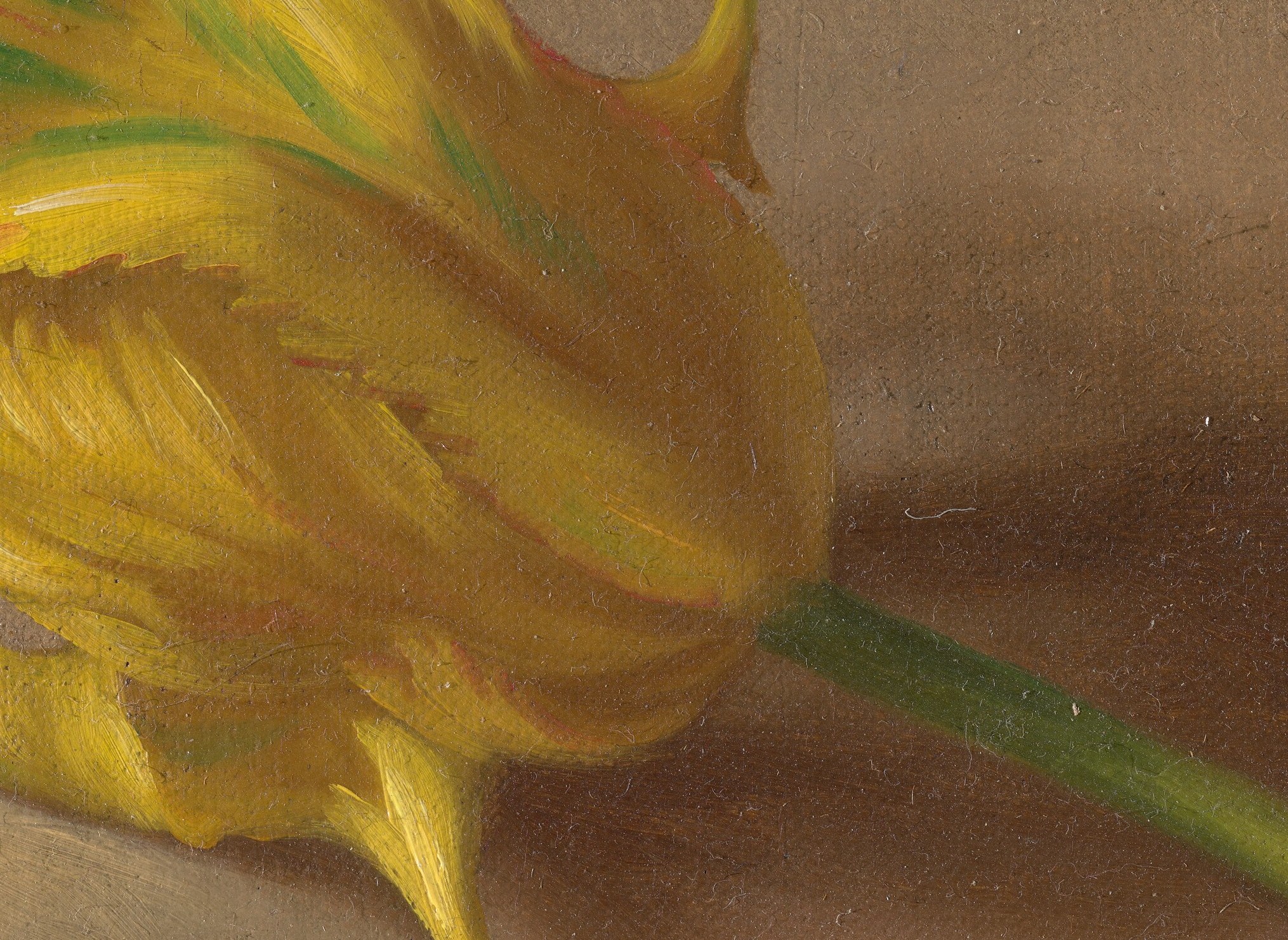
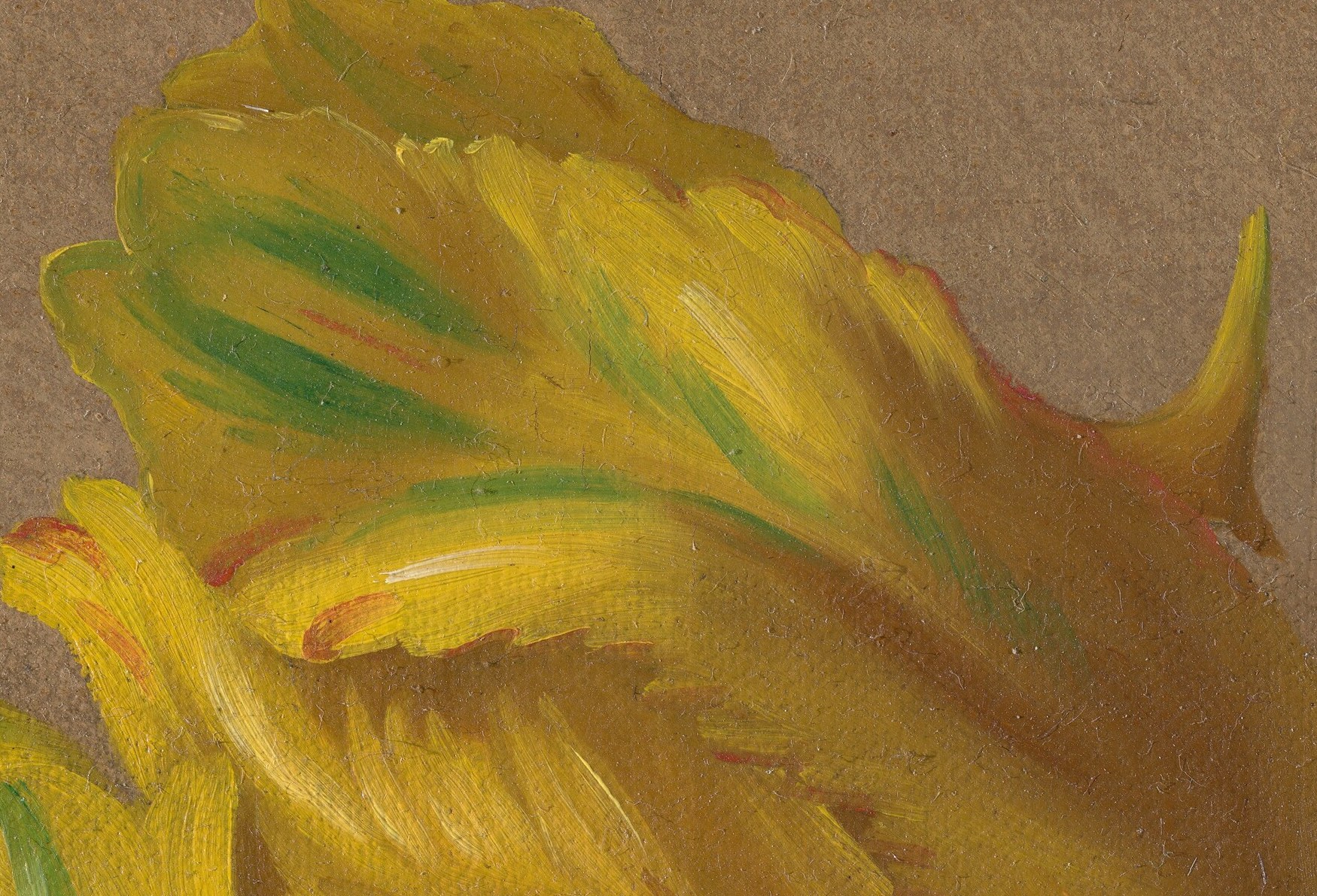
Observe the pronounced, impasto brushstrokes that give the petals a soft, velvety texture, and the subtle green striations that add to its lifelike appearance. Hall's meticulous attention to form and color transforms a simple subject into a captivating study.
Hall, an American still-life and landscape painter, studied in Düsseldorf and Paris before working primarily in New York City and the Catskills. During his prolific career, he sold over 1,600 paintings, reflecting his dedication to depicting the tangible world with precision. This work aligns with 19th-century realist principles, valuing close observation over idealization.
What details do you notice first in this beautifully rendered tulip?
Details
Transcript
This single tulip, painted in 1869, captures fleeting beauty. The painter worked in New York and Europe, selling over 1,600 works. Look closely at the unfurling petals, almost velvet to the touch. Visible brushstrokes give the flower a tactile, almost real presence. The subtle green stripes make each petal unique. This realist approach valued precise observation over idealization. The artist signed and dated his work with care.