The Infanta Isabel Clara Eugenia by Peter Paul Rubens
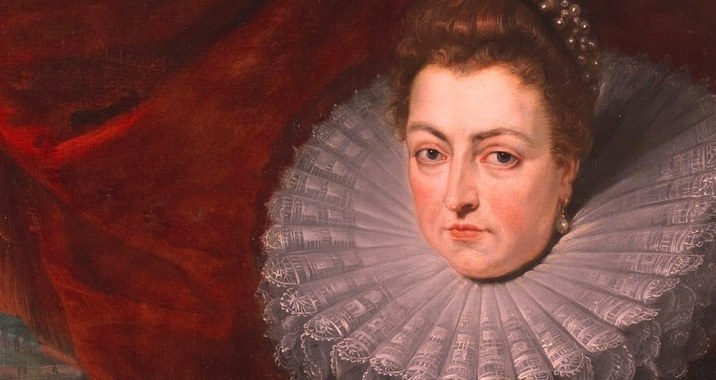
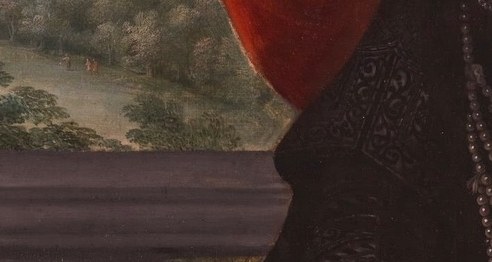
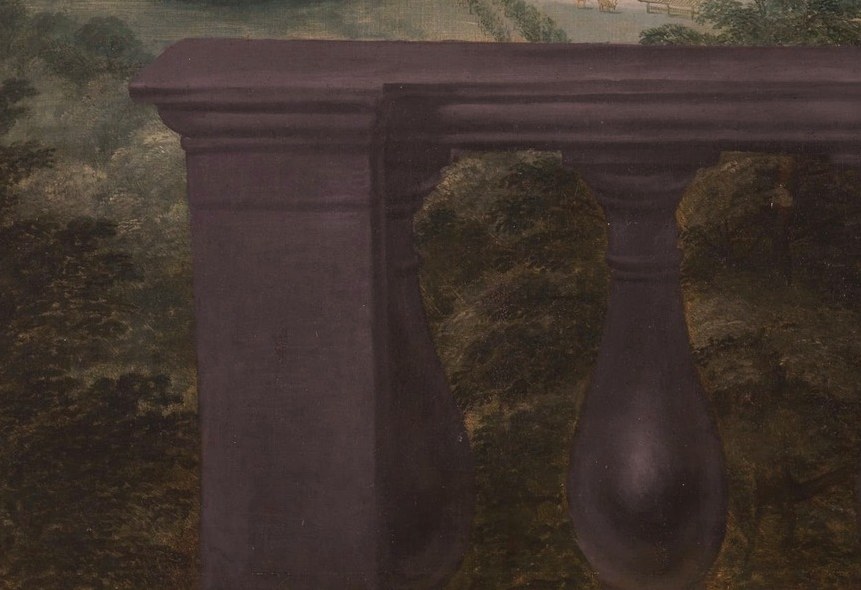
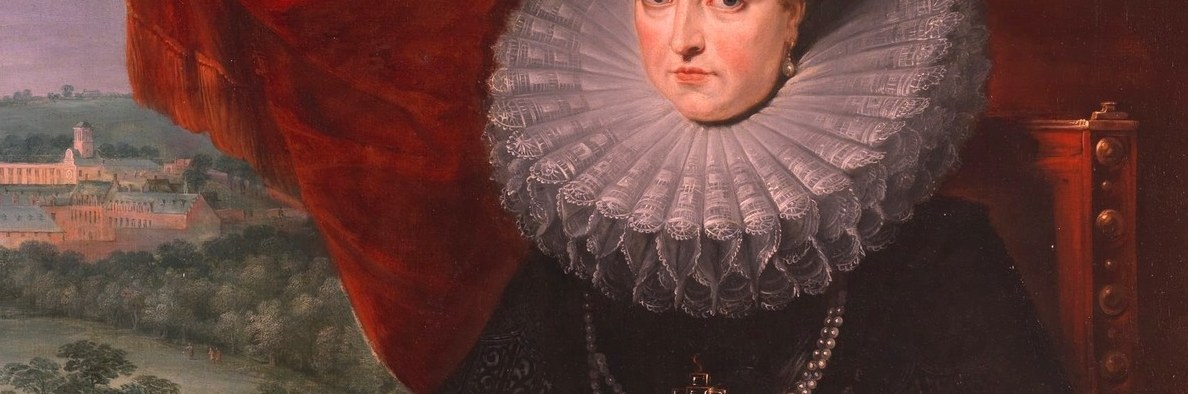
Peter Paul Rubens's The Infanta Isabel Clara Eugenia (1615, Museo del Prado) is a formal portrait that holds a subtle, often overlooked detail. The Infanta's gaze is not directed at the viewer, but rather seems to be fixed on something beyond the frame, drawing us into her world. Look at her face, her direct stare, slightly pursed lips, and the direction of her eyes suggest a private moment or a distraction. Rubens, a master of Flemish Baroque, painted this in 1615, a period marked by his signature dynamism and rich color. The background features a detailed rendering of Mariemont palace, but also a charming pastoral landscape with deer and distant birds. However, the most intriguing hidden detail is found in the foreground balustrade. Upon close inspection, a small, sculpted face can be seen carved into the stone, a detail that adds a layer of unexpected intimacy and playfulness to this regal portrait. What might the Infanta be looking at, and what did this hidden face signify?
Details
Transcript
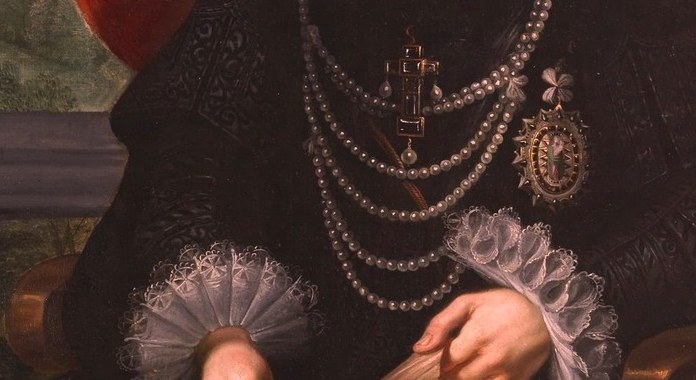
This is a portrait of the Infanta. She wears pearls and a fine ruffled collar. Her eyes are focused somewhere else. Rubens painted this in 1615. A tiny pastoral scene is in the distance. Look closely at the balustrade. Is that a face carved into the stone?