Stoke-by-Nayland by John Constable
John Constable's "Stoke-by-Nayland" (1810) is not a generic landscape. It is a portrait of a real Suffolk village, painted in a specific, transitional moment of English weather. The artist was 34, years from fame, but already committed to a radical idea: painting the agitation of the sky and the substance of the land exactly as he saw them, not as classical formulas dictated.
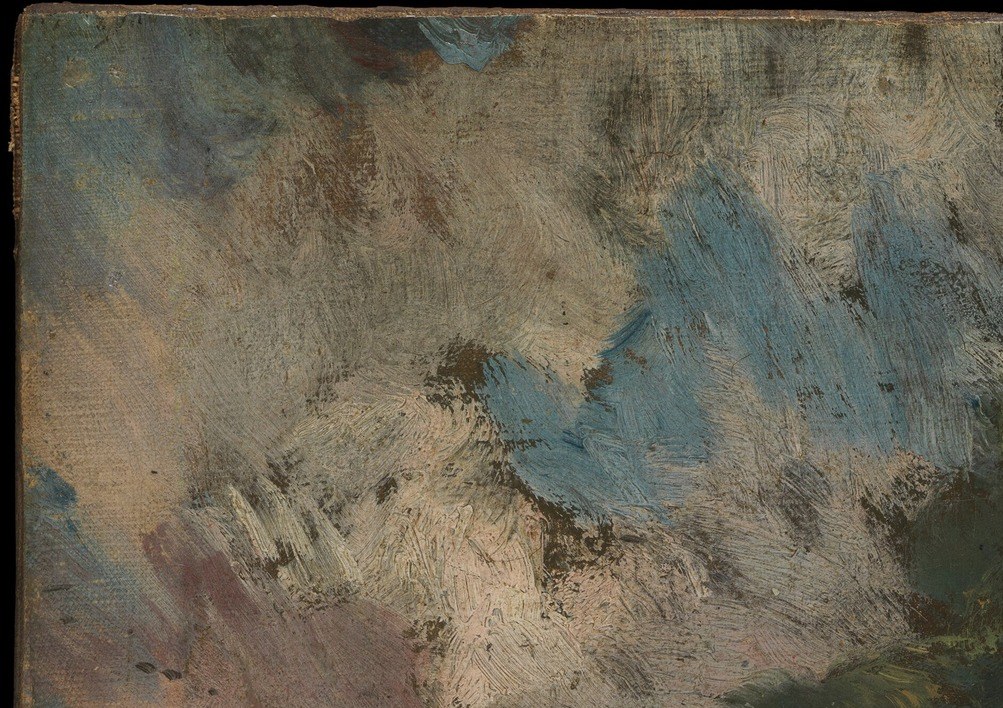
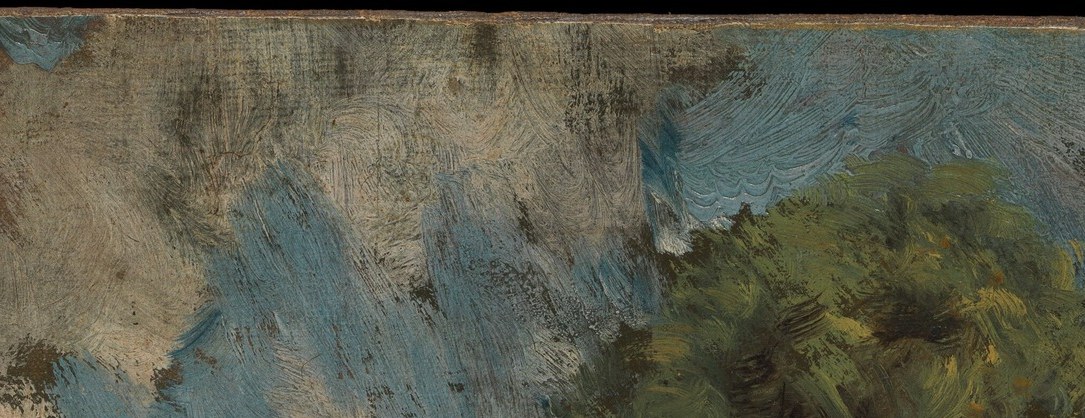
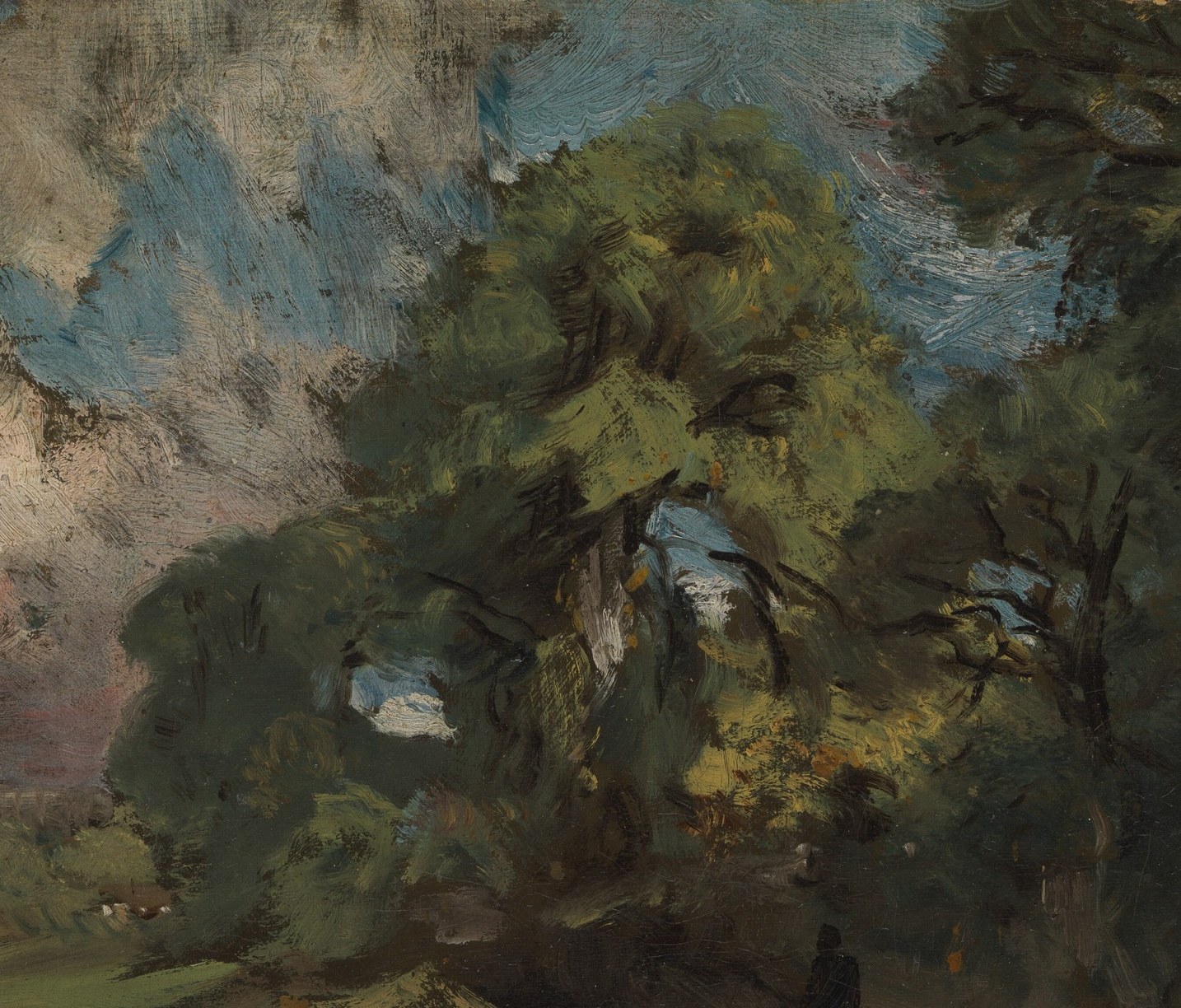
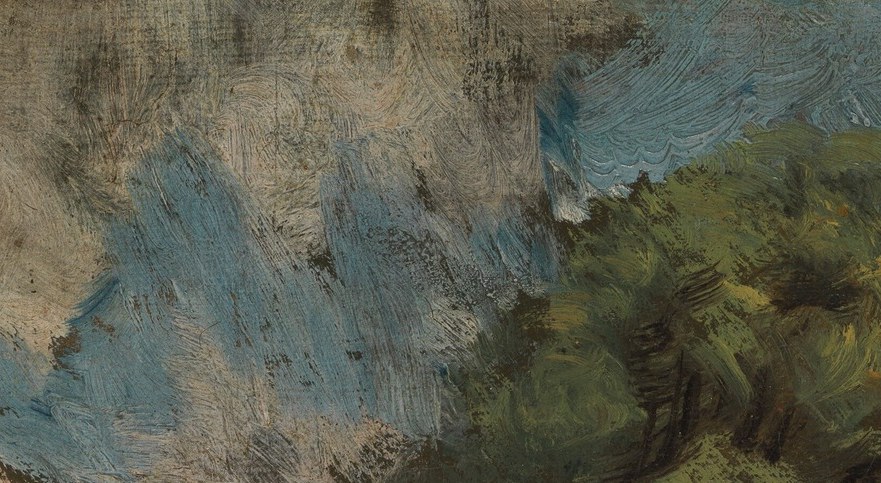
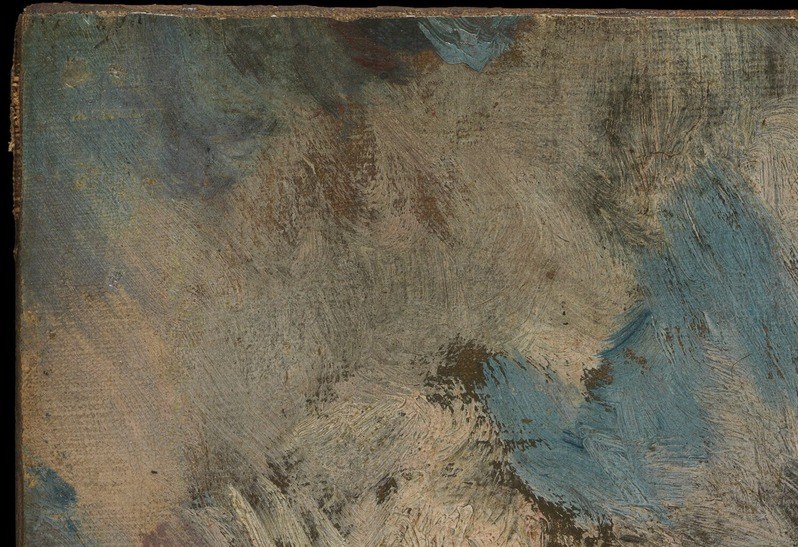
Look at the sky first. The left half is a wall of churning grey-brown storm cloud, its surface built from heavy ridges of paint Constable loaded onto the canvas. At the center, this mass breaks open into brilliant blue. The same light that spills through that gap hits the whitewashed cottage on the left, turning a modest farm building into a beacon. The cattle in the foreground are not decorative; they anchor this as a working pastoral, a place of labor, not a fantasy.
This view preserves a world on the edge of disappearance. St. Mary's Church tower, piercing the dense oak canopy, had stood for centuries, but the agrarian rhythms Constable painted were being reshaped by enclosure and industrial change. He wrote, "I should paint my own places best, painting is but another word for feeling." This was not nostalgia. It was documentation.
Held at The Metropolitan Museum of Art, this early oil shows Constable arriving at the direct observation of light and weather that would later revolutionize European painting. What does the contrast between the storm cloud and the bright sky make you feel about that specific patch of ground?
Details
Transcript
A storm is coming, and the light is already here. The clouds on the left are a wall of grey. But at the center, the sky tears open. Constable painted this in 1810, before anyone called it Impressionism. He built this canopy with a thousand small strokes of the brush. The storm clouds feel so heavy because the paint itself is thick. He was painting his own corner of England before the railways came. A working farm. A real church tower. A country that would not stand still.