The Dream after the Ball by Hans Makart
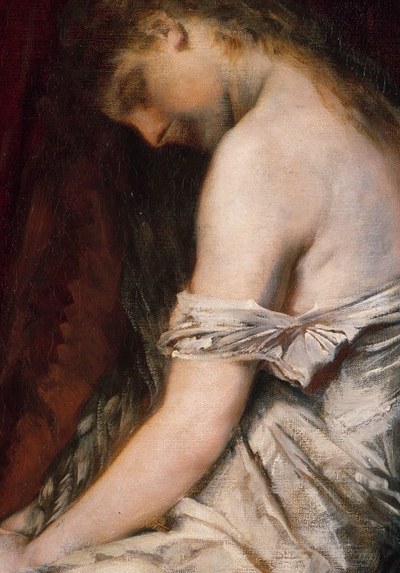
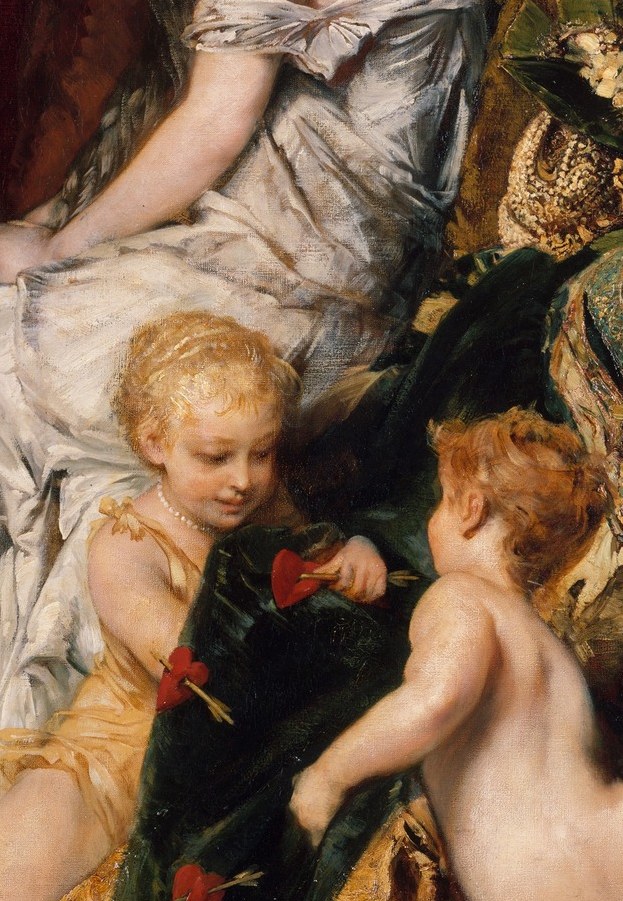
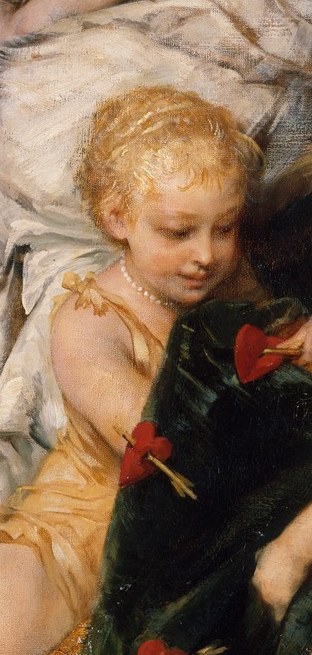
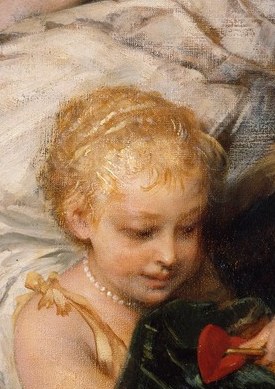
Hans Makart's 'The Dream after the Ball,' painted in 1872 and held at The Metropolitan Museum of Art, was a work that shocked its initial audiences. Despite its tender portrayal of a woman reflecting after a social event, critics interpreted it as decadent and overly sensual. The painting depicts a woman, her face turned away, her hair unbound, leaning over two children. One child innocently holds a red flower, a symbol often associated with love, though here it is pierced by arrows, hinting at a more complex emotional landscape. The artist, Hans Makart, was a towering figure in late 19th-century Austrian art, and this work exemplifies the Orientalist movement's fascination with exoticism and lush aesthetics. Makart's style, with its emphasis on rich textures and soft, luminous effects, particularly in the woman's flowing white dress, creates a dreamlike atmosphere that viewers at the time found unsettling. The contrast between the intended quiet contemplation and the perceived decadence highlights the shifting interpretations of art and sensuality.
Look at the woman's profile and her flowing white dress, which seems to glow against the darker background. Notice the child holding the red flower, a detail that is pierced by small arrows, a subtle symbol of painful or unrequited love. The dark red curtain on the left frames the intimate scene, adding dramatic depth, while the patterned textile behind the flowers suggests a luxurious, exotic setting.
Makart's significant influence on visual art in Austria-Hungary is undeniable. 'The Dream after the Ball' was created during a period of intense public engagement with art, where themes of sensuality and emotion were often scrutinized. The painting's reception reveals much about the societal norms and anxieties surrounding the depiction of women and domesticity in the late 19th century.
Does the piercing of the flower transform the scene from one of innocence to one of sorrow?
Details
Transcript
A woman after the ball, lost in thought. Her dress flows like a dream. One child holds a flower. It is pierced. They called this decadent, not tender. Makart painted this in 1872. His career defined Austrian art.