Flora and Zephyr by Jacob de Wit
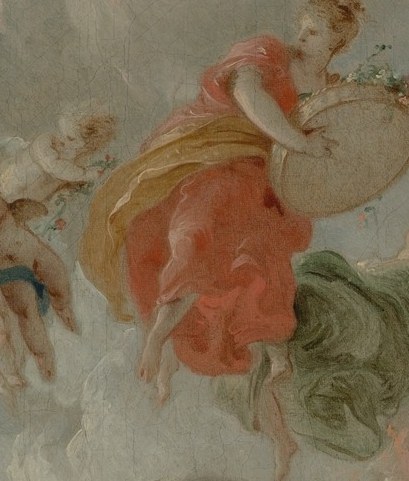
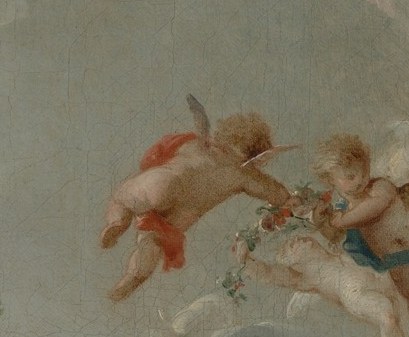
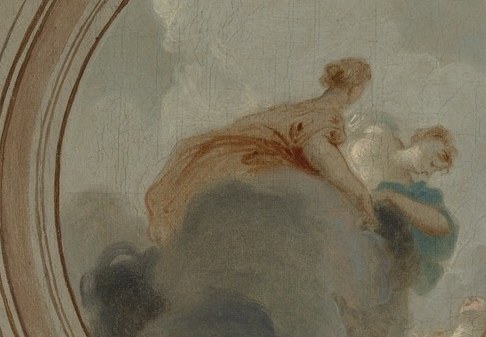
Jacob de Wit's *Flora and Zephyr*, painted in 1743, is a classic example of Rococo art, a style that was considered shocking and scandalous by critics when it first emerged. This oil painting, held at The Metropolitan Museum of Art, depicts Flora, the goddess of flowers, surrounded by cherubs and the personified west wind, Zephyr.
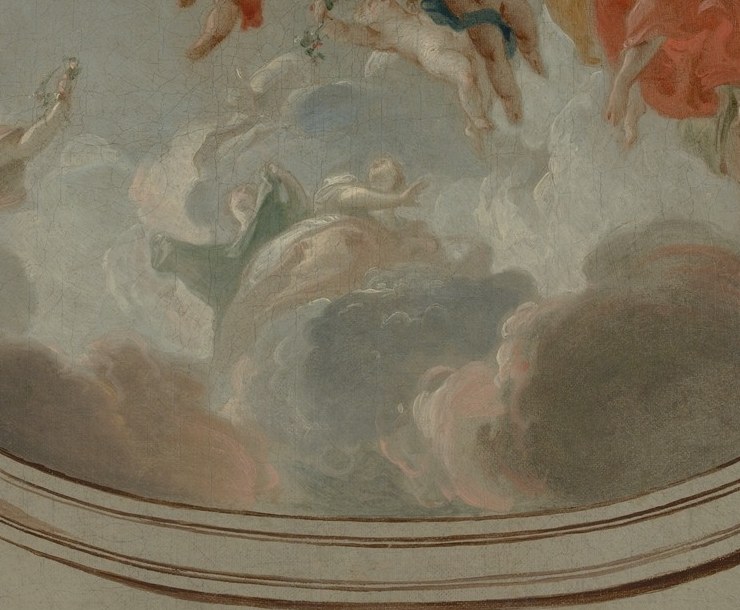
Look closely at the swirling clouds and the graceful figures. De Wit's polished, almost porcelain-like brushwork and restrained palette of pale blues and greens, contrasted with Flora's vivid red dress, are characteristic of the Rococo's elegant delicacy and playful mythological narratives.
While de Wit was also known for religious scenes and interior decoration, *Flora and Zephyr* perfectly captures the Rococo fascination with light, airy atmospheres. However, this shift from grand, moralistic classical art to more decorative and whimsical subjects often drew the ire of critics, who viewed the style as superficial and decadent. Yet, its charm ultimately won over much of 18th-century Europe.
What do you think of the Rococo style? Does its elegance still captivate today?
Details
Transcript
This painting, made in 1743, looks like a harmless fantasy. It features Flora, the goddess of flowers, and the west wind, Zephyr. But its style, Rococo, was scandalous in its day. Critics called it frivolous, immoral, and lacking seriousness. They longed for the grandeur and morality of classical art. Despite the outrage, Rococo's playful elegance captivated Europe.