Still Life of Fruit by American 19th Century
This intriguing "Still Life of Fruit," painted by an unknown American artist between 1865 and 1880, offers a glimpse into a popular yet often overlooked genre of 19th-century art. The painting, an oil on wood panel, is part of the collection at the National Gallery of Art.
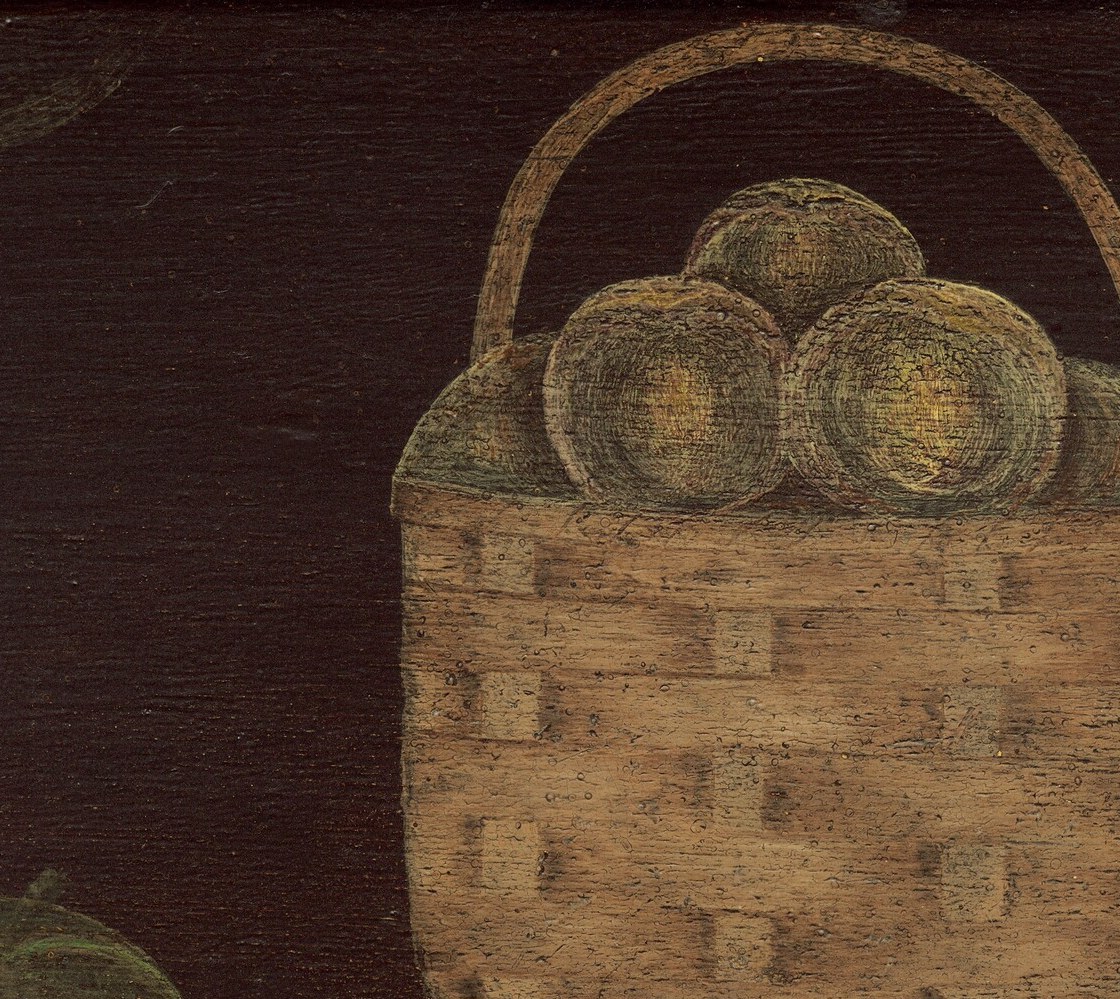
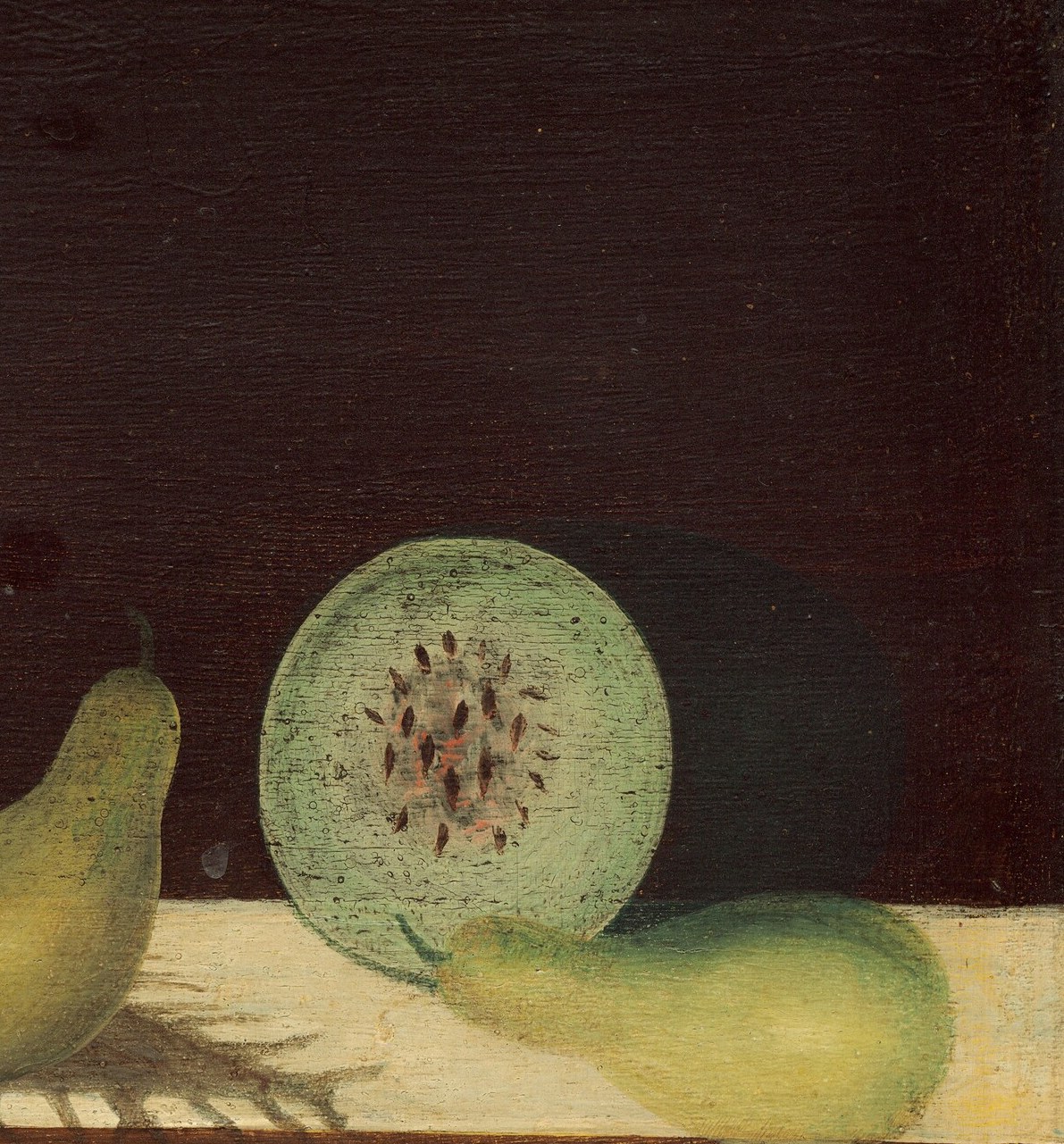
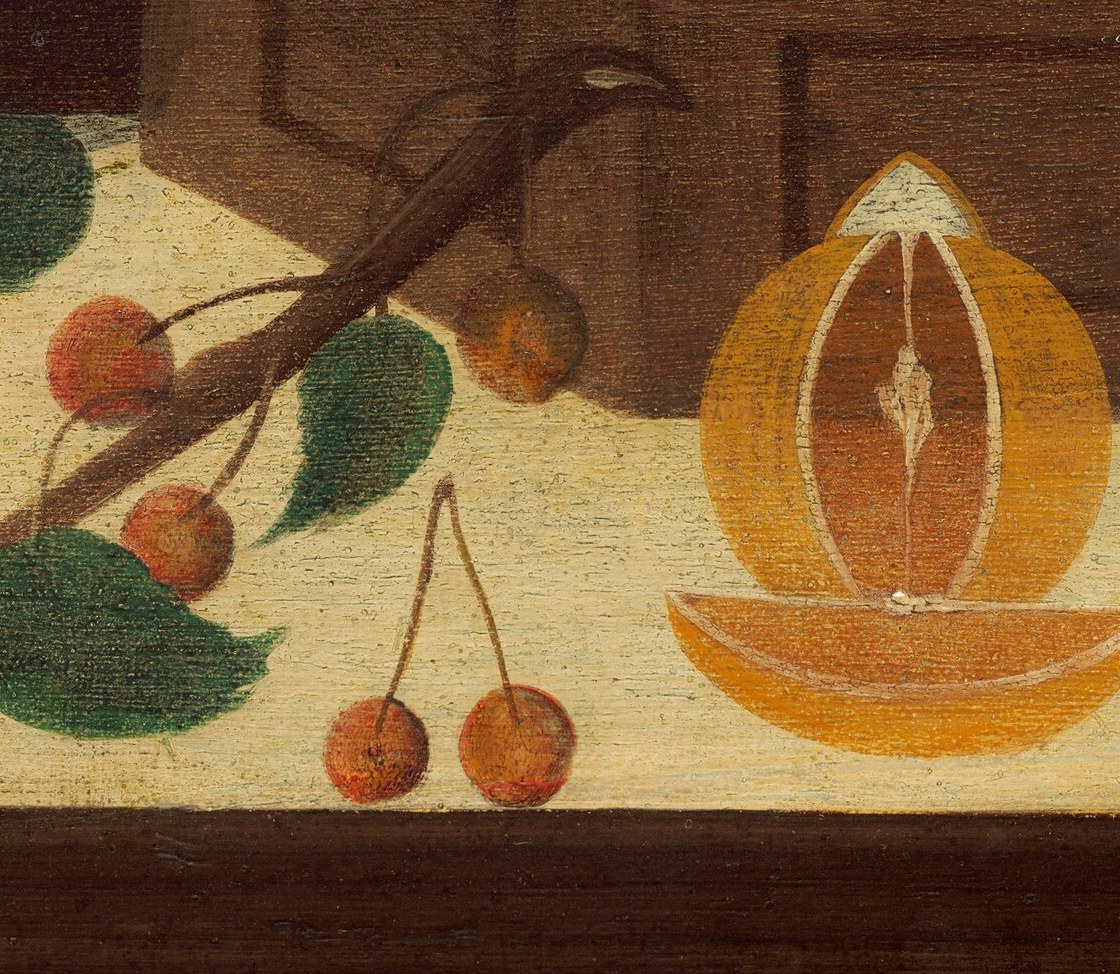
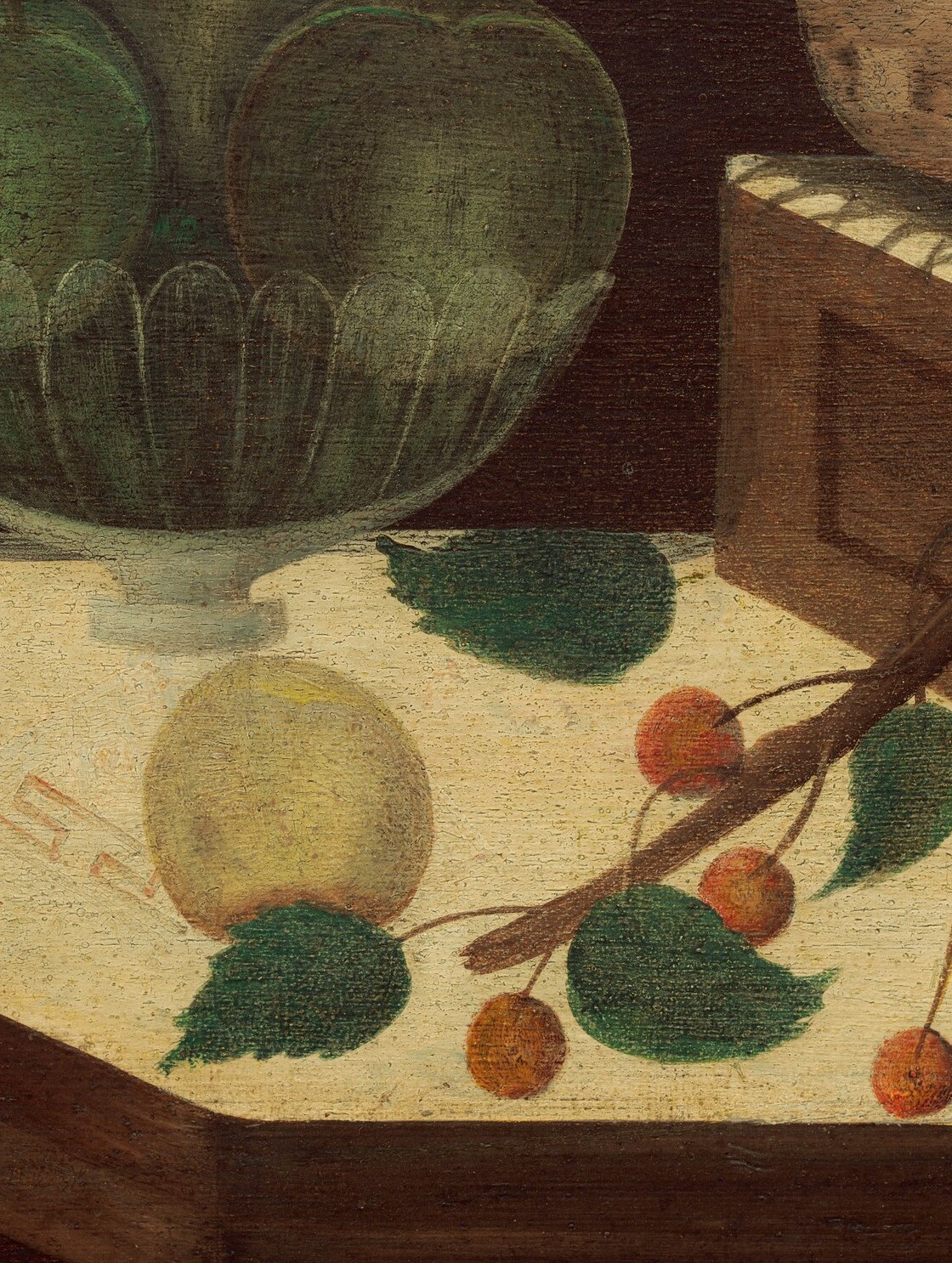
Notice the meticulous detail in the wicker basket and the variety of fruits, from the large green fruits on the left to the halved melon and bright orange in the foreground. The artist's skill in rendering textures and light transforms these everyday objects into a captivating arrangement.
The artist's anonymity reflects a common practice of the time; many still life painters, working on smaller panels for a broader market, didn't sign their works. While these pieces were often considered 'minor art,' they required immense talent and patience, bringing beauty into countless homes.
It makes you wonder, what other beautiful, unsigned works are out there waiting to be appreciated for their craft?
Details

Transcript
This painting is called “Still Life of Fruit.” The artist didn’t sign it, which was common. Many artists like this one simply weren't known by name. They worked on small panels, often for a general market. Look closely at the basket, a showcase of skill. These still lifes elevated everyday objects with precise observation. Yet, these anonymous works were often dismissed as minor art.