Vanitas Still Life by B. Schaak
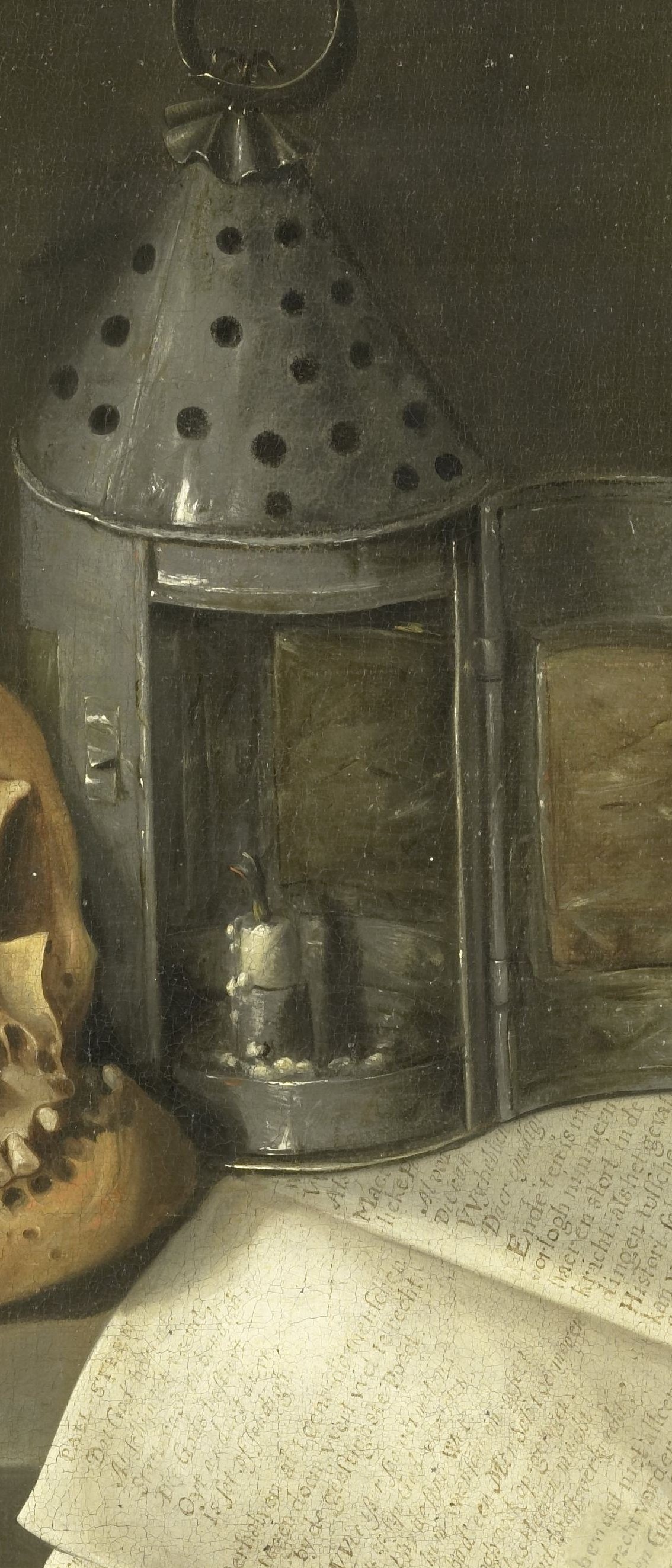
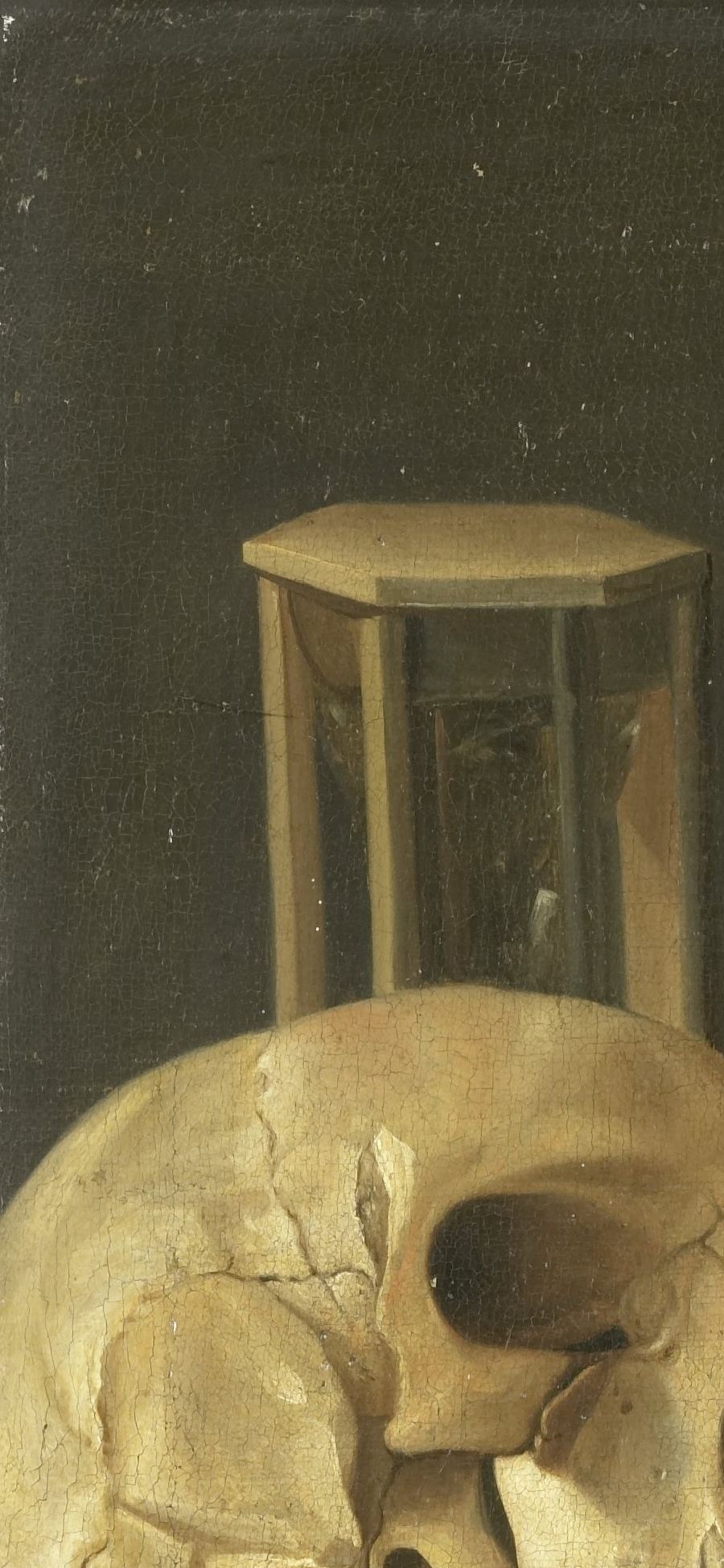
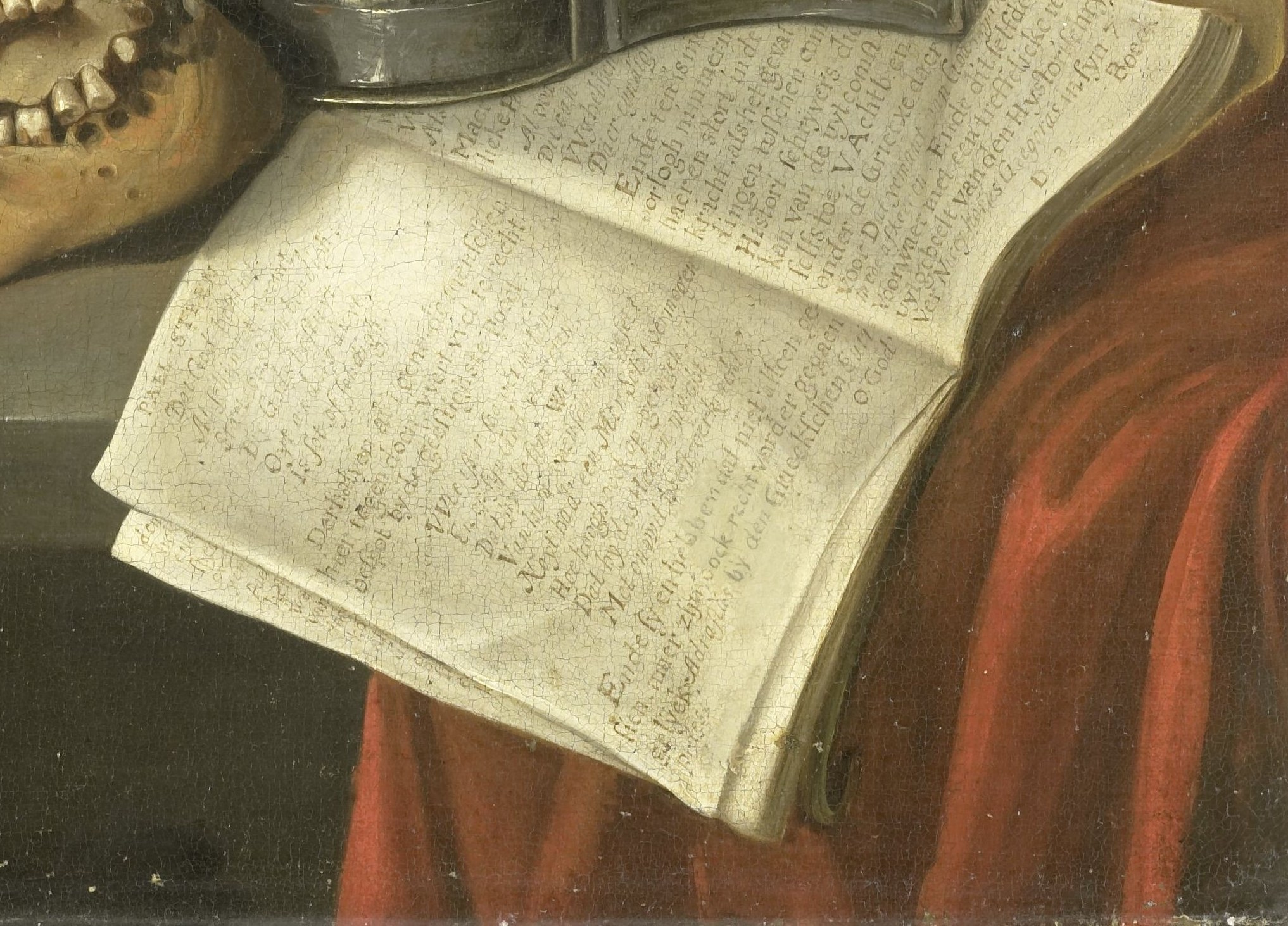
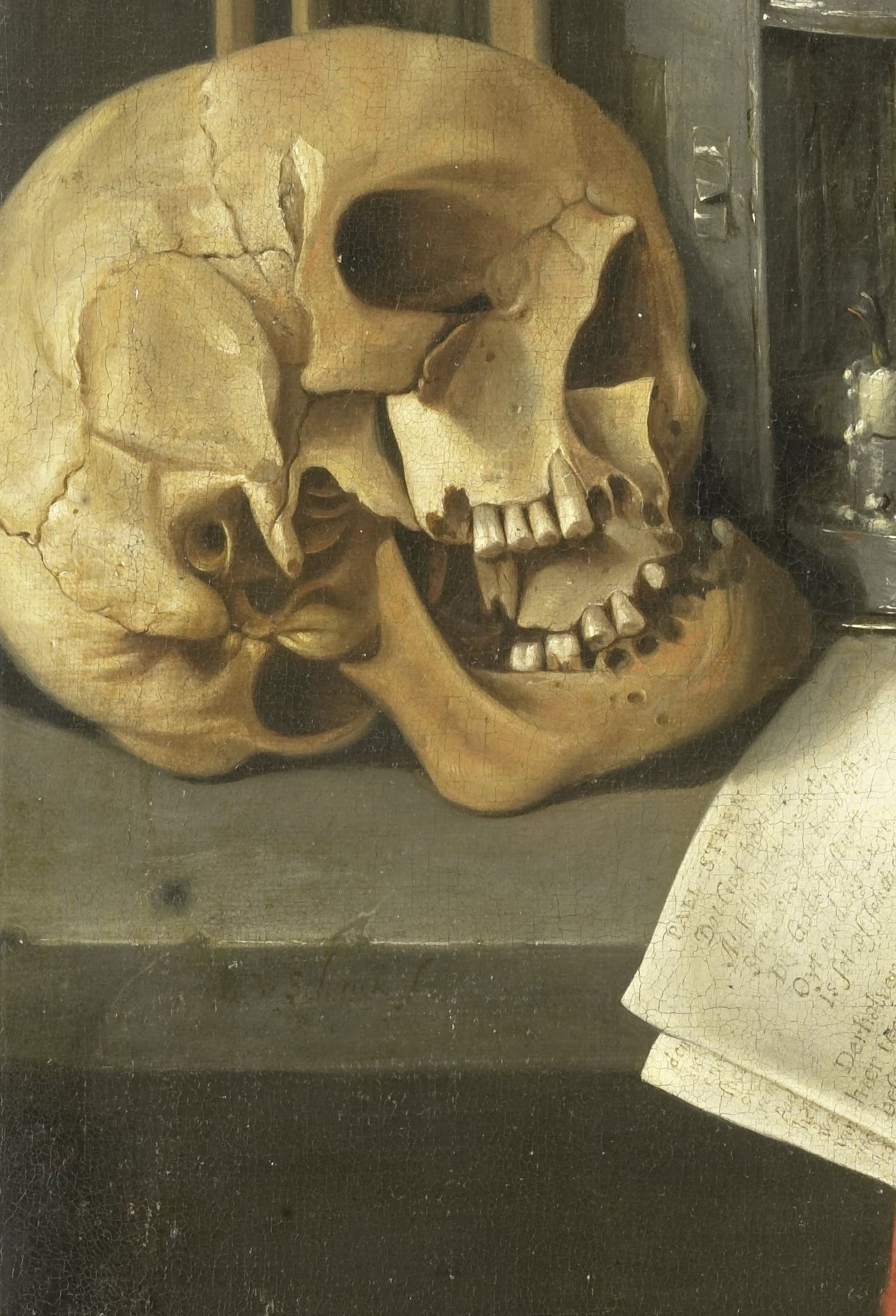
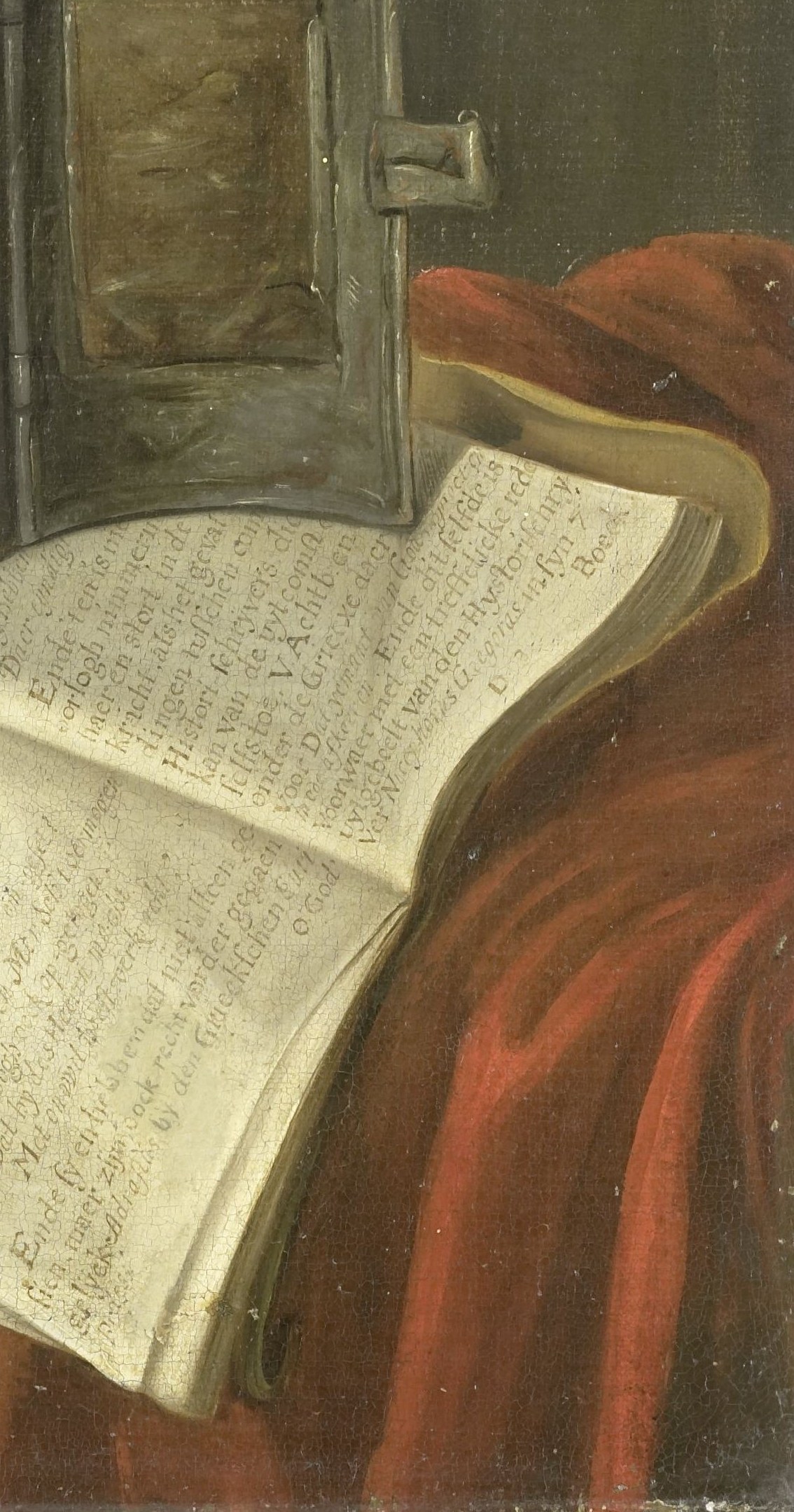
Vanitas Still Life by B. Schaak, painted around 1694, is a meditation disguised as a tabletop. A human skull, an extinguished lantern, a running hourglass, and an open book sit on a stone ledge against absolute darkness. The painting is held at the Rijksmuseum in Amsterdam.
Look closely at the skull. The jaw hangs open, the teeth are chipped, and the eye sockets are voids of pure black. Nothing grows here, nothing moves. The lantern above it was once a source of light, but its flame is out. The hourglass still holds sand, which means time is still running, just not for the person this skull belonged to.
This object arrangement is called a vanitas, a genre that flourished in the 17th-century Dutch Republic. A prosperous merchant or scholar would commission or buy such a painting and keep it in a study or private chamber, a deliberate memento mori, a Latin phrase meaning remember you must die. The book and the fine metal lantern speak to worldly knowledge and comfort, while the skull and hourglass quietly answer that none of it lasts.
The painter B. Schaak left little biographical trace, but the painting does exactly what it was made to do. It delivers an argument in objects, one that is as legible now as it was in a candlelit room three centuries ago.
Details
Transcript
Every object here was chosen. A metal lantern with its flame gone out. An hourglass with the sand still falling. The open book of a life, half-read. And the skull that waits at the end of all of it. This was a memento mori, a reminder of death. A wealthy Dutch merchant kept this near his desk. To look at every day.