The Preaching of John the Baptist by Bartholomeus Breenbergh
The Preaching of John the Baptist by Bartholomeus Breenbergh stages a biblical wilderness sermon with the precision of an eyewitness report. Completed in 1634, the painting is a masterclass in Dutch Italianate landscape, now in a private collection after passing through the hands of European royalty.
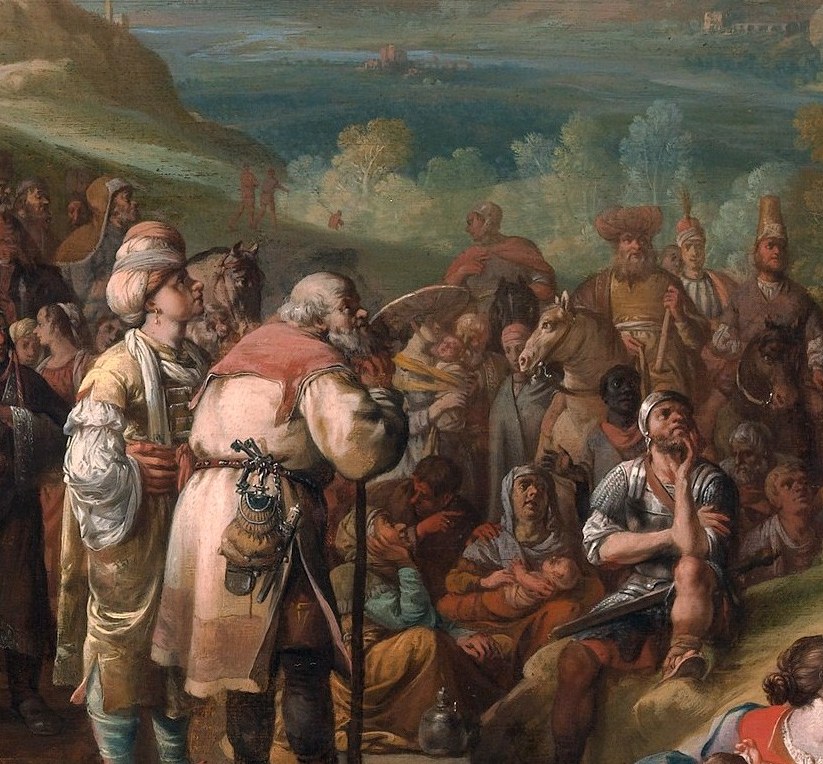
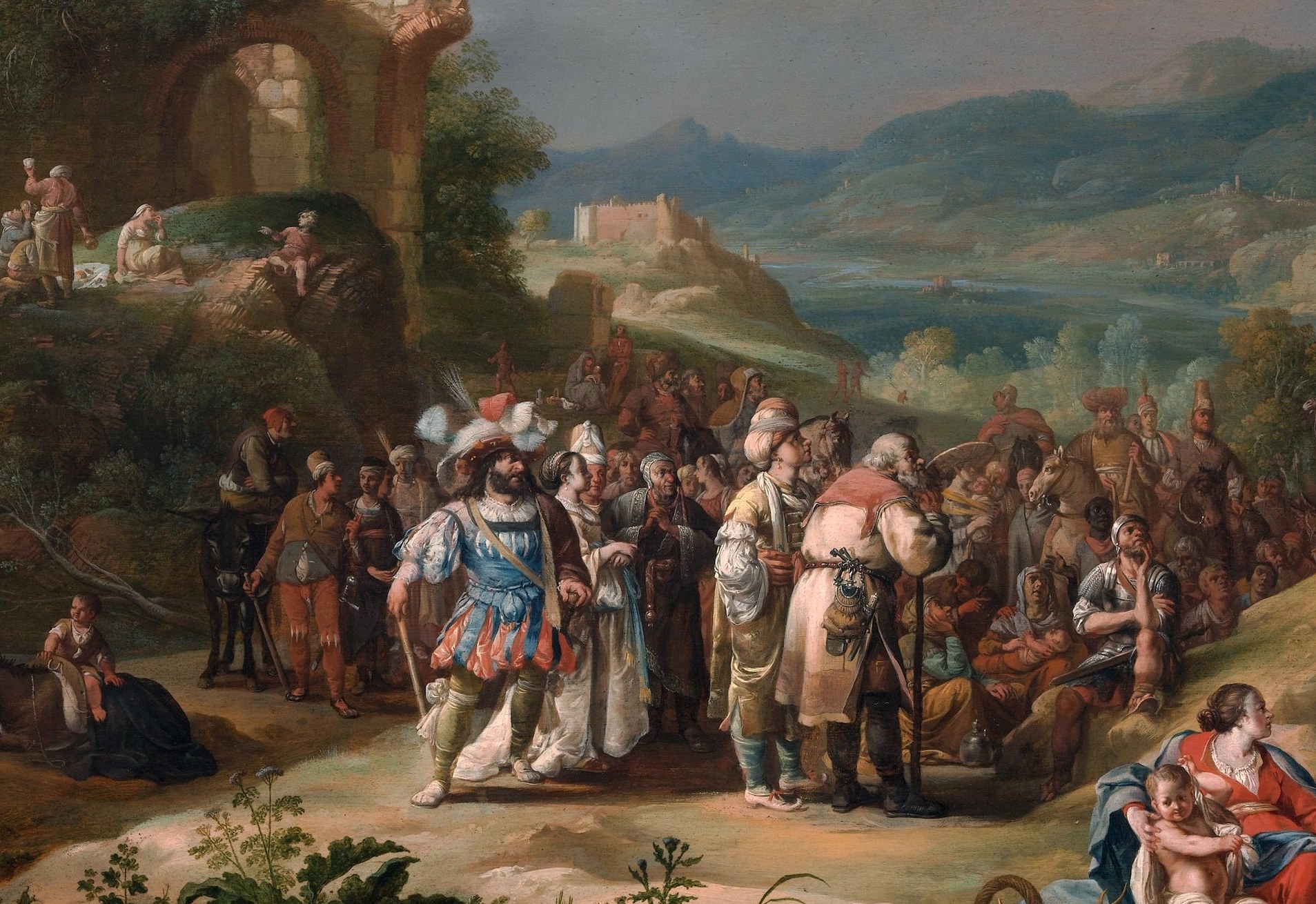
Breenbergh had spent a decade in Rome studying ruins and light, and he brought that fieldwork home to Amsterdam. The composition works like a reporter's notebook: John the Baptist preaches from a rough stone pulpit, his arm aimed at heaven. The crowd is a social cross-section, soldiers with spears, a finely dressed nobleman, a mother cradling an infant, proof that the message reached everyone. A beam of sky light breaks directly behind John's head, a natural halo painted in oil.
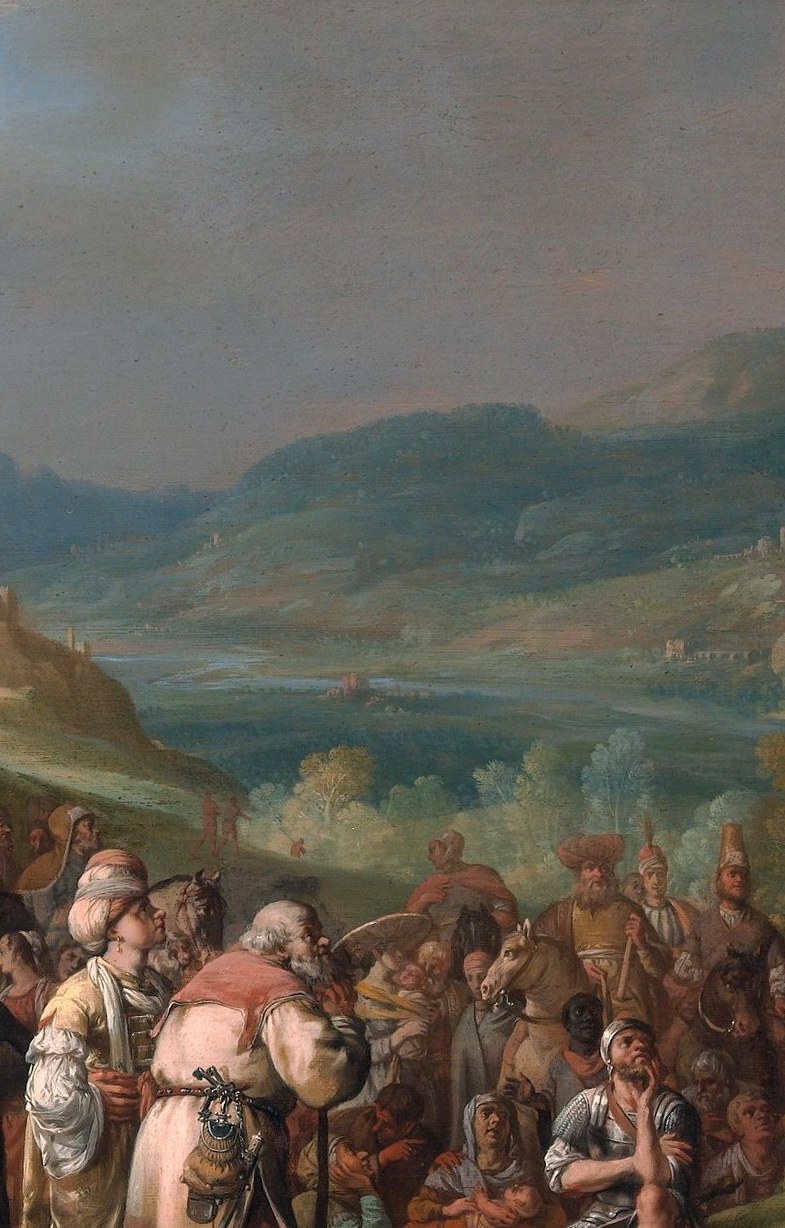
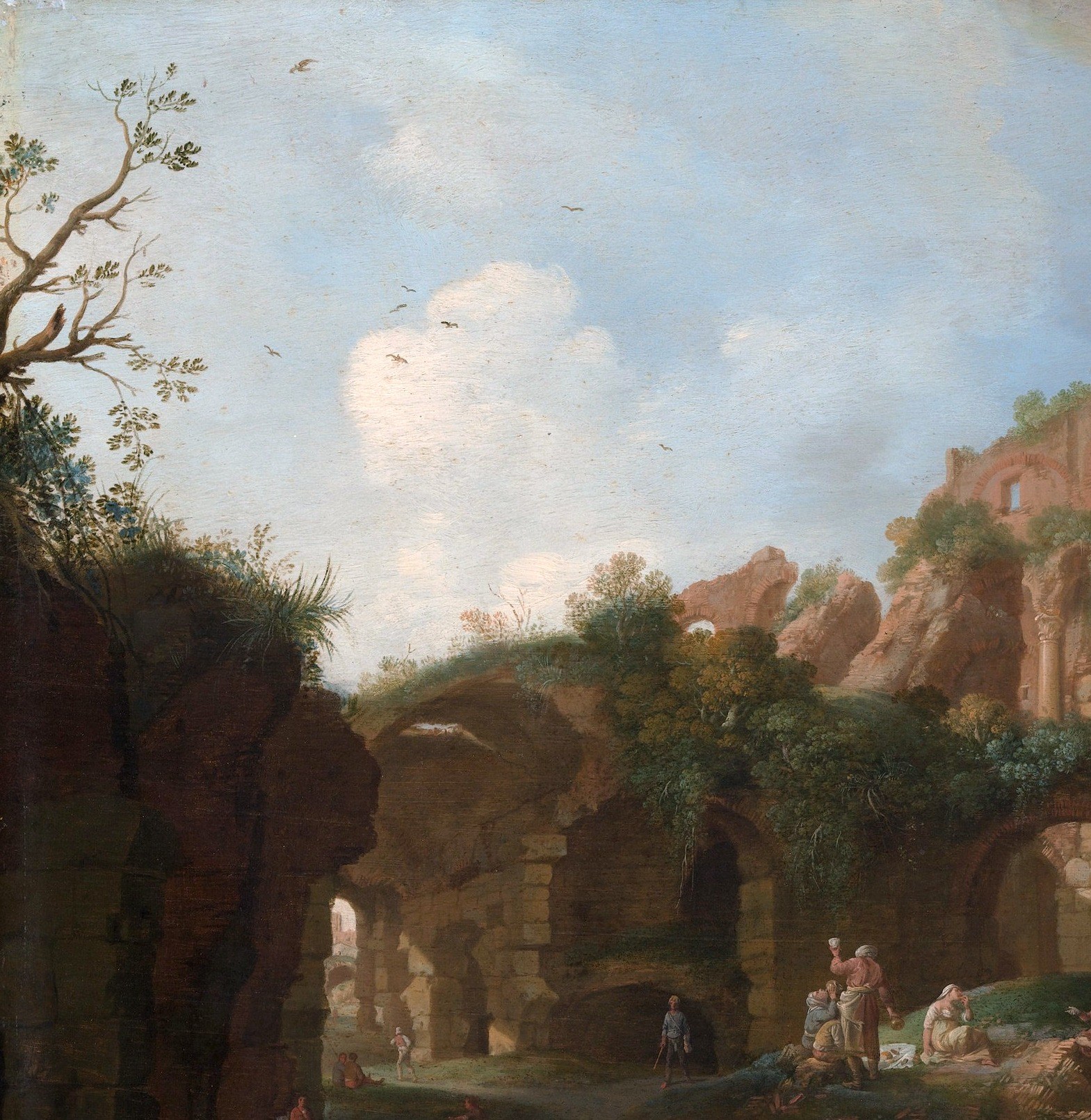
The crumbling classical arch in the upper left does double duty. It recalls the Roman ruins Breenbergh sketched in Italy, and it signals the old pagan world giving way to the new Christian story. The far-right horizon holds a faint city, a reminder that this wilderness sermon stood outside civilization entirely.
He was painting an event he never witnessed, set in a landscape he'd never visited, and he made it feel like breaking news.
Details

Transcript
He wasn't in a temple. He was on a rock. The preacher is John the Baptist, and his church is the raw wilderness. The painter wasn't there. He lived in Amsterdam, 1600 years later. But look at the crowd. Soldiers, merchants, a mother, a rich man. Breenbergh built this like a news report from a place he'd never seen. He used Roman ruins to signal the old order crumbling. And a single beam of light to tell you who matters.