Apple Blossoms by Charles François Daubigny
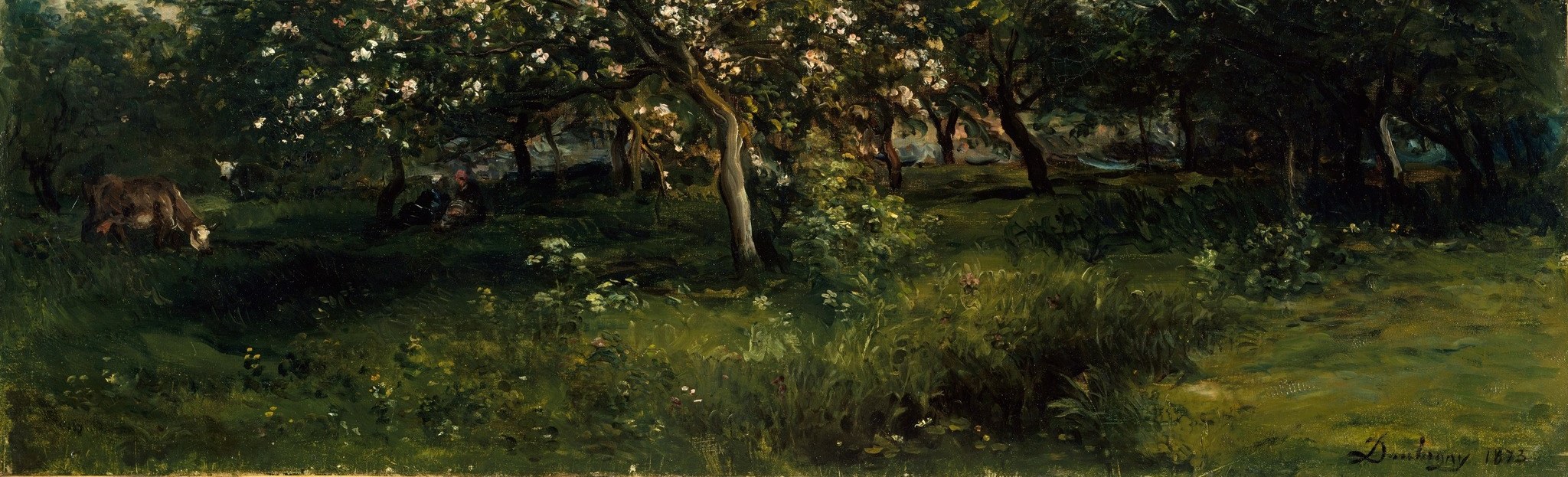
Charles François Daubigny painted "Apple Blossoms" in 1873, and it holds a secret most people scroll right past. The work hangs in The Metropolitan Museum of Art and captures a pivotal moment just before Impressionism fully arrived.
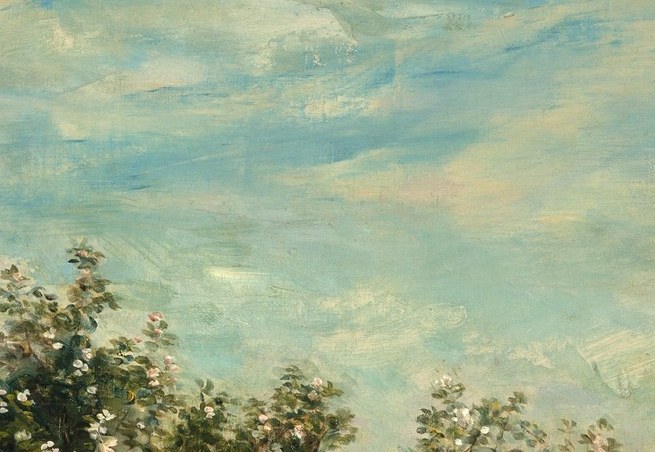
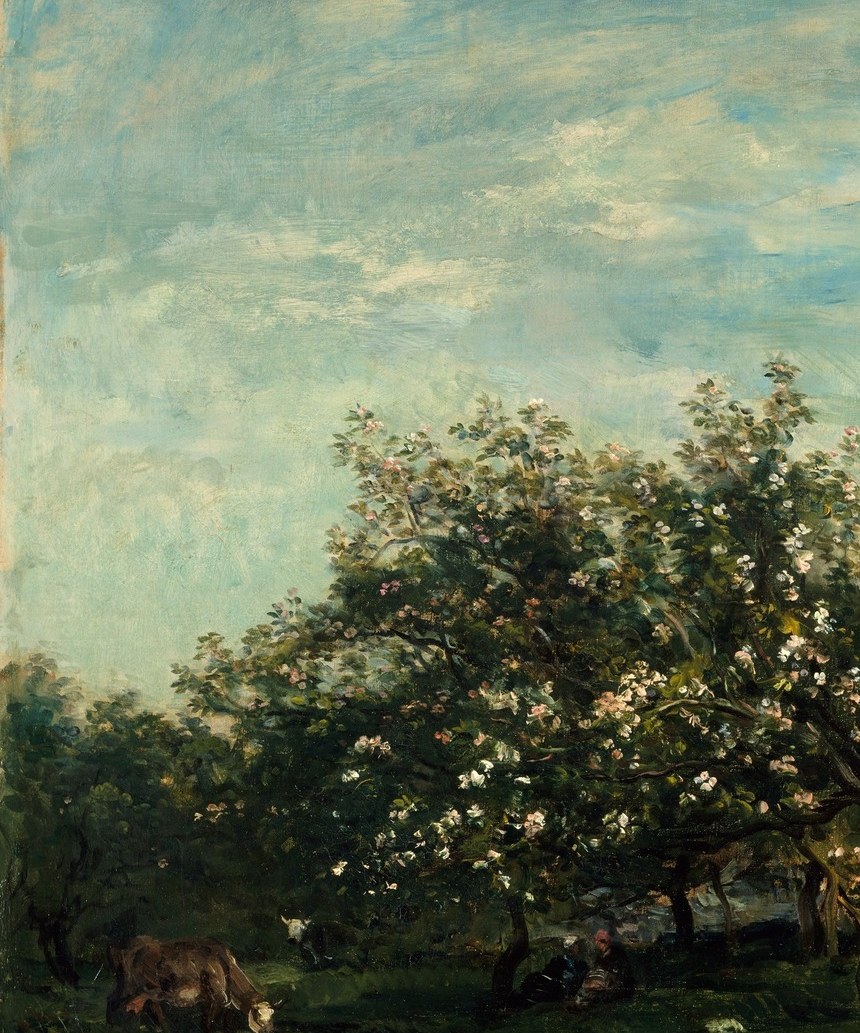
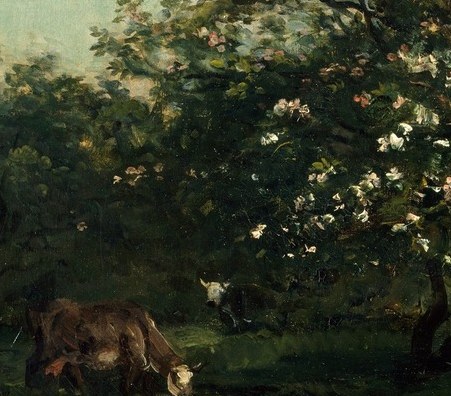
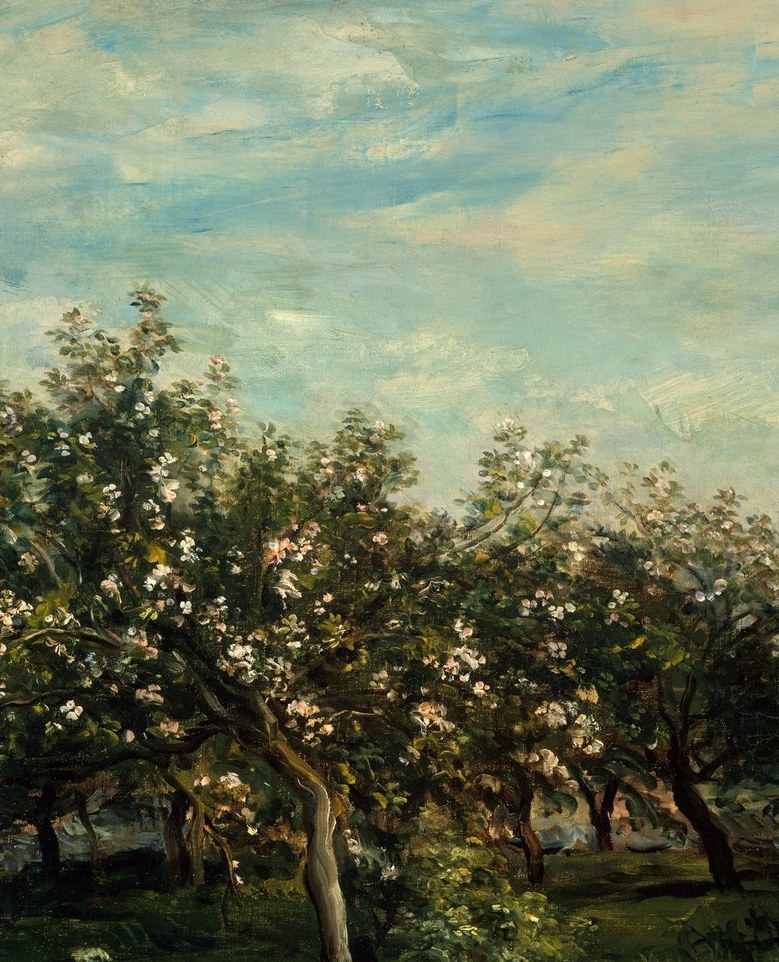
The painting is a riot of white petals and dappled spring light rendered with quick, loose brushwork. Your eye goes straight to the thick, almost sculptural blossoms in the central canopy. But let your gaze drift to the deep shade at the base of the left trees: a lone figure stands there, so small and dark it nearly disappears into the grass.
Daubigny was a central figure in the Barbizon school, a group of artists who left their studios to paint directly from nature. His direct observation of light and atmosphere, and his willingness to let brushstrokes show as marks of paint, directly influenced the young Impressionists who followed him. Monet himself admired Daubigny's work and even built a studio boat like his.
This tiny figure in the orchard is a classic Daubigny touch, a solitary presence that gives the vast, transient beauty of the landscape its human scale. Next time you stand before a seemingly empty landscape, look into the shadows. Someone might be looking back.
Details
Transcript
Spring, 1873. A French orchard explodes into white. Daubigny built this whole scene of light with fast, loose strokes. Look to the left, at the base of the trees in the shade. A small figure stands alone, almost swallowed by the grass. Daubigny often hid a single person in his vast landscapes. A tiny witness to a fleeting spring no one else is there to see.