Catching Monkeys by Paulus Potter
Paulus Potter, a Dutch painter from the Golden Age, created 'Catching Monkeys' around 1650. Known for his keen observation of animals, Potter often painted them from a low perspective, inviting viewers into their world. This work is part of the State Hermitage Museum's collection.
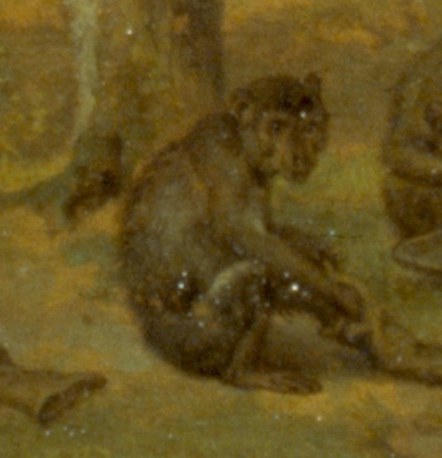
Here, three monkeys interact with their environment. One clutches a metal bowl, while another gazes downwards, perhaps in thought. These depictions of animals often carried symbolic weight in 17th-century Dutch art, hinting at human traits like curiosity or folly.
Potter had a tragically short career, dying from tuberculosis at just 28. Despite this, he produced about 100 paintings, each demonstrating his meticulous brushwork and dedication to naturalism. His work continues to offer a unique window into animal life and allegorical meaning of his time.
What do these monkeys seem to be communicating to you?
Details


Transcript
This Dutch painter focused on animals in nature. He often placed his subjects from a low perspective. See how this monkey examines the metal bowl. Another monkey looks down, perhaps contemplating. These animals often symbolized human folly or curiosity. The painter died young, at only twenty-eight years old.