First Landing of Christopher Columbus by Kemmelmeyer, Frederick
Frederick Kemmelmeyer’s "First Landing of Christopher Columbus," painted in 1802, offers a romanticized view of this pivotal historical moment, now housed at the National Gallery of Art.
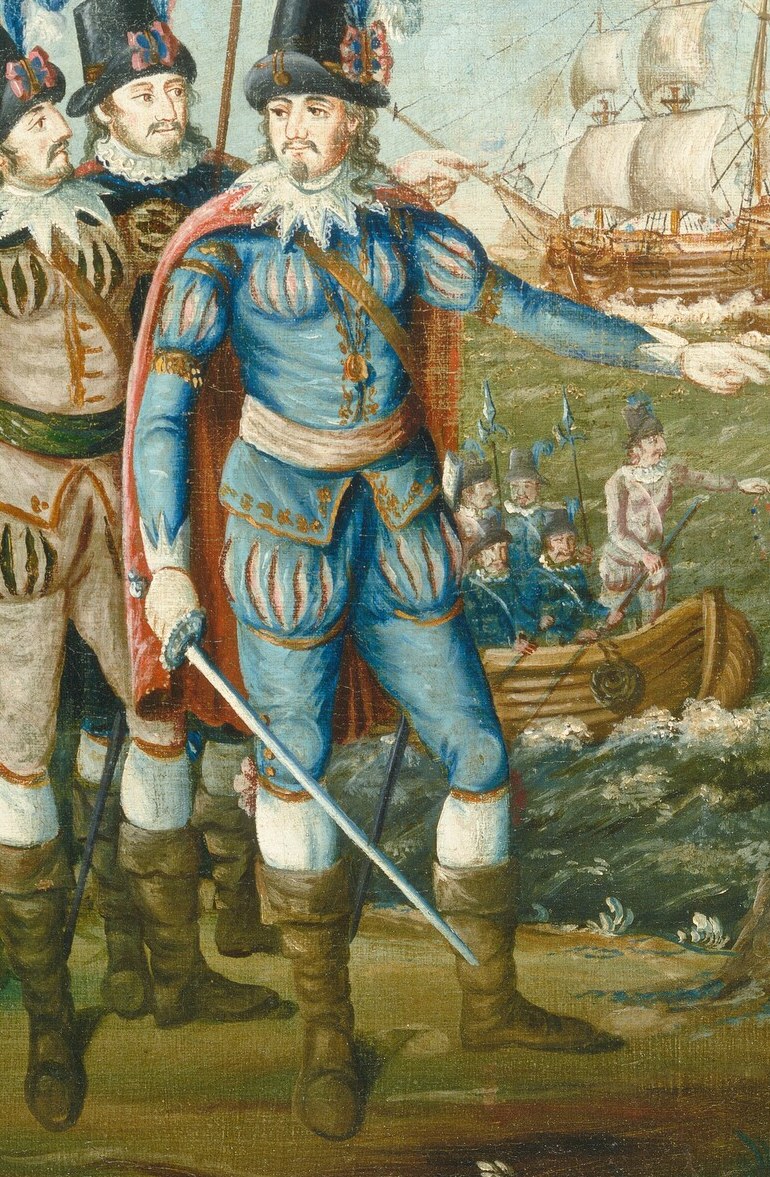
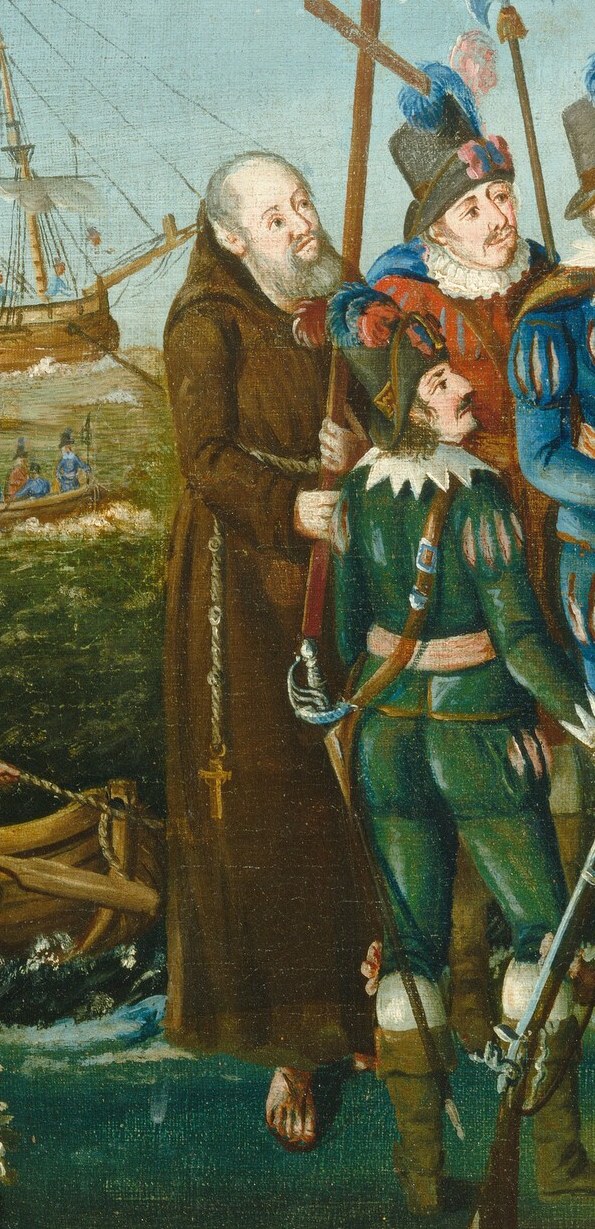
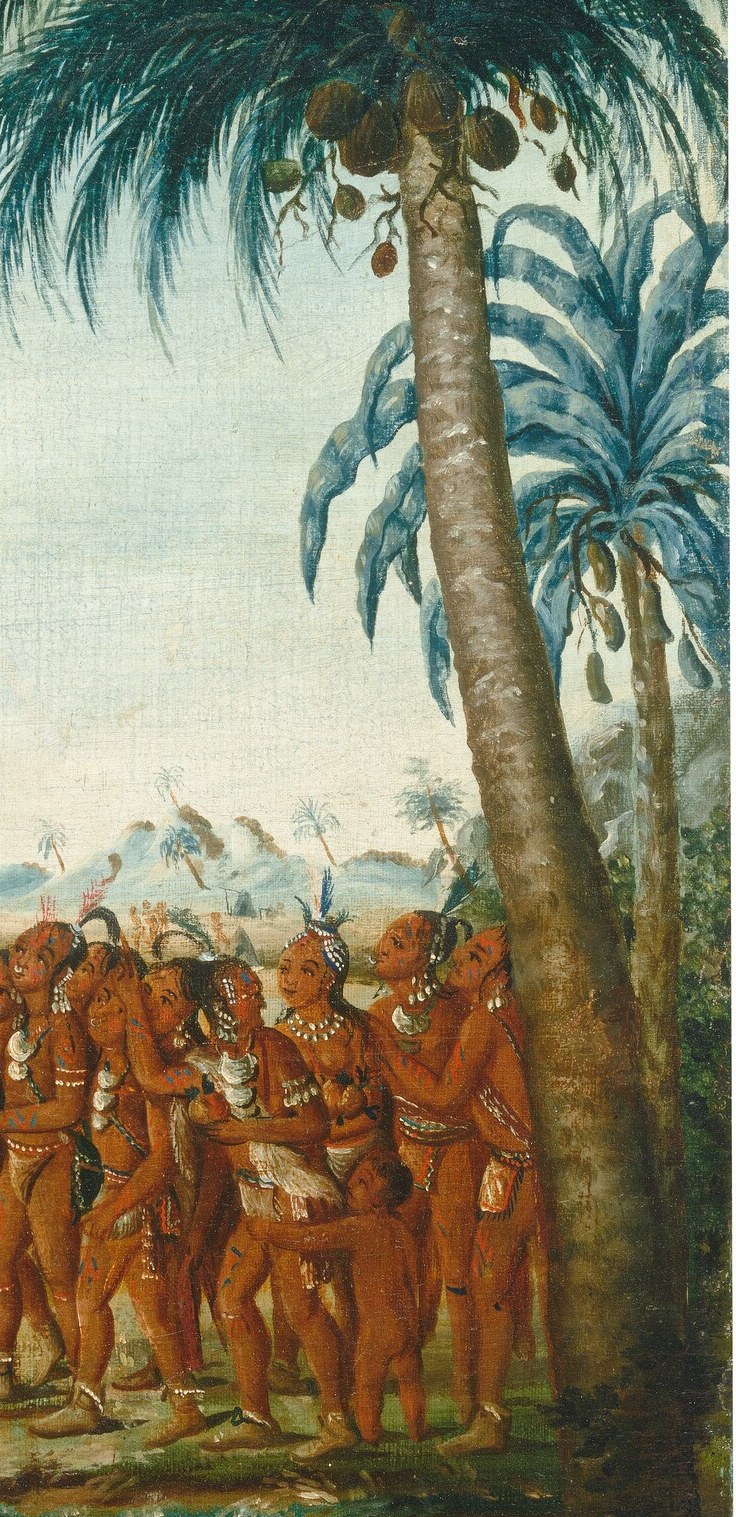
The painting depicts Columbus and his men stepping onto a Caribbean shore, flanked by a priest holding a cross and an explorer with a raised sword. Indigenous figures are shown offering gifts, creating a narrative of encounter and supposed diplomacy. The composition, typical of early American academic style, uses muted earth tones for the landscape and brighter hues for the European figures.
The work aligns with early 19th-century artistic trends that often romanticized the Age of Exploration. Such scenes served patriotic purposes, reinforcing a mythic view of European expansion into the New World. The small inscription on the bottom right gives us a direct insight into the specific message the painter intended to convey.
What do you notice first in this depiction of discovery?
Details
Transcript
This painting shows Columbus arriving in the New World. A commander in blue plants his flag, claiming the land. A priest holds a cross, marking the religious conquest. Indigenous people approach, some offering gifts. But look closely, there is another story here. An inscription details the painter's specific message.