Interior Scene by American 19th Century
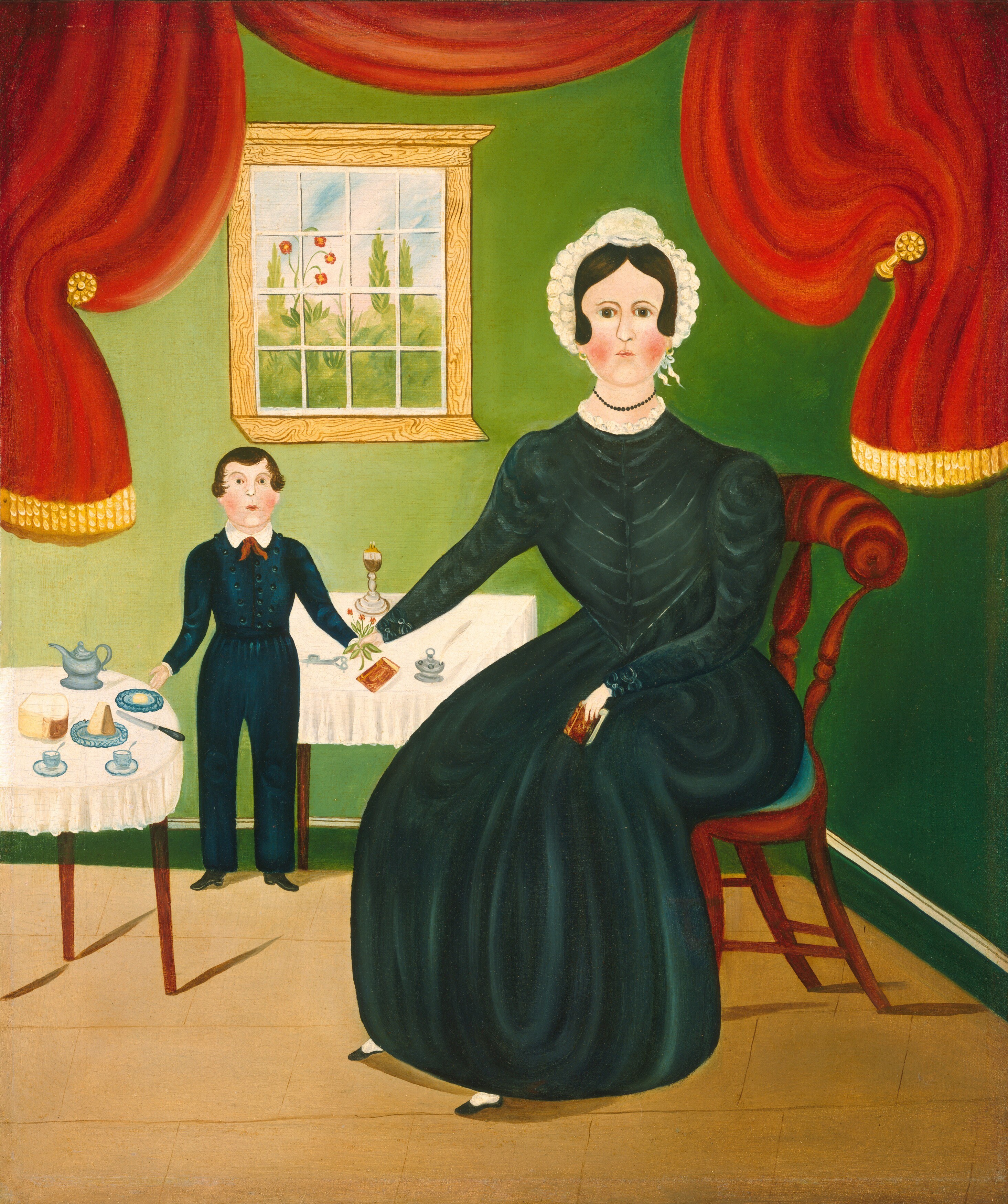
This tranquil "Interior Scene," painted around 1840 by an anonymous American artist, holds a surprising secret: it gives us a glimpse into the very origins of modern art.
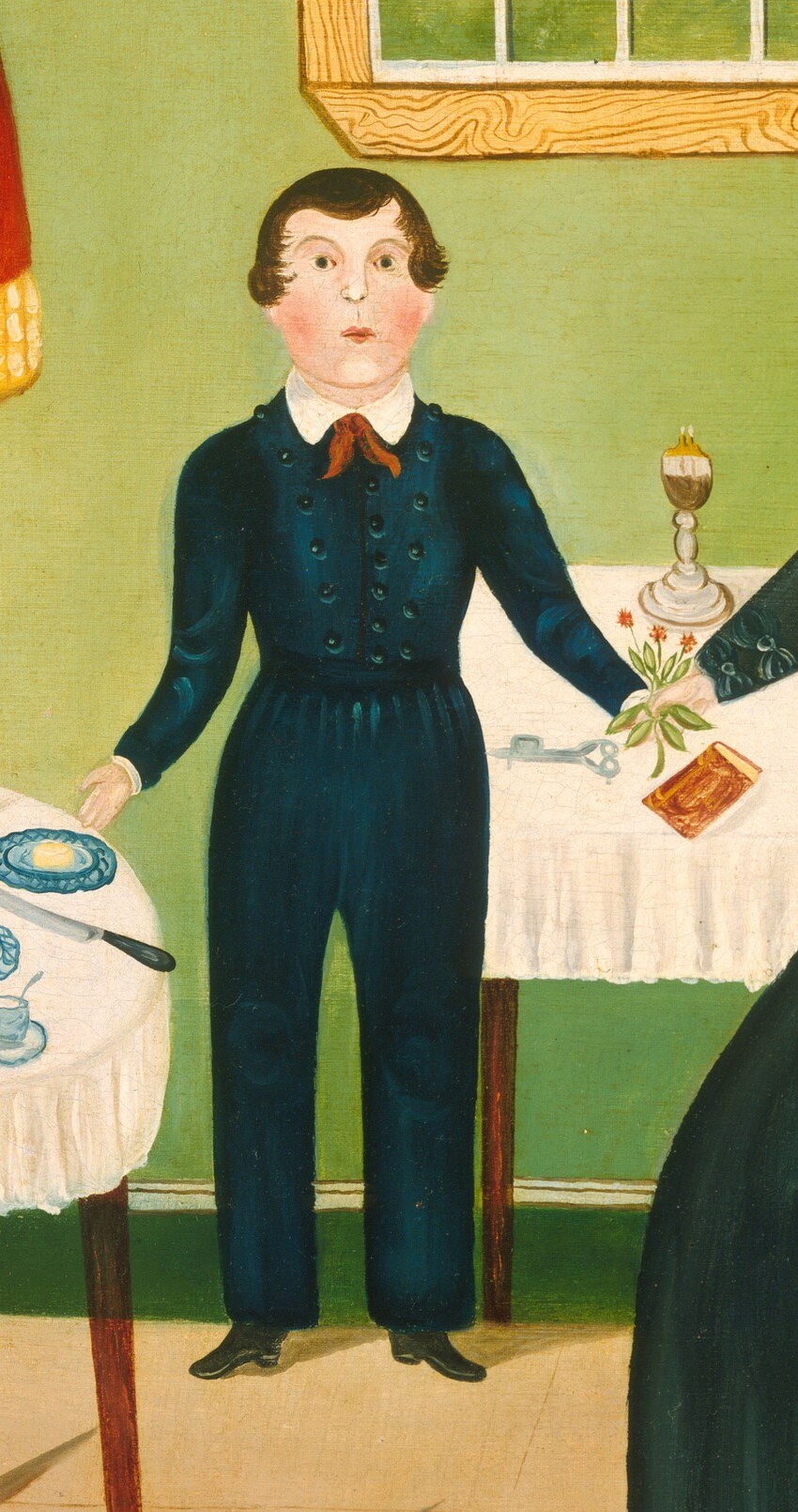
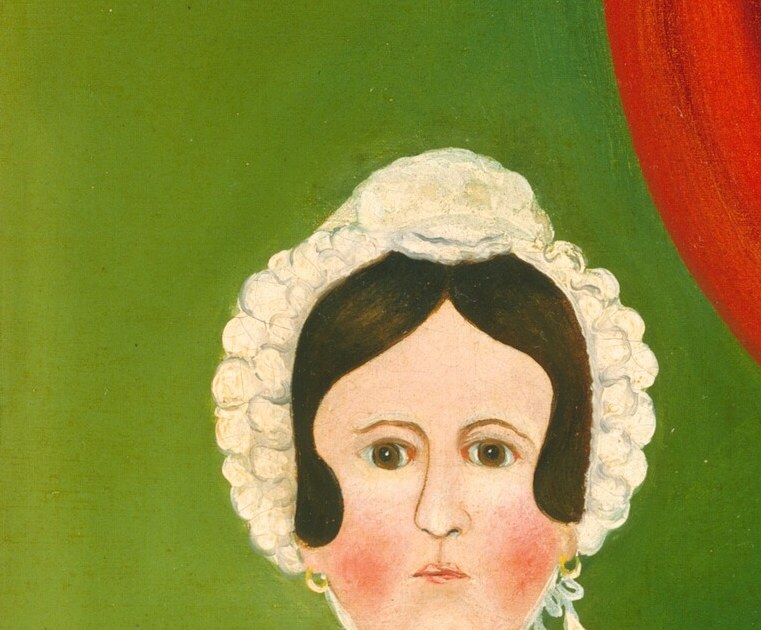
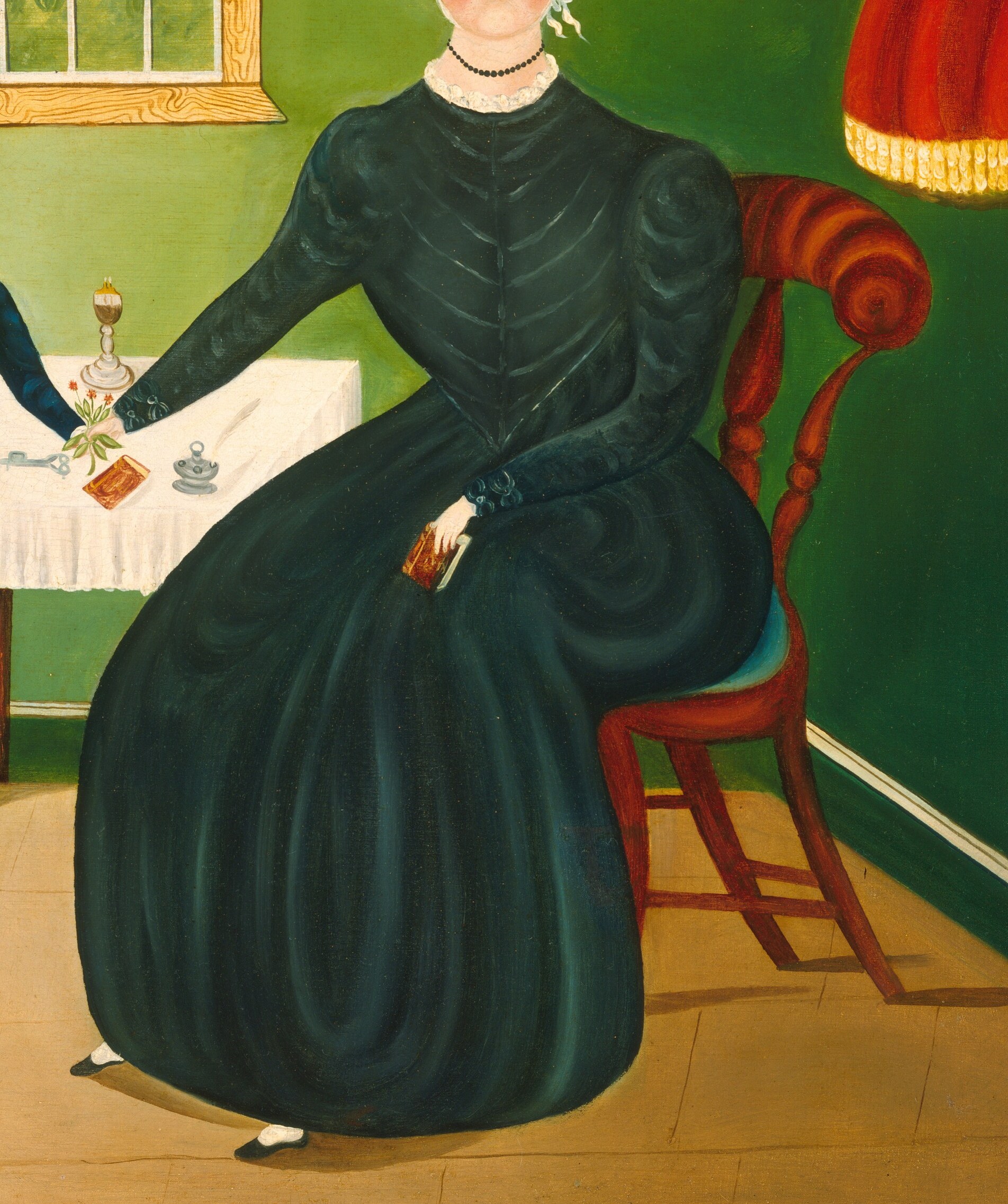
The painting's charm lies in its depiction of a quiet, domestic moment. A woman in a dark dress and bonnet sits, a book in hand, while a young boy formally offers her a flower. The richly colored red curtains and the glimpse of a garden through the window frame this intimate setting.
Yet, it's the vibrant green of the wall that tells a bigger story. The pigments used for such vivid greens were relatively new at the time, indicating the increasing availability and use of synthetic colors. This technological shift in paint production allowed artists greater freedom and paved the way for the groundbreaking movements of Impressionism and Post-Impressionism that would soon follow. It's a reminder that even seemingly simple paintings can carry profound historical significance.
What other subtle details do you notice in this scene that might hint at its era?
Details
Transcript
This peaceful scene, painted around 1840, is by an unknown artist. The formal clothes, even for a young boy, were common. And this offer of a flower, a quiet, domestic moment. Look closely at the green wall, behind their heads. It shows why this painting is important, despite its unknown painter. The pigments were so new, they hint at the birth of modern art.