The Holy Family with Saint Paul and a Donor by http://www.wikidata.org/.well-known/genid/29520e631aa7d4a9c0b405bda5d2f763
This is The Holy Family with Saint Paul and a Donor, painted around 1500 by an artist whose name has been completely lost.
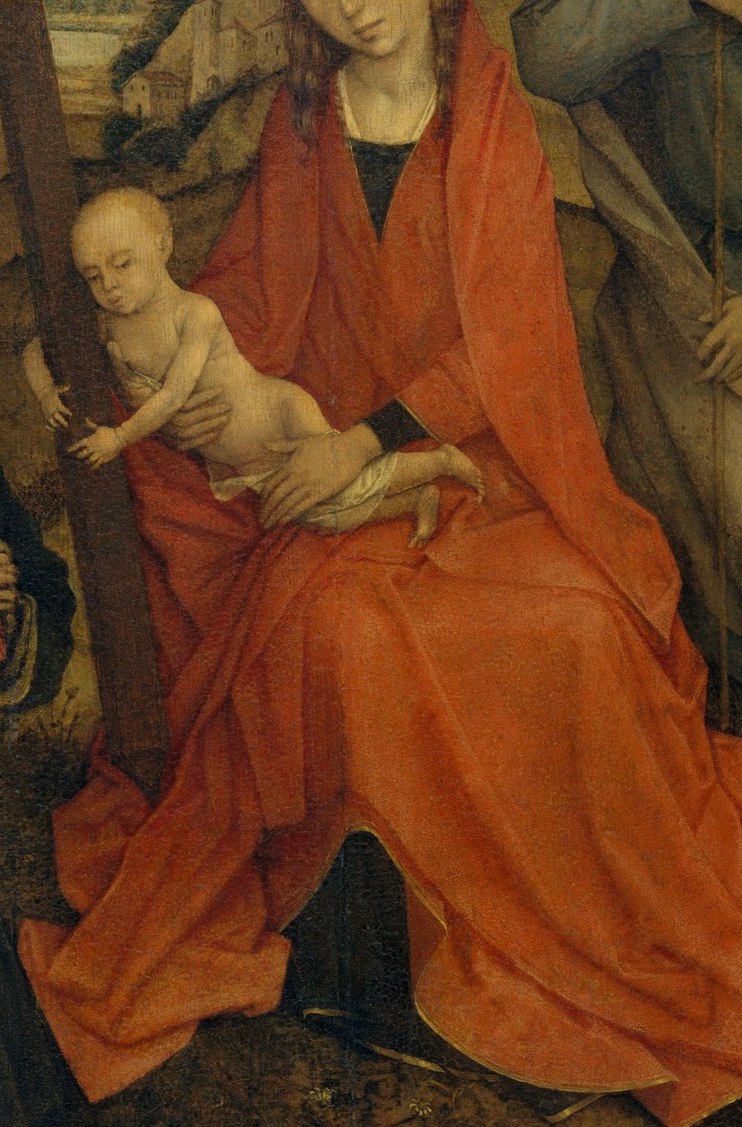
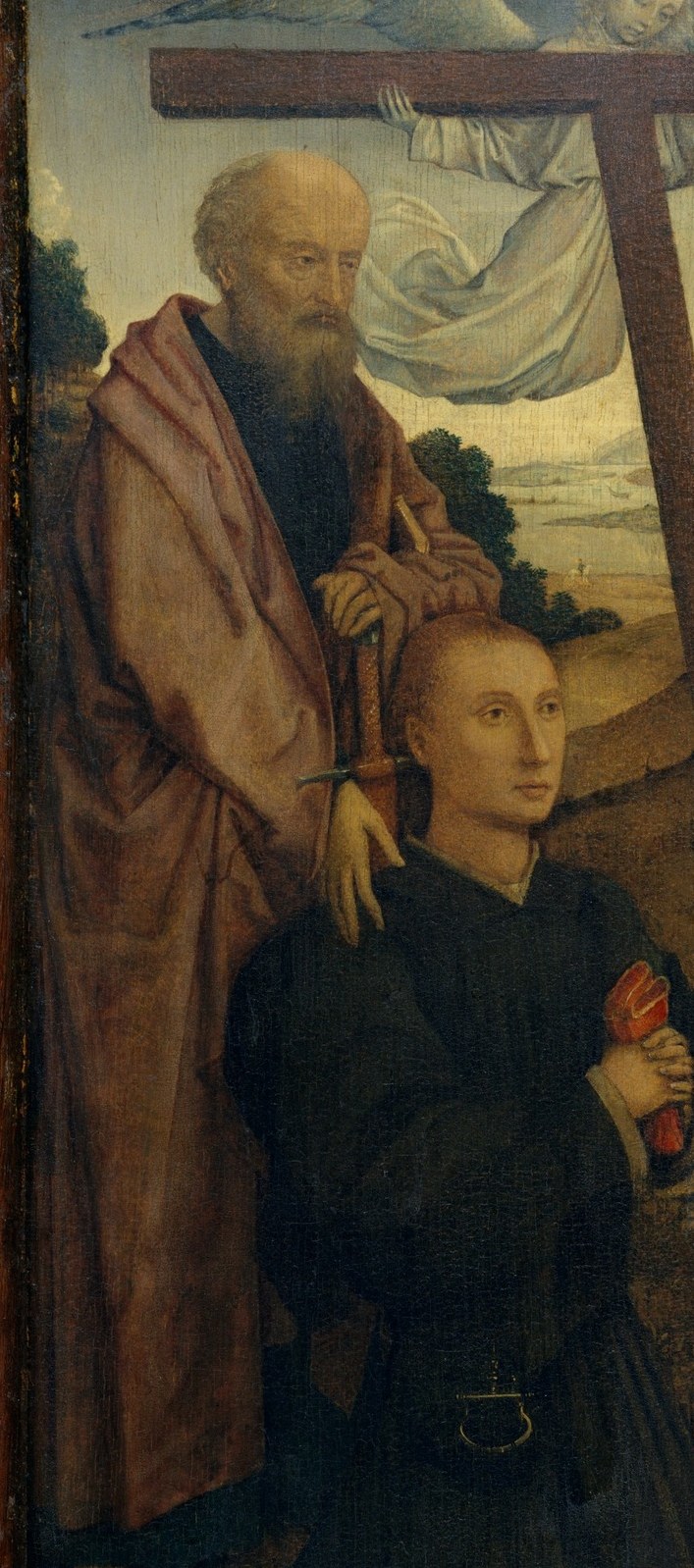
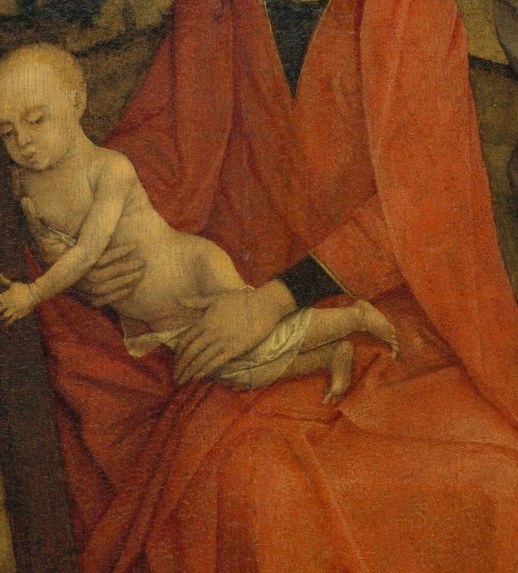
Look first at the Virgin's red mantle. The color is the most saturated thing in the painting, a deliberate choice in oil to pull your eye straight to her. Then follow Saint Paul's hand. He gestures past Mary, past the Child, toward a hill in the upper-left background where a tiny cross with a crucified figure is barely visible. The infant Christ is literally framed against the instrument of his own death.
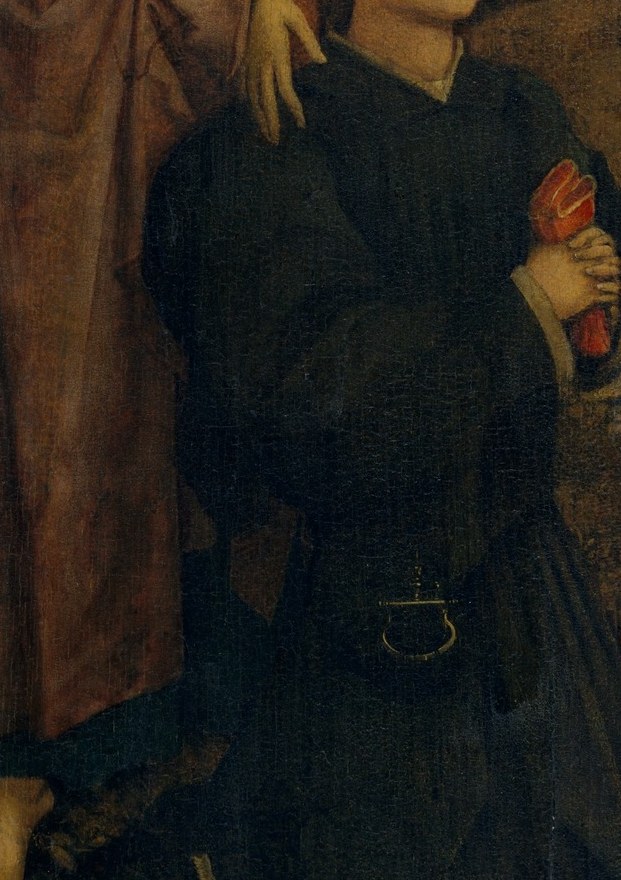
A kneeling donor appears at the lower left, hands clasped in prayer. He paid to be inserted into this sacred scene, a common practice in Flemish devotional art, where a patron purchased proximity to the holy figures and, by extension, intercessory prayer. His inclusion breaks the biblical narrative into the real world.
The painter remains unidentified. The work sits at fame rank 1,634 among roughly 241,000 catalogued paintings, known, studied, but permanently unsigned. Many early Netherlandish painters vanished this way: their panels survive, their names do not.
What does it mean for a painter to leave behind a work this precise, this deliberate, and no signature at all?
Details
Transcript
The Virgin wears a red so loud it silences the rest of the painting. But Saint Paul is already pointing past her, toward a hill in the distance. There, barely visible, a man hangs on a cross. The infant in her lap is already framed against his own death. And here, a kneeling donor paid to be placed inside this prophecy. His clasped hands are the entire reason this panel exists. But no one can name the painter. Fame rank: 1,634. A ghost who left no name.