Still life of flowers and fruits on a marble ledge by Paul Theodor van Brussel
Paul Theodor van Brussel’s *Still life of flowers and fruits on a marble ledge*, painted in 1794 and housed at the Art Institute of Chicago, uses everyday objects to convey a deeper meaning. This work exemplifies the Dutch tradition of still life painting, where arrangements of flowers and fruit carried symbolic weight.
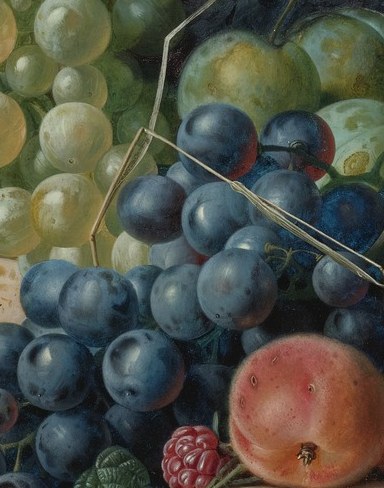
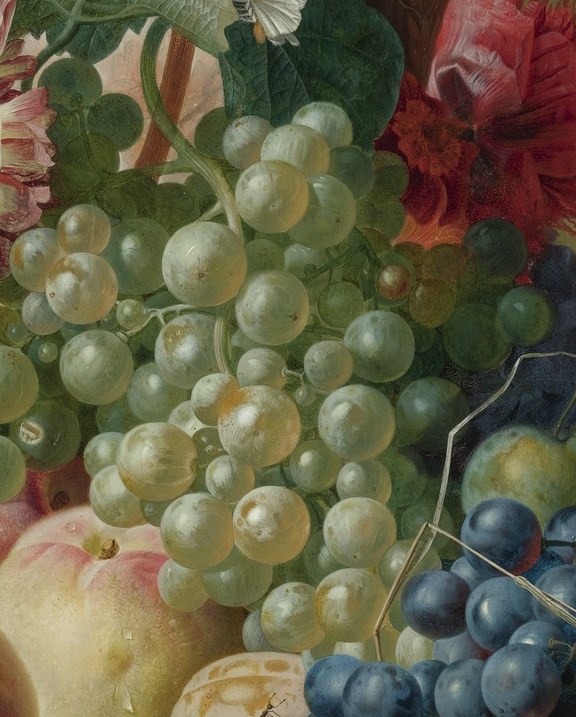
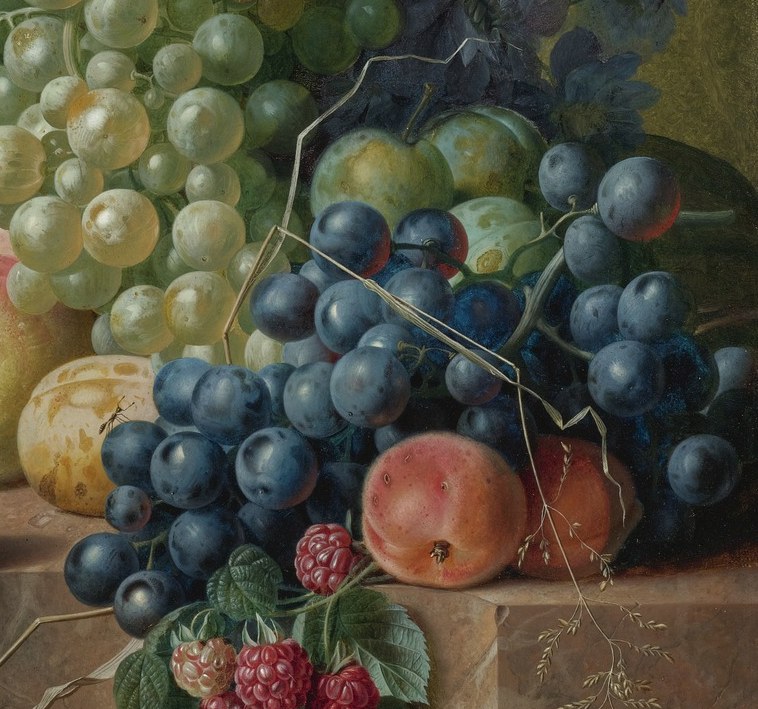
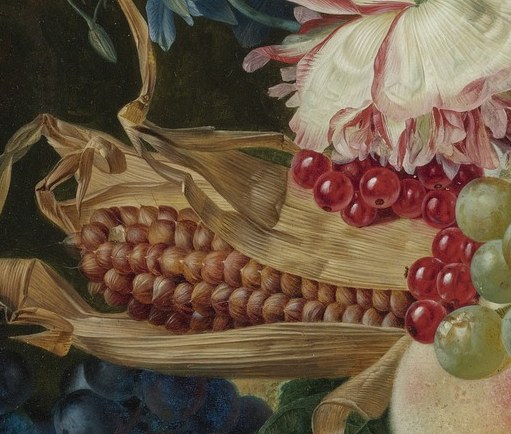
Notice the luscious peaches and plump grapes, rendered with exquisite detail. These fruits, alongside the vibrant bouquet and basket of corn, represent nature’s bounty and earthly delights. However, look closer at the tiny fly resting on a peach. This detail, common in vanitas paintings, serves as a stark reminder of life's fleeting nature and the inevitability of decay.
Van Brussel, a respected Dutch flower and fruit painter, dedicated himself to this genre after an earlier career in tapestry production. His paintings from the 1790s, like this one, are considered his finest. The symbolism within this still life reflects broader cultural anxieties about mortality and the ephemeral nature of pleasure, common themes in art of the period.
The careful arrangement of these elements transforms a beautiful depiction of nature into a profound meditation on life and death.
Details
Transcript
This painter loved to hide messages. Look at the ripe peaches. A fly lands on the fruit. Flies symbolize life's decay. Grapes represent earthly pleasures. But they also signify abundance. Corn was a symbol of wealth. Flowers fade, life is short.