Flowers in a Grotesque Vase by Orsola Maddalena Caccia
This is Flowers in a Grotesque Vase, painted around 1635 by Orsola Maddalena Caccia, and it hangs in The Metropolitan Museum of Art. A nun ran a successful painting studio for six decades in a convent in Moncalvo, Italy. Her still lifes fuse precise botanical observation with a quiet, insistent spiritual vocabulary.
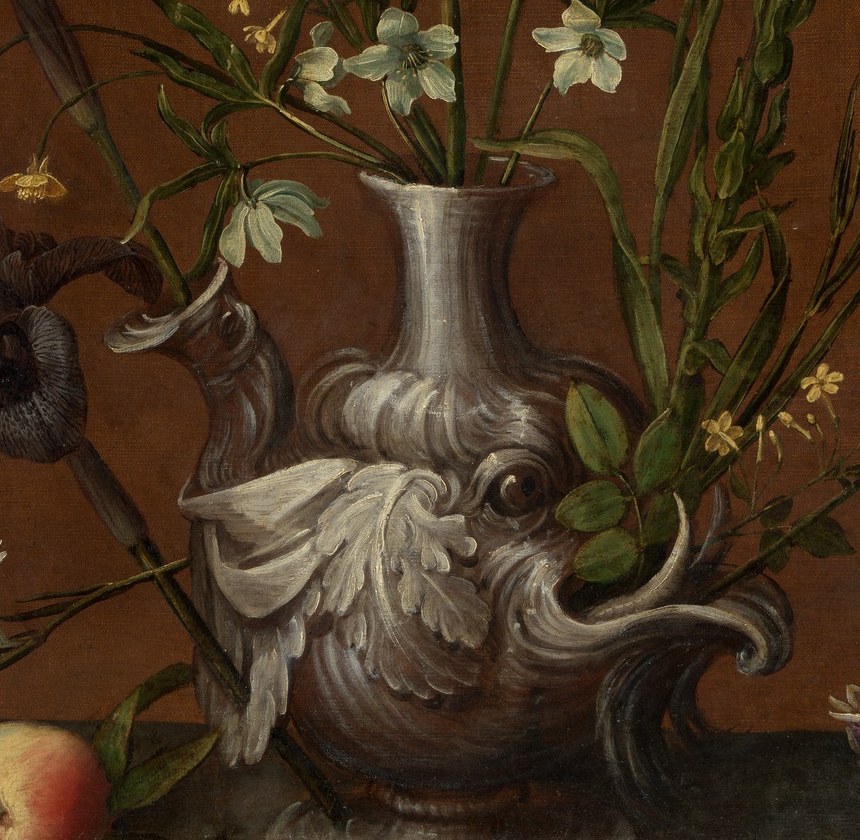
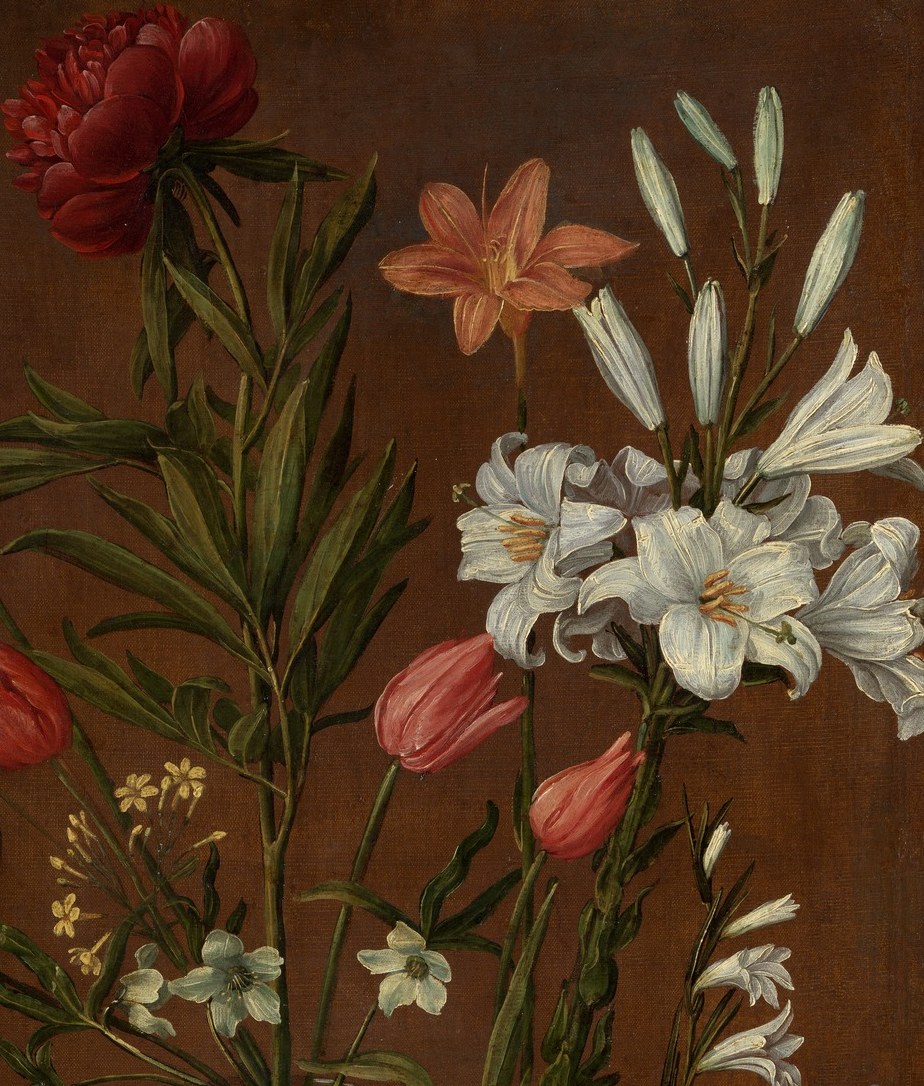
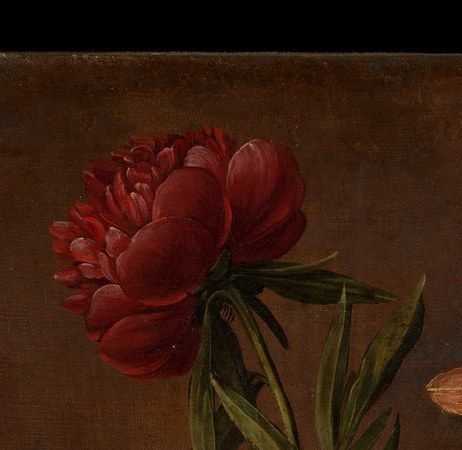
Look first at the vase itself. It is a grotesque, with curving handles that read like scrolling faces. The blooms above it are not random: white Madonna lilies dominate the center, a deep maroon carnation crowns the top as a sign of the Passion, and to its right, on the upper edge, a single orange flower sits almost out of sight.
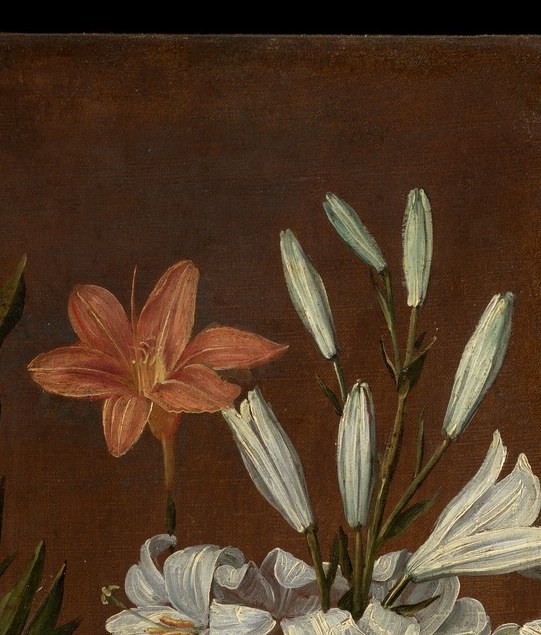
That orange flower is a daylily. In emblem books of the period, the daylily was a symbol of transience: it blooms in the morning and is dead by nightfall. Caccia placed it in a marginal corner, where a viewer who only scans the white lilies will miss it entirely. She played the same game at the lower left, where scattered shells function as pilgrimage tokens and reminders of the empty vessel after the soul departs.
The whole painting is a meditation made physical. A gifted painter who had taken religious vows spent a lifetime producing altarpieces and these quieter compositions, layering meaning into every petal. What else might be hiding in the shadows at the lower right?
Details
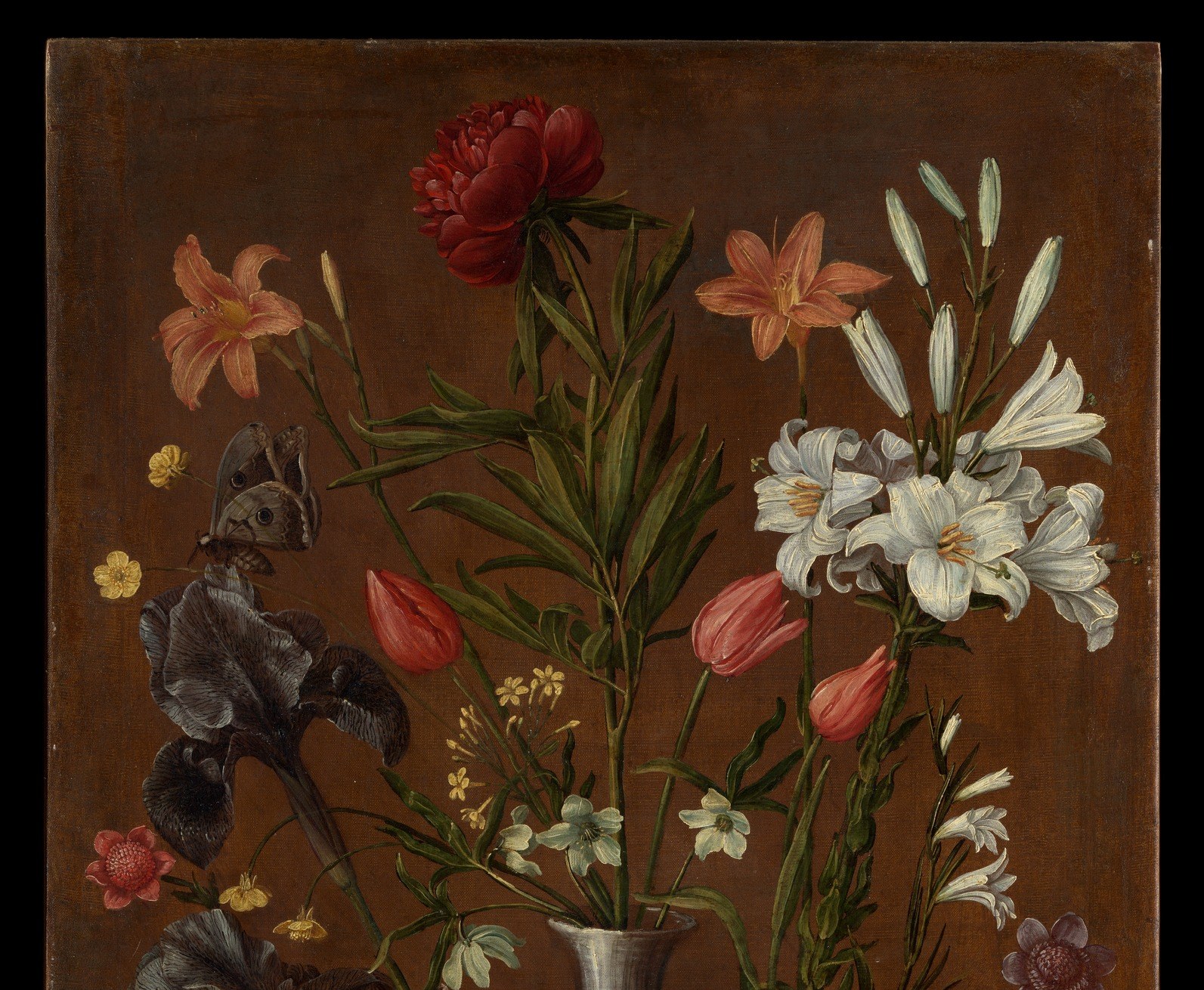
Transcript
A nun painted this. Not a famous workshop. Her father taught her. She was an artist for sixty years. The white lilies are for the Virgin. No surprise there. The dark red at the crown is a carnation for Christ's blood. But look higher. Right edge. That orange flower. A daylily opens and dies within a single day. It is a memento mori. She tucked a thought about death into a corner of her bouquet.