Stilleven met vissen en een kreeft by Augustin Théodule Ribot
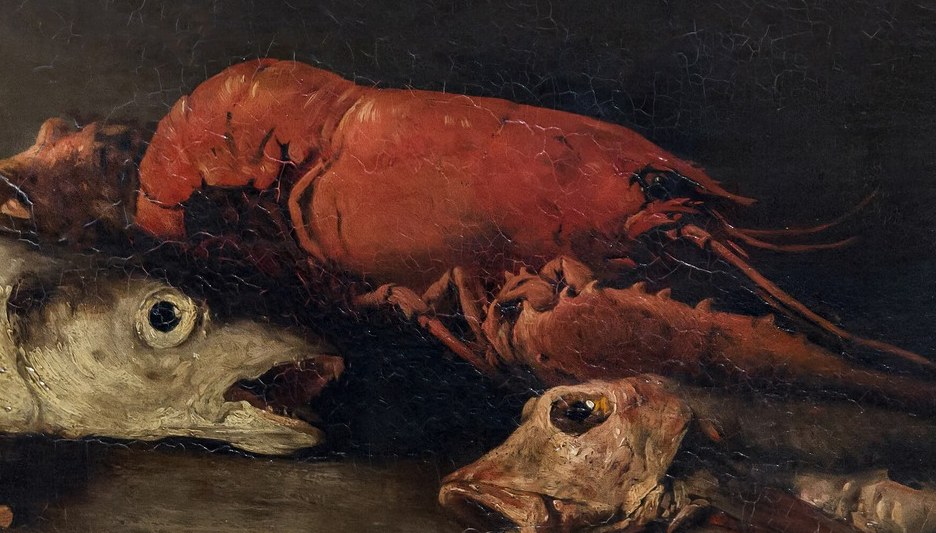
Created around 1850 by French realist Théodule-Augustin Ribot, “Still Life with Fish and Lobster” at the Rijksmuseum offers a quiet, almost understated beauty that rewards close looking. Ribot, largely self-taught, often painted everyday subjects, bringing a remarkable level of detail to his work.
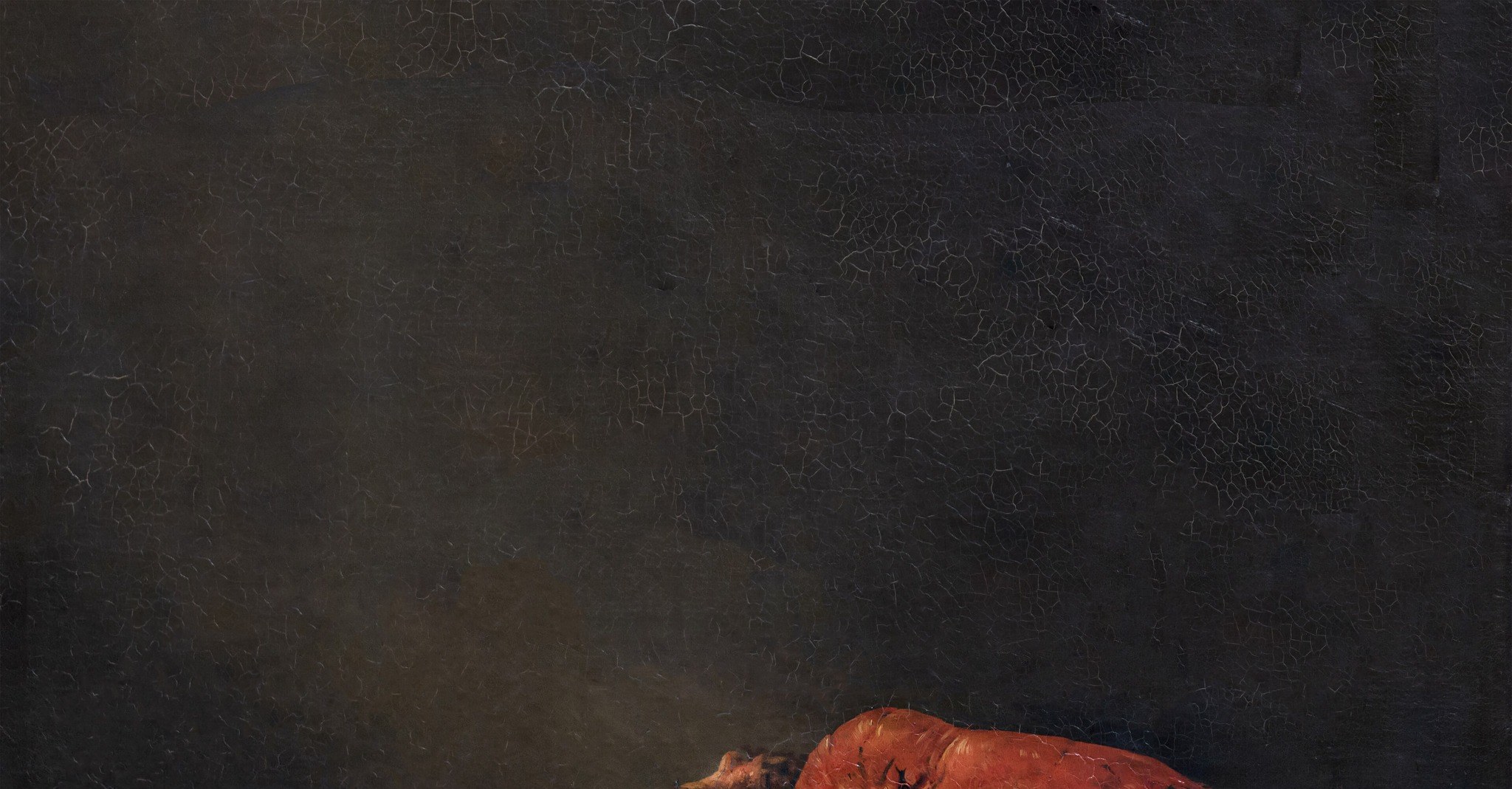
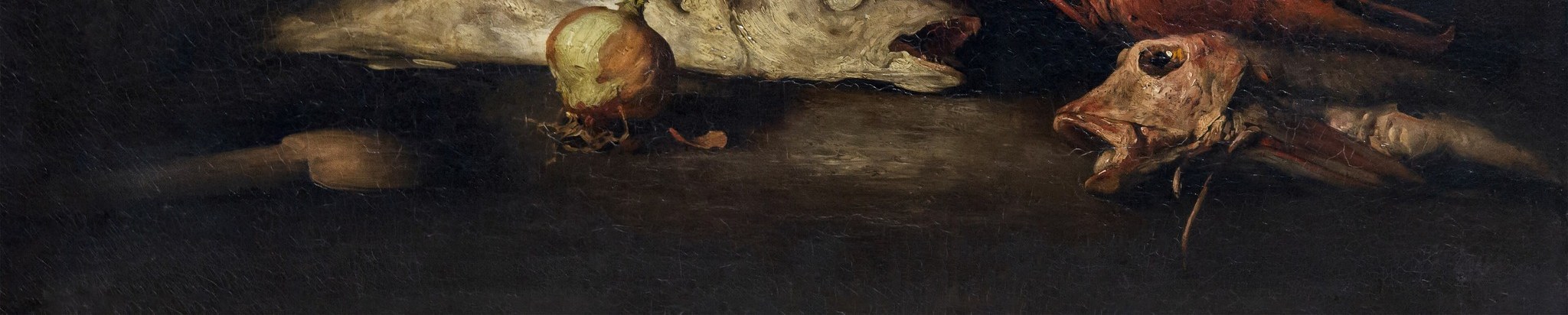
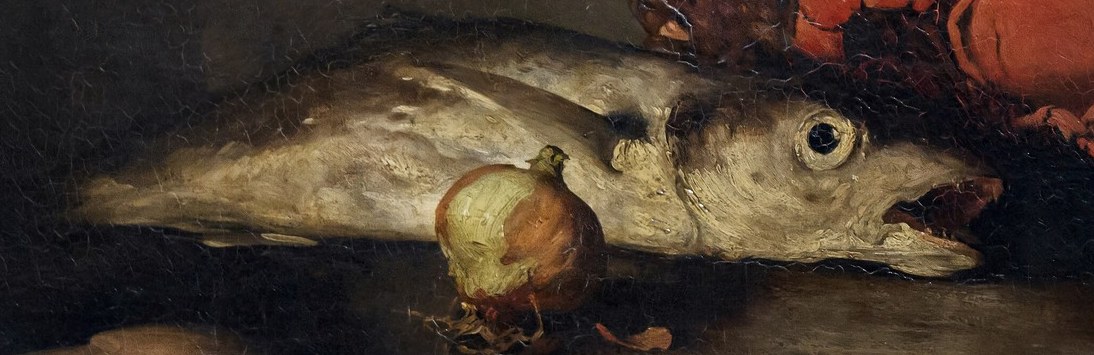
While the vibrant lobster and pale fish are the stars, take a moment to observe the subtle, cracked texture of the dark background and the delicate scales of the fish. These are not merely props, but meticulously rendered elements that speak to the artist's dedication to depicting the world as it truly is.
Ribot began his artistic career decorating gilded frames before teaching himself to paint seriously, often working by lamplight at night. This dedication to craft and observation is evident in how he captures the materiality of each object, from the fish's glassy eye to the humble halved onion.
It's a testament to the idea that even the most ordinary subjects can reveal extraordinary depth when viewed with precision and care. What unexpected details do you find in everyday scenes?
Details
Transcript
This painting from 1850 shows a quiet still life. The French artist Théodule-Augustin Ribot painted common market fare. But look closely at the background. It isn't just dark, it has subtle, cracked textures. Ribot was largely self-taught, working by lamplight at night. This attention to detail defines his realist style.