La Pauvresse de village by Gustave Courbet
Gustave Courbet's "La Pauvresse de village" (The Poor Woman of the Village), painted in 1866, is a stark portrayal of rural hardship. Part of the National Gallery of Art in Washington D.C., it exemplifies the Realist movement's commitment to unidealized honesty.
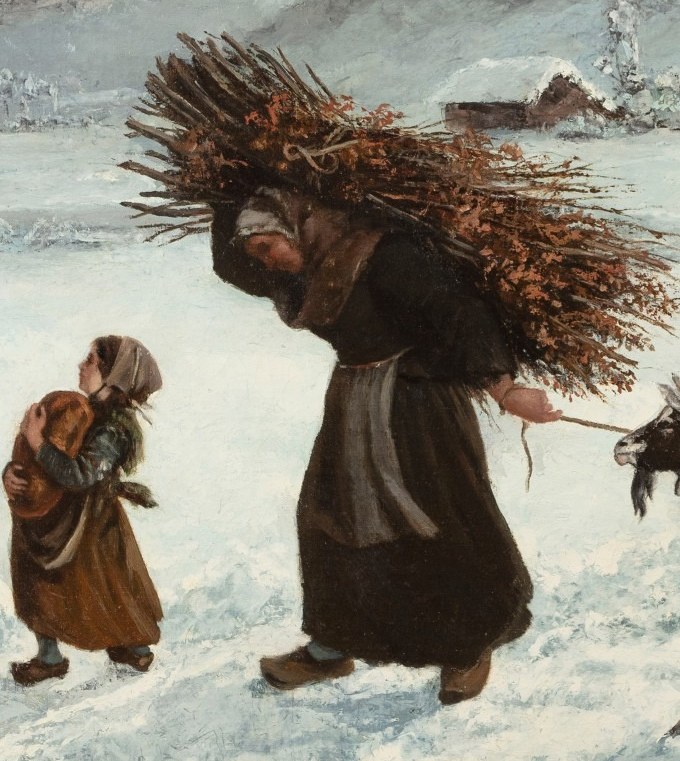
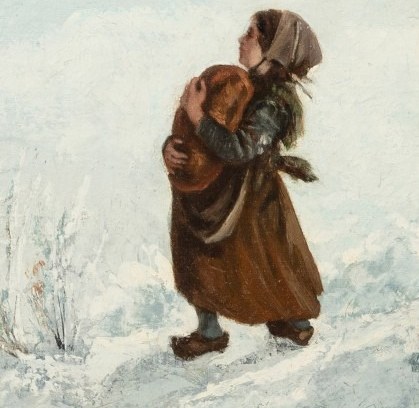
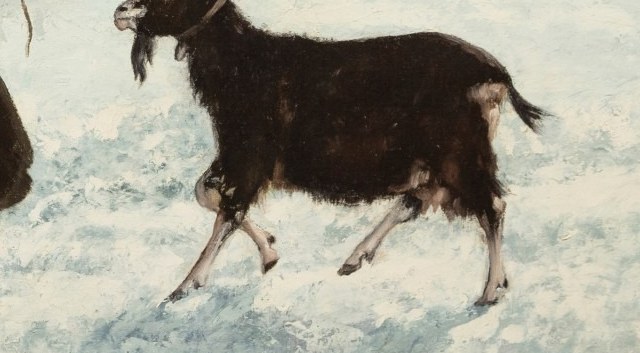
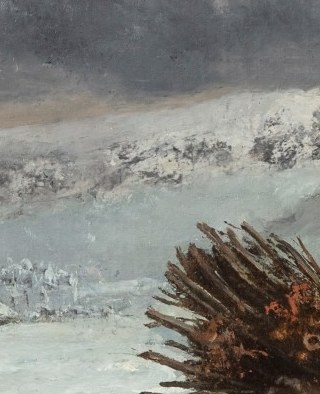
The painting shows a woman bent under a heavy load of firewood, accompanied by a bundled child and a goat, against a snowy landscape. The artist uses thick layers of oil paint and a muted palette to emphasize the physical strain and cold environment.
Courbet, a leading figure in 19th-century French Realism, rejected traditional academic subjects. He chose instead to depict everyday life, focusing on humble figures like this peasant woman rather than mythological or historical heroes. His independence paved the way for future movements like Impressionism.
What do you notice first in this powerful depiction of human resilience?
Details
Transcript
This painter turned away from grand subjects. He chose instead to show the struggles of ordinary life. This woman carries a heavy load of firewood. Her posture shows the immense burden she bears. Beside her, a child walks bundled against the cold. The muted colors reinforce the harsh realism of the scene.