Child in a Straw Hat by Cassatt, Mary
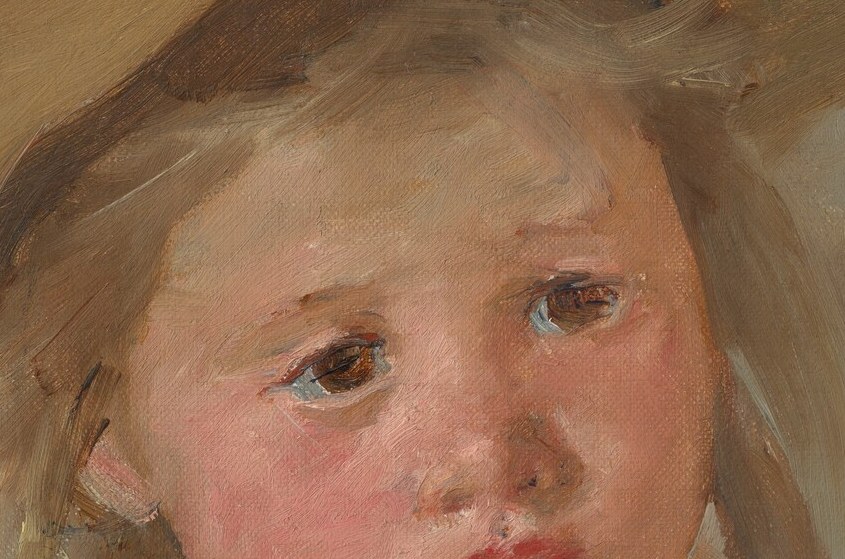
Mary Cassatt's 'Child in a Straw Hat' (c. 1886, National Gallery of Art, Washington D.C.) is a portrait of resistance. The young sitter, likely a girl from the French village near Cassatt's country house, does not want to be there, and Cassatt does not try to hide it.
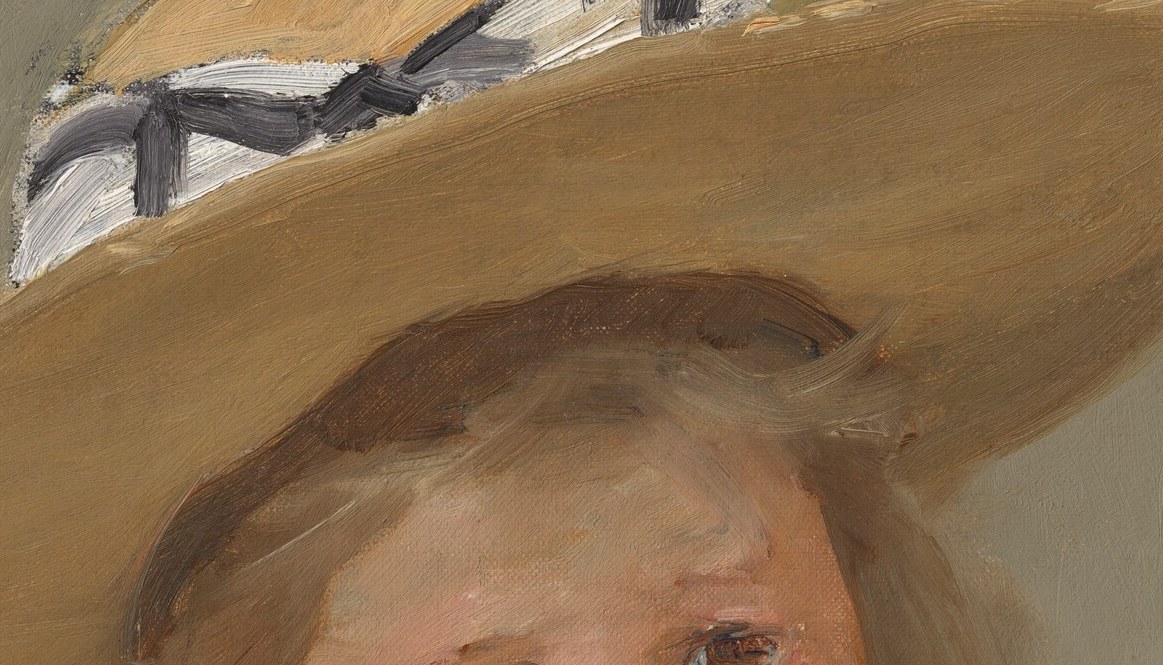
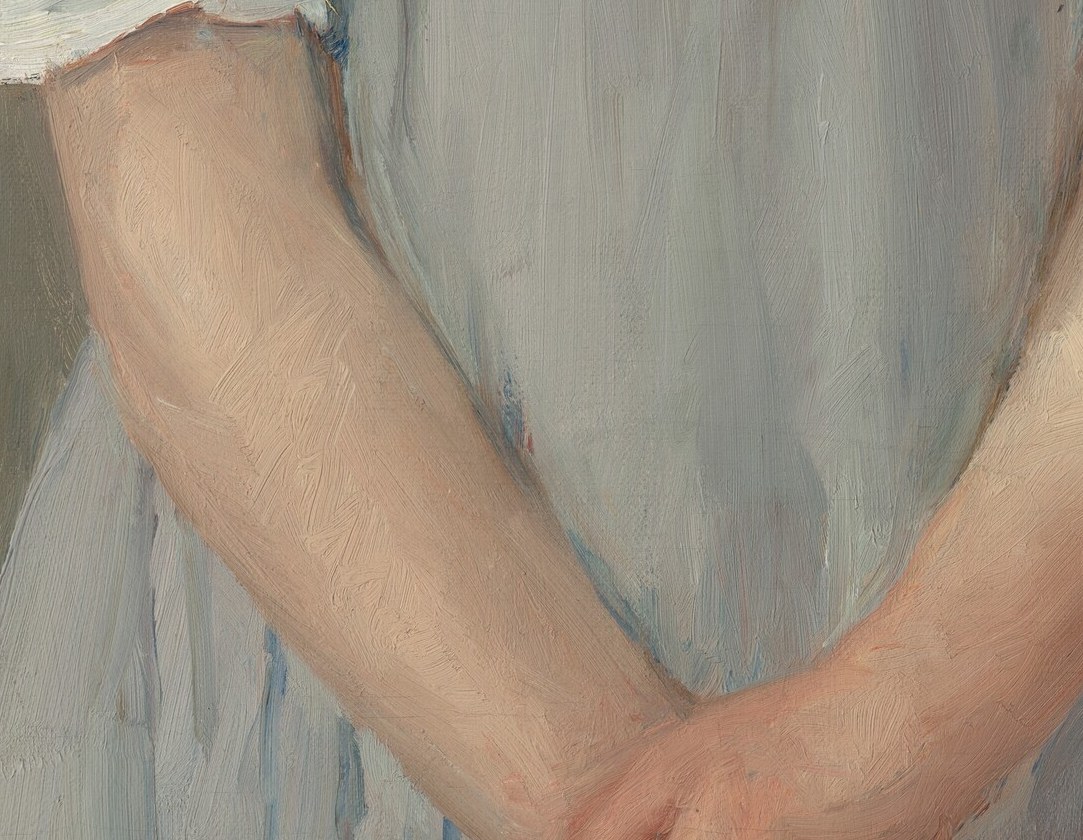
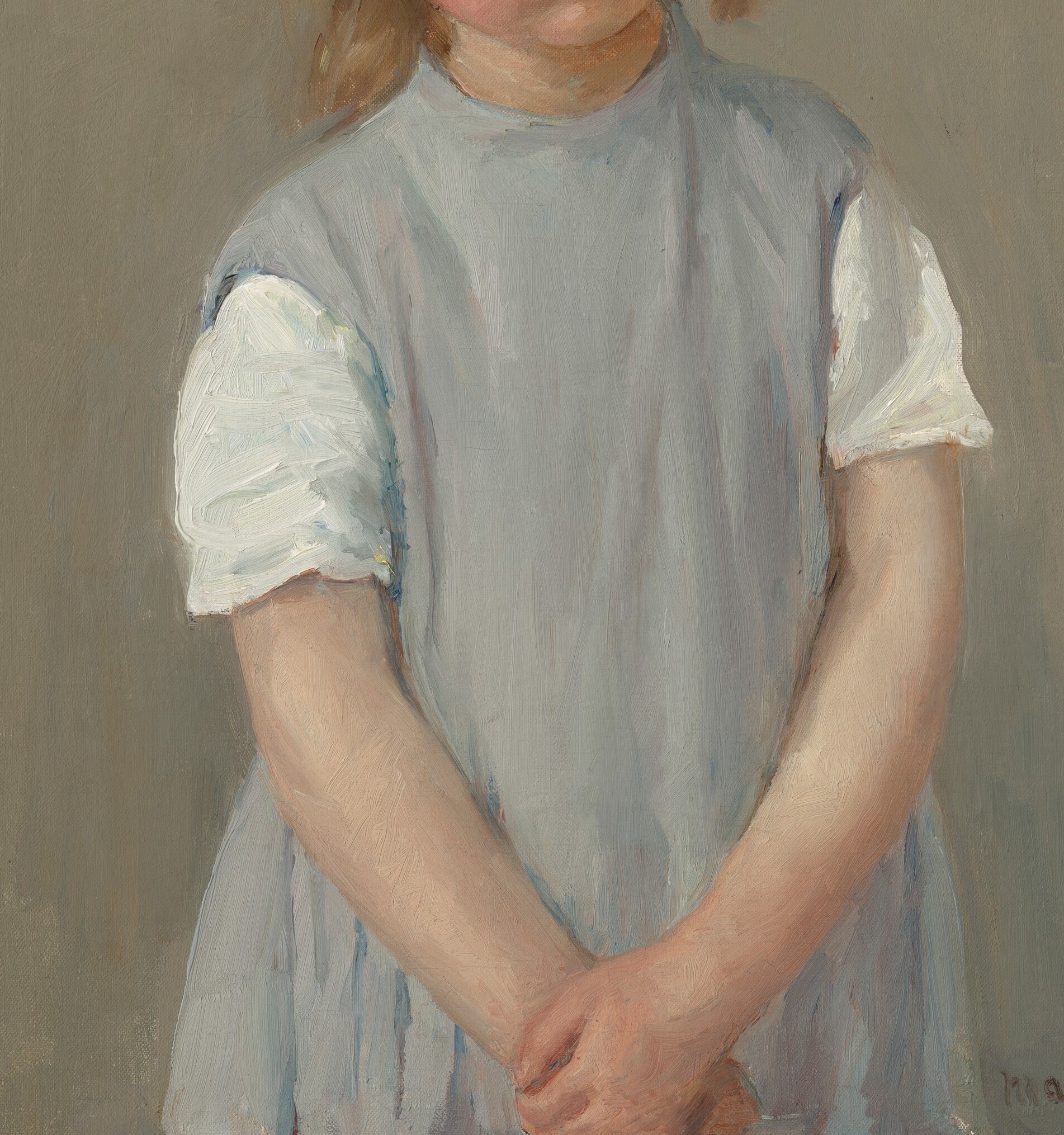
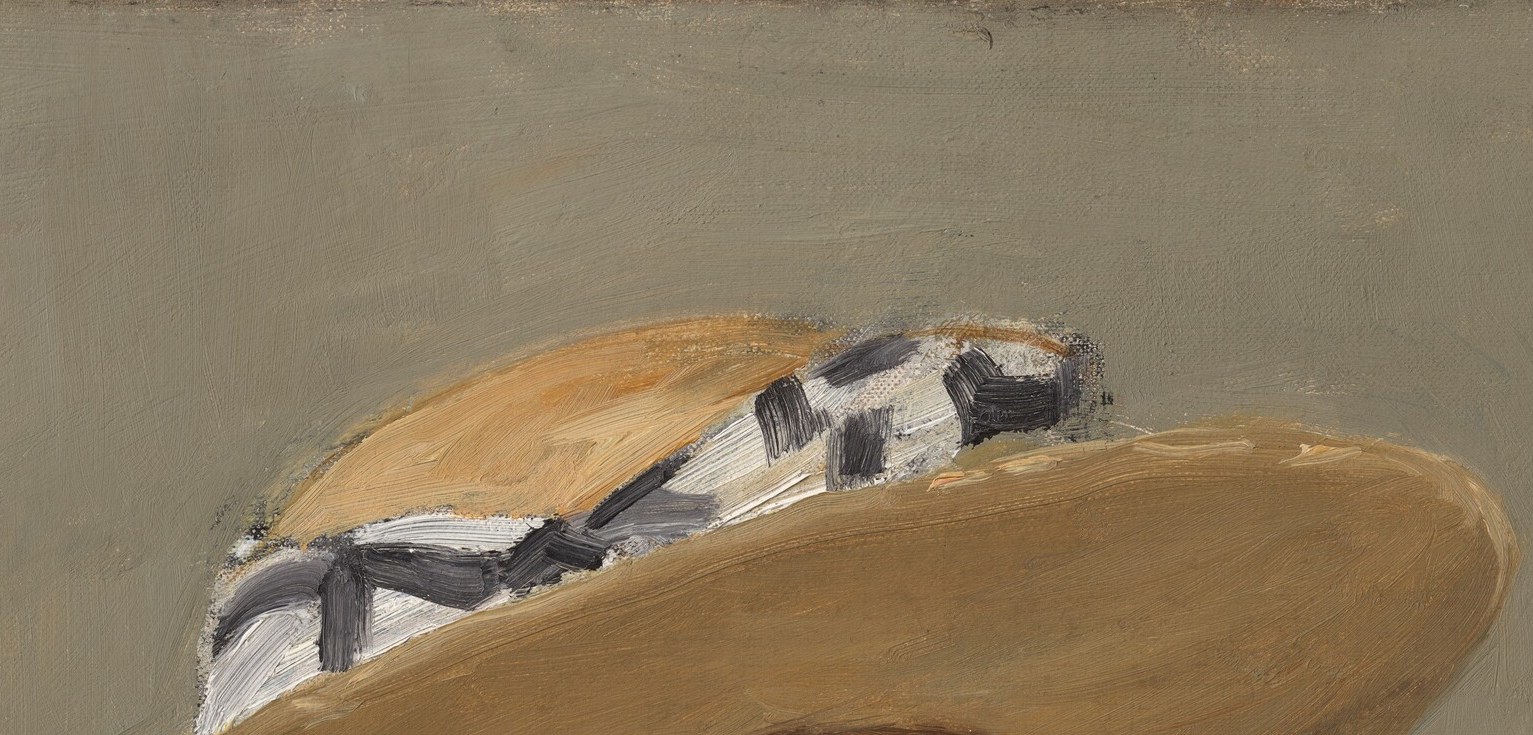
Look at her mouth: closed, pulled slightly inward, the compressed neutral of a child told to hold still one more minute. The hat brim shades her eyes so we cannot quite meet them, and her hands rest in front of her with the loose, unstudied weight of real childhood. Cassatt paints the blue pinafore in broad summary strokes, the straw hat with short directional flicks that read as woven texture without ever becoming literal.
Cassatt befriended Degas and exhibited with the Impressionists, becoming one of the few Americans inside the movement. She carved out a subject the others largely ignored, the private, domestic world of women, and treated it with the same unblinking attention that Monet gave haystacks. No sentimentality, no idealization.
This painting is about seeing someone who has not yet learned to perform. The grey background is a non-space, a studio wall left raw at the edges. Cassatt gives us nothing to look at except the child herself. That was the whole point.
Details
Transcript
She looks like she lost an argument. That small, pursed mouth. The heavy eyelids. Real reluctance, not a pose. Cassatt paid models from the local village to sit for her. Children fidget. This girl's hands are still settling into place. So Cassatt worked fast, broad, visible brushstrokes that don't hide the speed. The hat brim shadows her eyes, but the woven straw is alive with light. No furniture, no window. Just a child in a grey nowhere, entirely present. An American in Paris, painting women and children the world overlooked.