Little Girl in a Blue Armchair by Cassatt, Mary
View the artwork: Little Girl in a Blue Armchair →
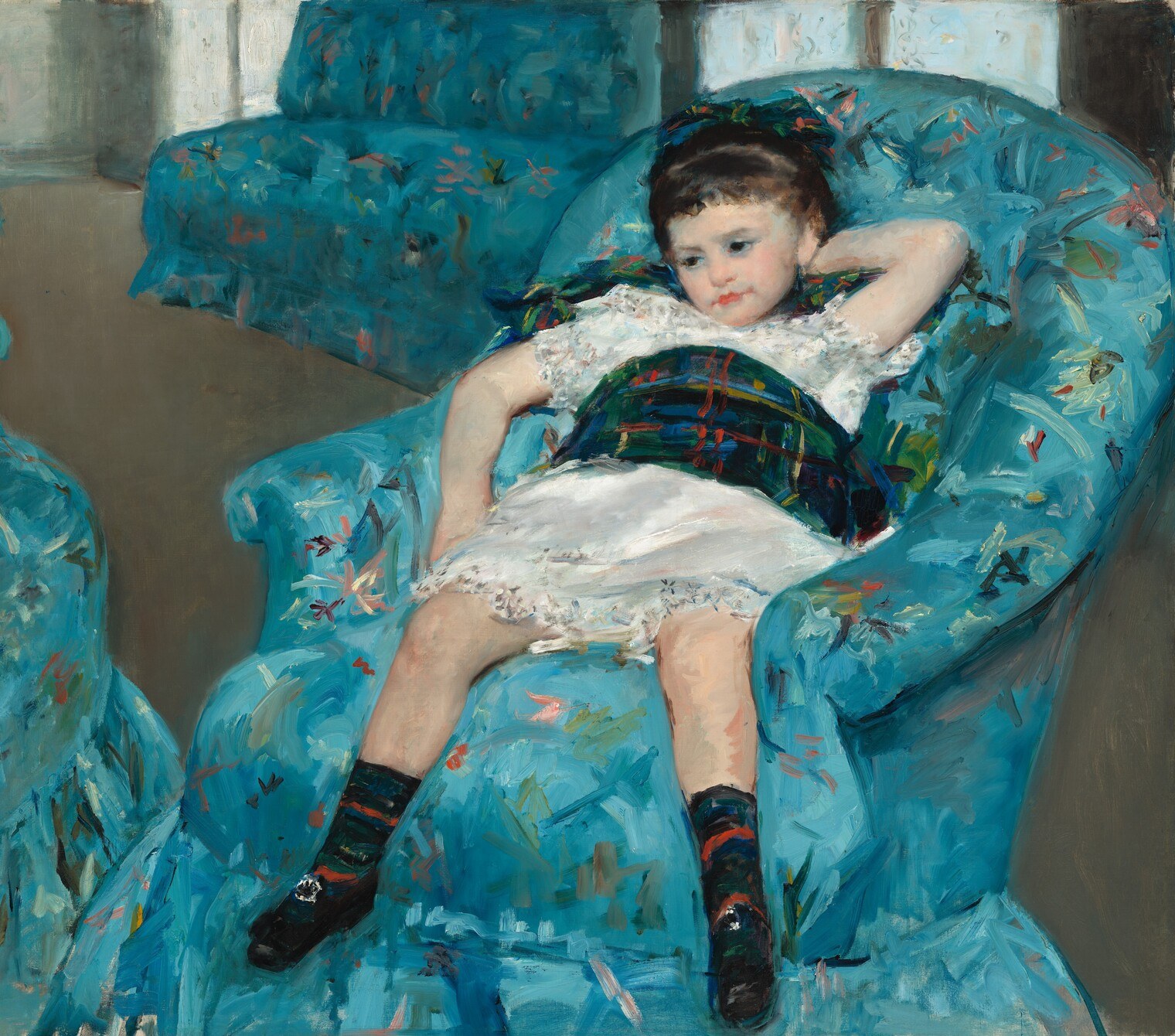
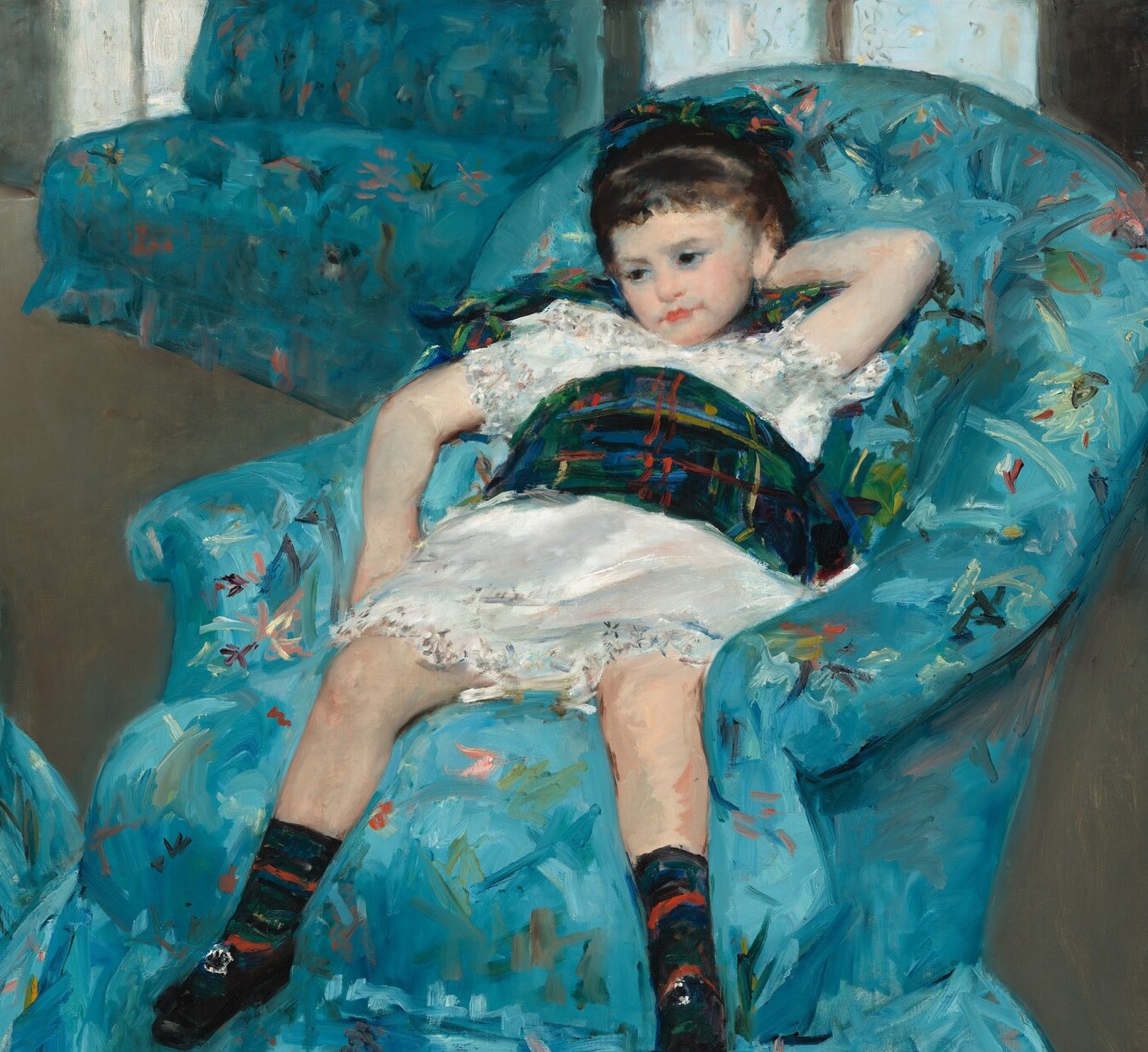
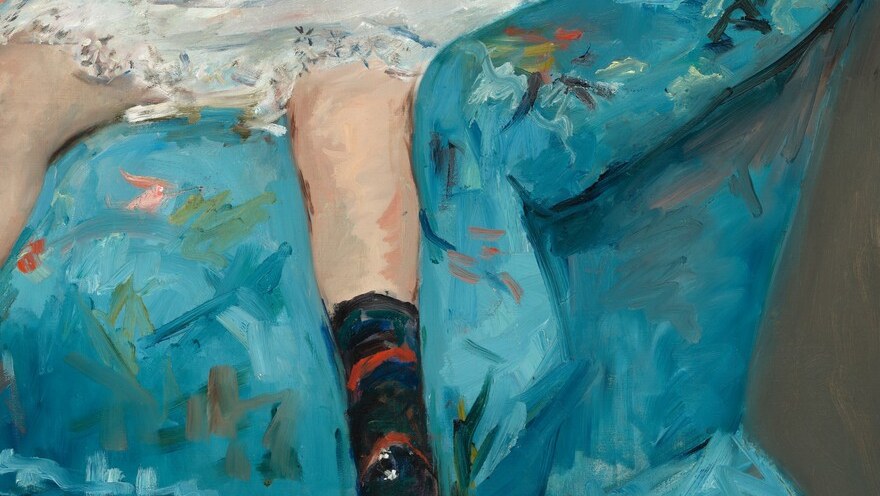
Mary Cassatt’s Little Girl in a Blue Armchair, painted in 1878 and now in the National Gallery of Art in Washington, D.C., began as a public failure. Cassatt submitted it to the Paris Salon, the era’s most important art exhibition, and the jury rejected it outright. The reason was exactly what we see: a bourgeois girl slouching with unguarded, almost rude physical honesty in an enormous blue chair. It broke every rule of formal child portraiture.
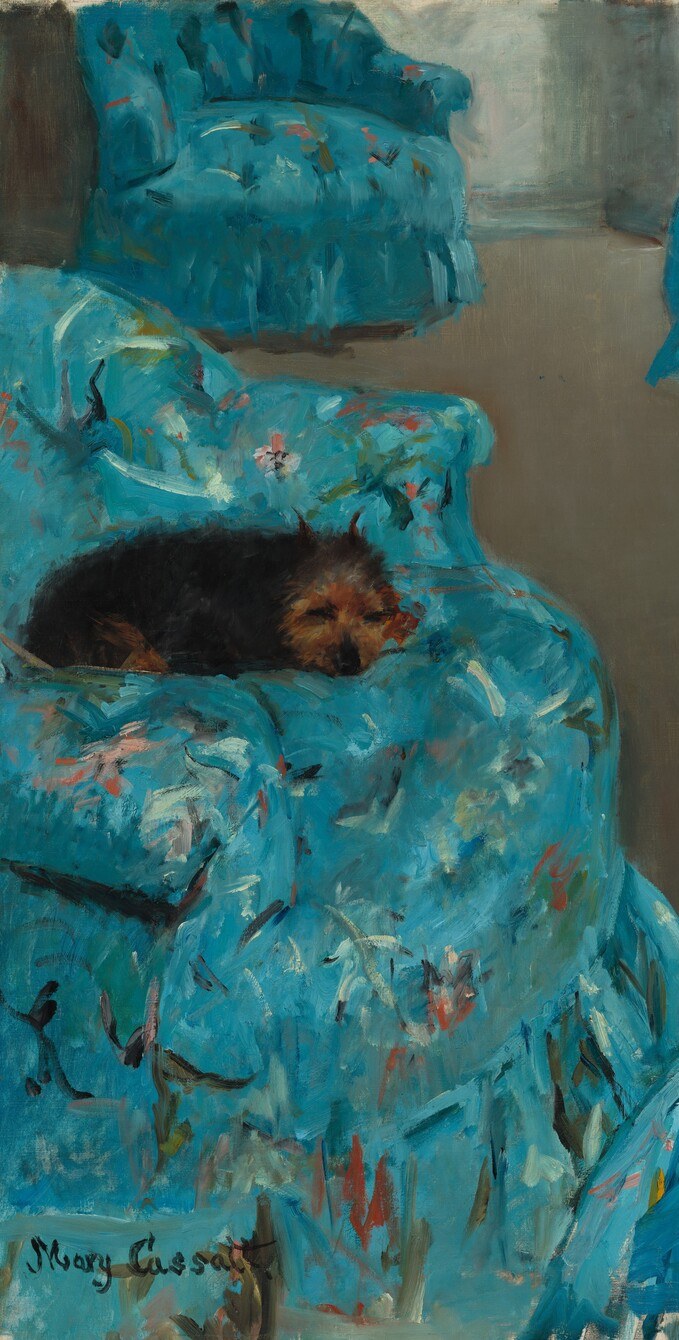
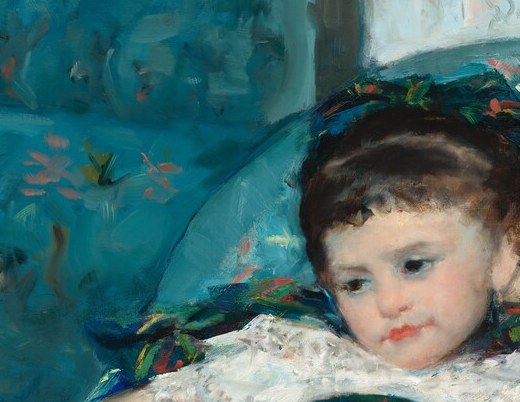
Look at the complete physical abandon, arms bent behind the head, legs dangling, Sunday-best shoes pointing nowhere in particular. The white muslin dress is rumpled, the face glazed with boredom. The massive chair swallows her. And then there is the detail most people scroll past: a tiny dog curled asleep in the identical blue chair to the left. That dog, equally boneless and limp, transforms the image from a failed portrait into a domestic scene of pure, shared exhaustion.
Cassatt showed the canvas to her friend and mentor Edgar Degas, who did something unusual: he took a brush and retouched sections himself. Historians note that Degas worked on the background and the chairs. So the final image carries two Impressionist hands, an American woman fighting for professional recognition, and the French master who championed her. The Salon said no. Today it hangs as one of the most beloved American paintings in existence.
What small, overlooked figure has shifted a whole painting’s meaning for you?
#arthistory #marycassatt #impressionism
Details
Transcript
The girl slumps as no Victorian child was supposed to slump. Cassatt submitted this to the 1878 Paris Salon. It was rejected. The sprawl, the blank face, it was too raw, too real, too modern. But Cassatt had a secret weapon. Her friend Edgar Degas stepped in. Degas personally reworked areas of the canvas. Look in the other armchair. The boneless, drowsy dog recasts the whole scene. It is not a portrait. It is a secret between two artists about how children really are.