Spring by Jean-Baptiste Pater
Jean-Baptiste Pater, a prominent Rococo painter, built his career largely on the teachings of his mentor, Antoine Watteau, and this painting, *Spring* (1728), now at The Cleveland Museum of Art, shows his lasting influence.
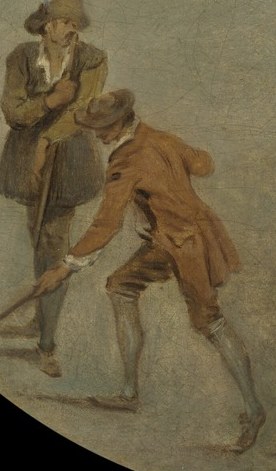
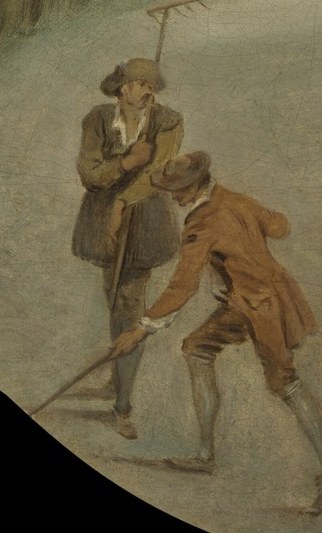
Pater, born in 1695, trained under Watteau briefly but later claimed these few weeks were the source of all his knowledge. You can see Watteau's touch in the graceful figures and the overall pastoral theme, characteristic of the Fête galante style.
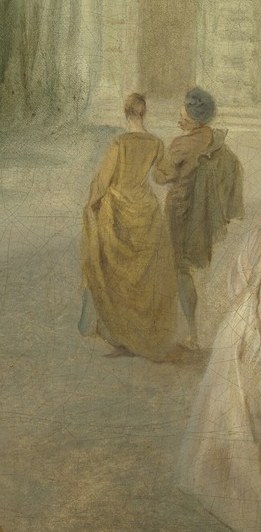
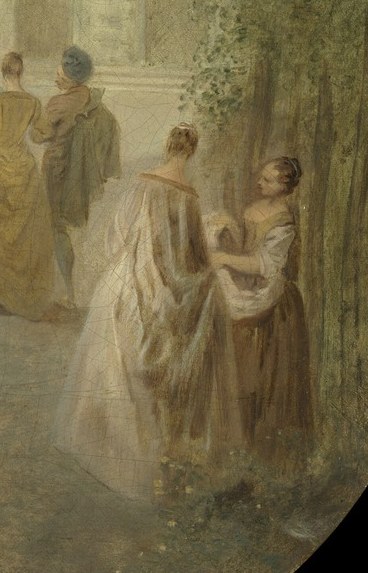
Notice the shimmering lines used to depict the women's dresses and the foliage, a technique Pater refined. Despite Pater's distinct style, the essence of Watteau's elegant, idealized scenes of leisure in nature remains a clear influence. Pater was accepted into the Académie in 1728, the same year he created *Spring*, solidifying his place in French Rococo art.
What do you think of Pater's homage to his teacher?
Details
Transcript
This painter was known for imitating his teacher. His name was Jean-Baptiste Pater, and this is his Spring. Pater studied briefly under Antoine Watteau, a famous Rococo artist. But Pater later claimed he learned everything from Watteau. Look at the woman in the yellow dress. She moves with a shimmering quality, a Pater signature. Yet even this movement mirrors Watteau's elegant figures. Pater built a career on what he learned in just a few weeks.