The Artist Painting a Cow in a Meadow by Hendrik van de Sande Bakhuyzen
Hendrik van de Sande Bakhuyzen painted himself painting a cow. The painting is called "The Artist Painting a Cow in a Meadow," and it lives at the Rijksmuseum in Amsterdam. Made around 1850, it's a self-portrait, a landscape, and a sly conceptual trick all in one quiet scene.
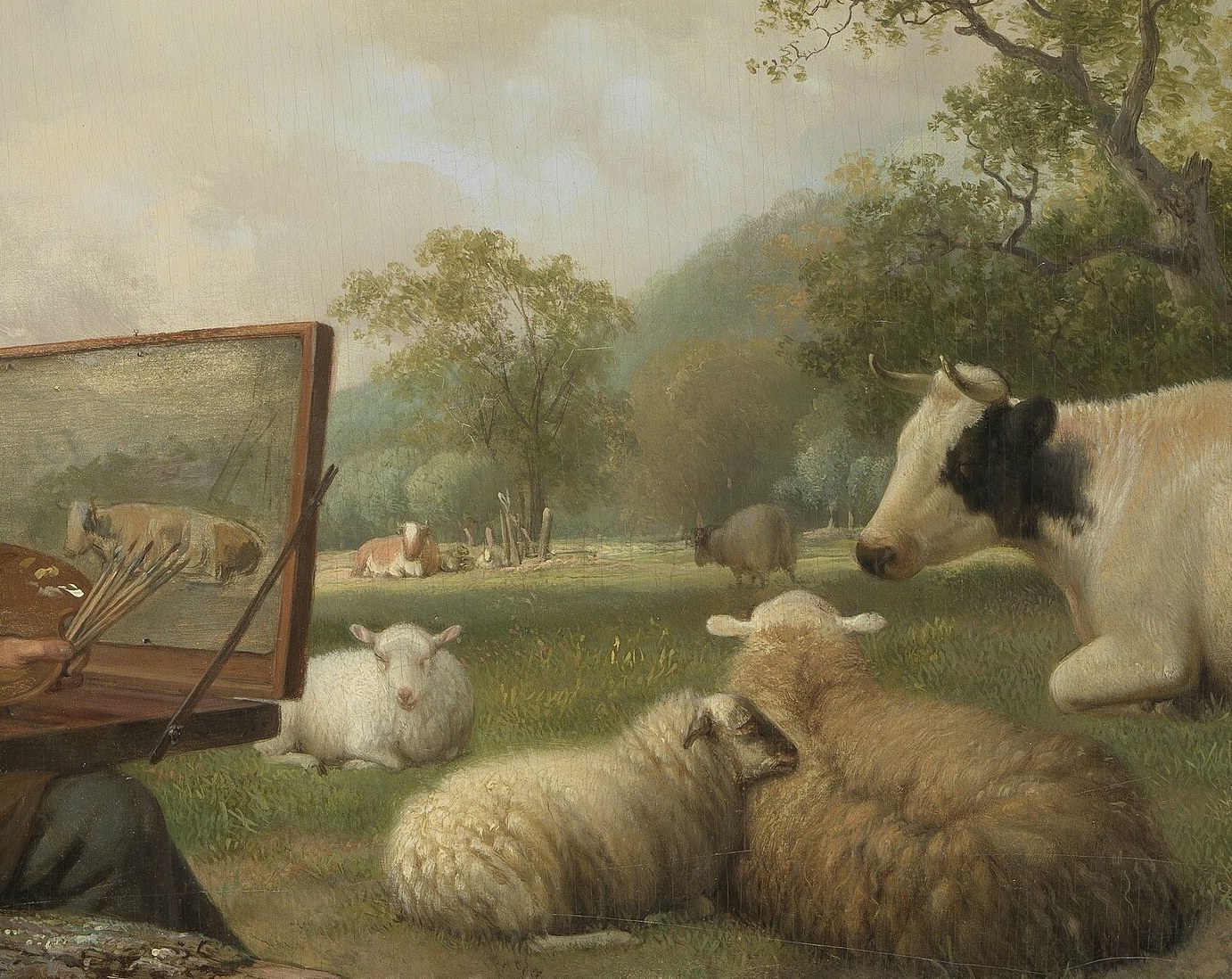
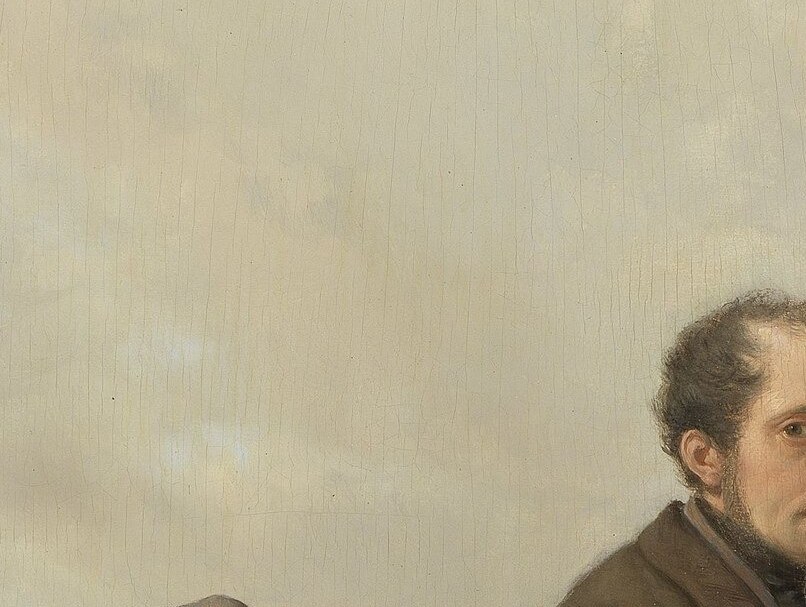
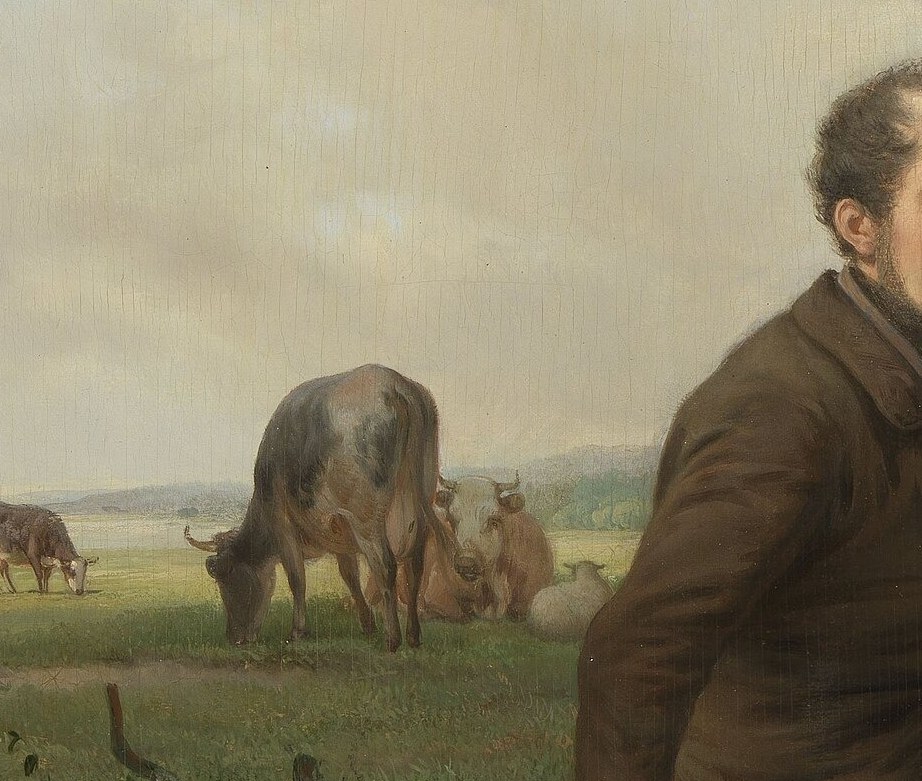
Find the artist seated in the left middle ground, beneath the broad dark hat. He's holding a small canvas on his lap. Now look at that canvas: you can just make out the silhouette of the same spotted cow who stands before him, mid-stroke. The painting holds its own making.
Bakhuyzen was a leading Dutch Romantic landscape painter and an influential teacher. This work belongs to the Barbizon School, a movement that prized painting outdoors, directly from nature. By putting himself in the field with his easel, Bakhuyzen closes the loop between the observer, the act of painting, and the animal subject.
A cow in a meadow seems humble. But look again: the painting contains a painting, and that painting contains this one. Where does the loop end?
Details
Transcript
A quiet meadow under a big Dutch sky. A spotted cow stands in the sun. Now look past the cow, into the shadow. A man in a wide hat is already painting her. He's the artist. He put himself in his own scene. Look at the canvas he's holding. You can see the same cow, half-finished in paint. The painting holds the painting that made it.