Untitled by Master of the Jaunpur Kalpasutra
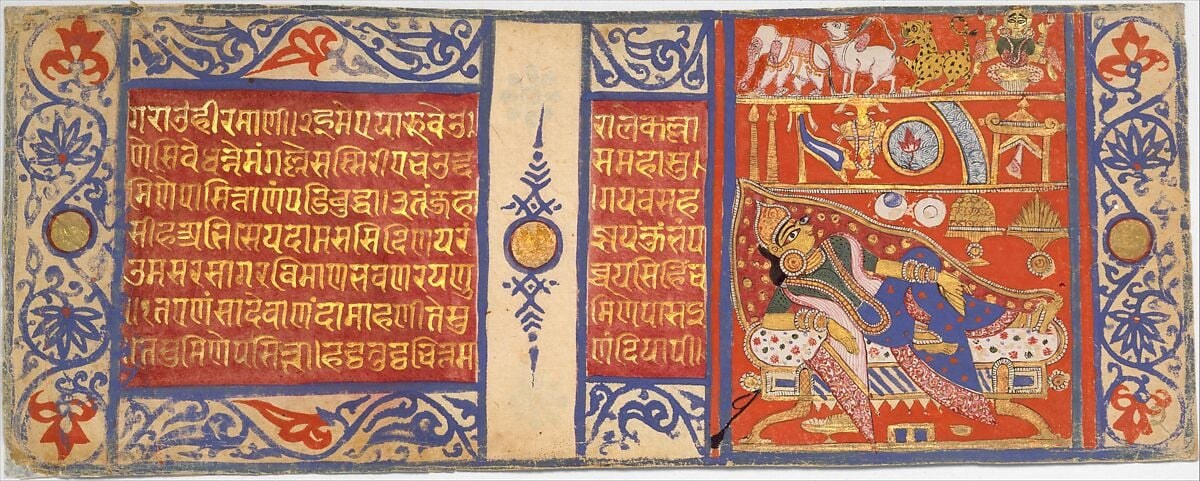
This is a folio from a Jain Kalpasutra manuscript, painted by the Master of the Jaunpur Kalpasutra around 1465, now in a private collection.
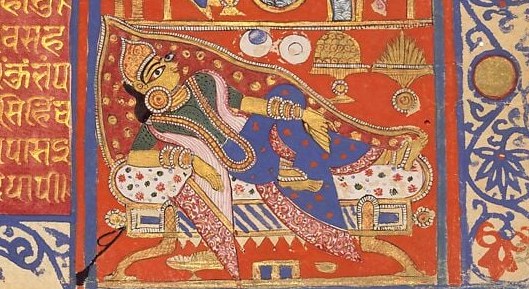
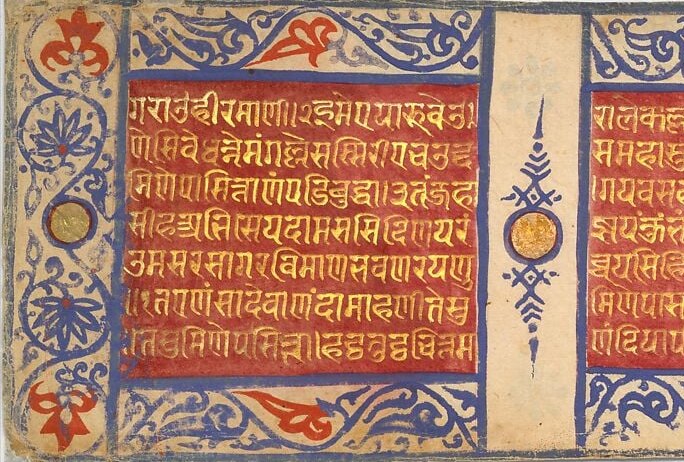
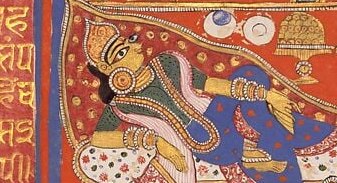
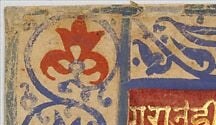
It shows a garden scene with female figures and elephants, a visual narrative from the life of Mahavira, probably the dream of his mother. The composition splits the page cleanly: dense red-ground Sanskrit text on the left, a painted miniature on the right. Our camera moves from the script to the figures, then in tight on the jewelry and the border's gold lotus rosette. What looks like a single small painting is in fact a book page, and the red disc at center marks the hole where string once bound it into a larger manuscript.
The folio was made in Jaunpur, in present-day Uttar Pradesh, under the Sharqi Sultanate. That is the twist: a Muslim court paid Jain scribes and painters to produce a sacred Jain text. The 15th-century Jaunpur sultans were notable patrons of learning who supported poets, musicians, and religious scholars across traditions. This manuscript is a physical witness to that interfaith patronage, a fact most viewers of the painting alone never learn.
Read the painting left to right. First the word, then the image. Even the thin red vertical band that divides text from illustration carries meaning: in Jain devotional practice, scripture and vision were distinct but inseparable paths into the same truth.
Details
Transcript
It looks like a sacred story. Jain nuns and elephants in a garden. But this book was paid for by a Muslim sultan. 1465. Jaunpur, in northern India. The Sultan's court hired Jain scribes to copy scripture. Look at their jewelry. Every necklace and armband painted with a single hairlike line. The gold leaf is still bright after five hundred and sixty years.