Three Gods of Good Fortune Visit the Yoshiwara; or “Scenes of Pleasure at the Height of Spring” by Chôbunsai Eishi
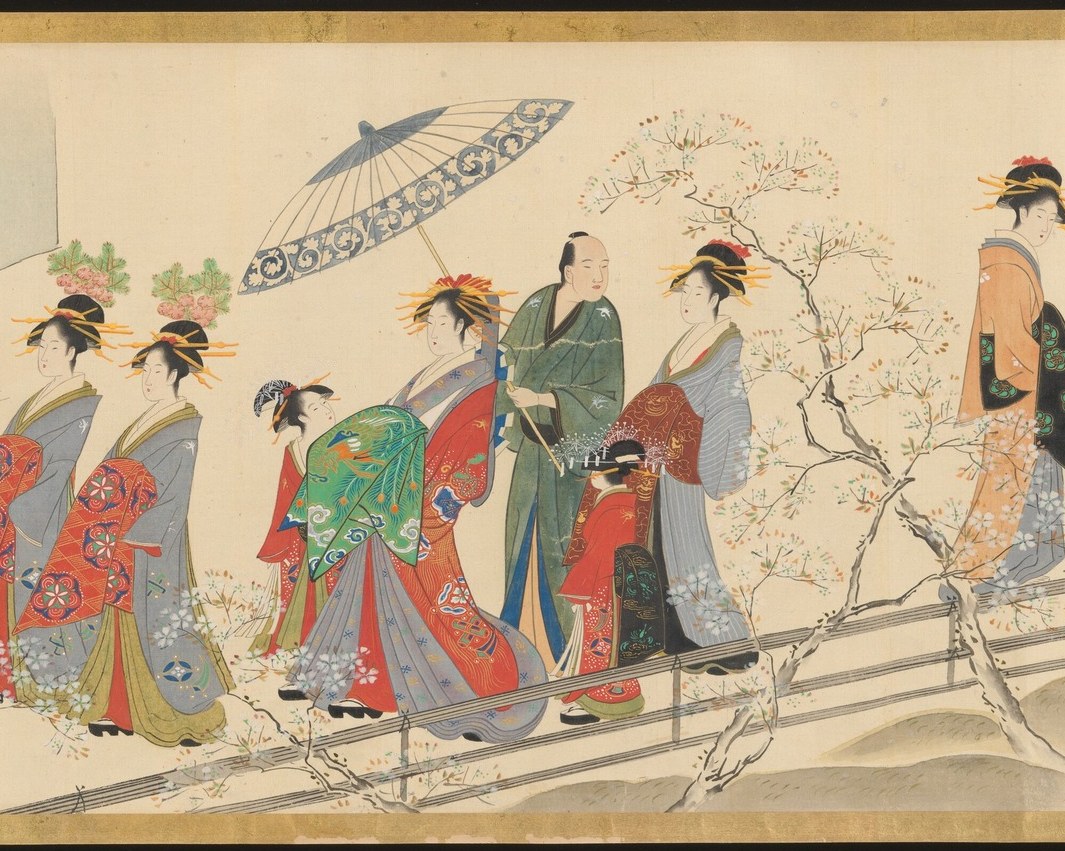
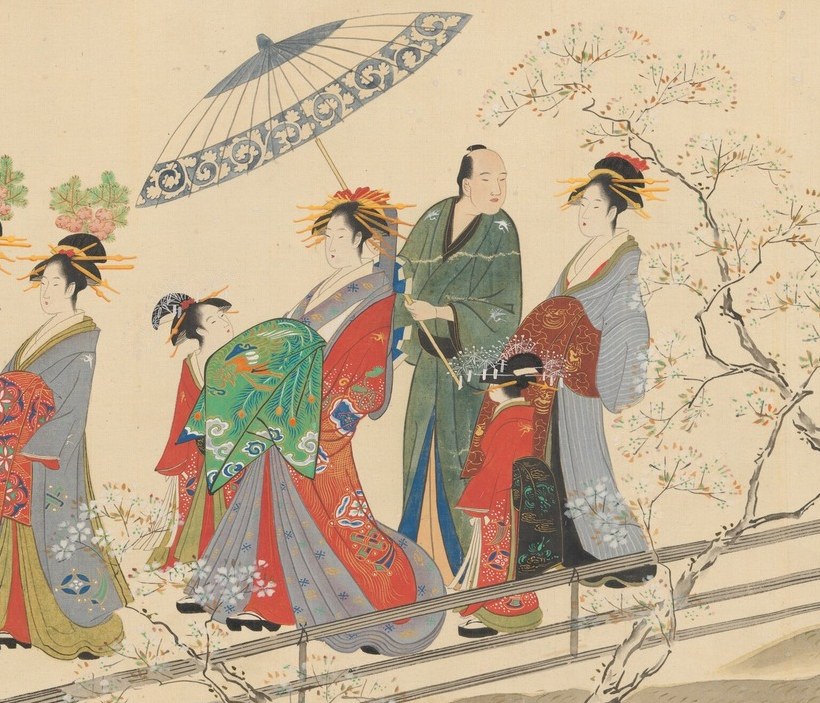
A winter morning in 1816. A procession of high-ranking courtesans moves through the snow outside the gate of the Yoshiwara pleasure district. What you are seeing is an oiran dochu, a formal public parade that was one of the most precisely documented social rituals of Edo-period Japan.
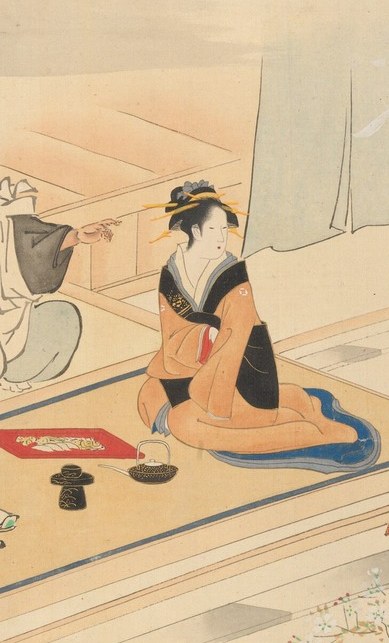
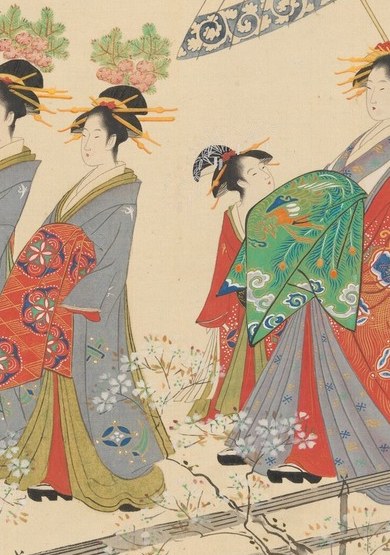
Chôbunsai Eishi records every detail that mattered. The number and style of hairpins in a courtesan's towering coiffure encoded her exact rank. The small child walking in the procession is a kamuro: a young attendant whose presence certified that the woman beside her was an elite oiran. At the far left, two robed figures sit and watch. Eishi identifies them as the Three Gods of Good Fortune in mortal guise, making this not just a documentary record but an auspicious New Year's scene.
Eishi was born into a samurai family with direct ties to the Shogunate and a generous stipend. He left that life behind to become an artist. By 1801, he had stopped making prints entirely to focus on painting, and this 1816 work shows why: the kimono patterns are not generic decorations but specific textile designs he studied and recorded, each one identifying an individual within the ceremonial group.
The bare plum branches on the right and the pale, empty sky do something most viewers miss. They make the cold air itself a presence in the scene. What do you notice first: the vivid red kimono, or the stillness of the watching gods?
Details
Transcript
A pale winter sky empties over the Yoshiwara gate. On a snow-covered morning, a formal procession begins. These two seated figures are the Three Gods of Good Fortune. They watch as the women of the pleasure quarter parade past. Her hairpins are not just decoration: they encode her rank. The child beside her is a kamuro, a young attendant to elite courtesans. Each kimono pattern records a real textile design of the 1810s. The procession extends beyond the frame. It was larger than any single view.