Still Life with Teapot and Fruit by Paul Gauguin
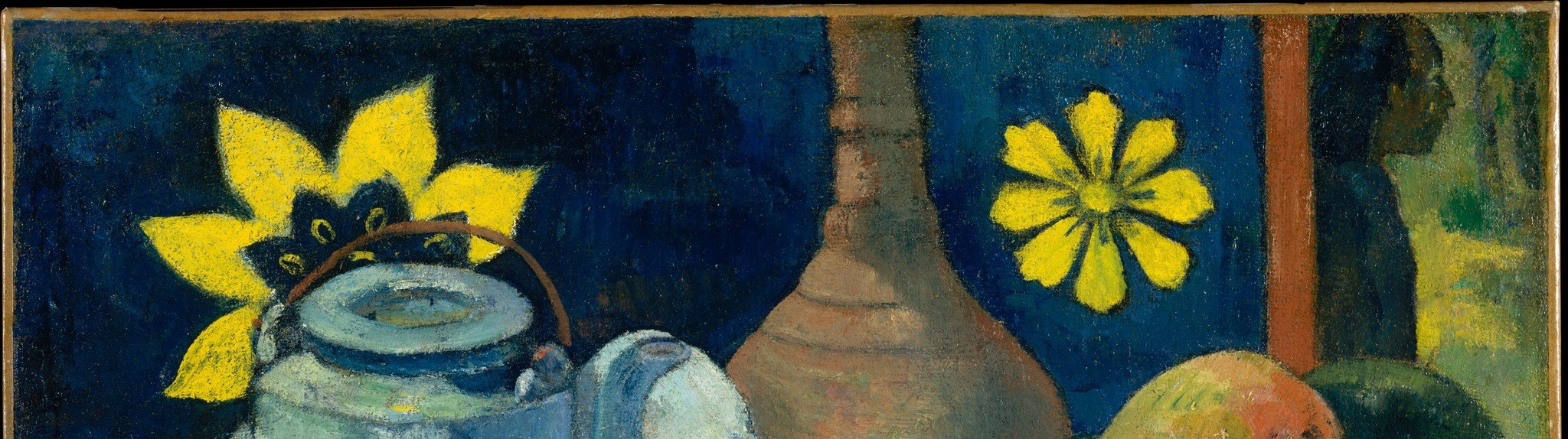
This is Paul Gauguin's 'Still Life with Teapot and Fruit,' painted in 1896 and housed at The Metropolitan Museum of Art. It looks like a simple domestic arrangement, but it is really a quiet manifesto. Every object maps the distance between the European art world Gauguin had rejected and the Tahitian life he had chosen.
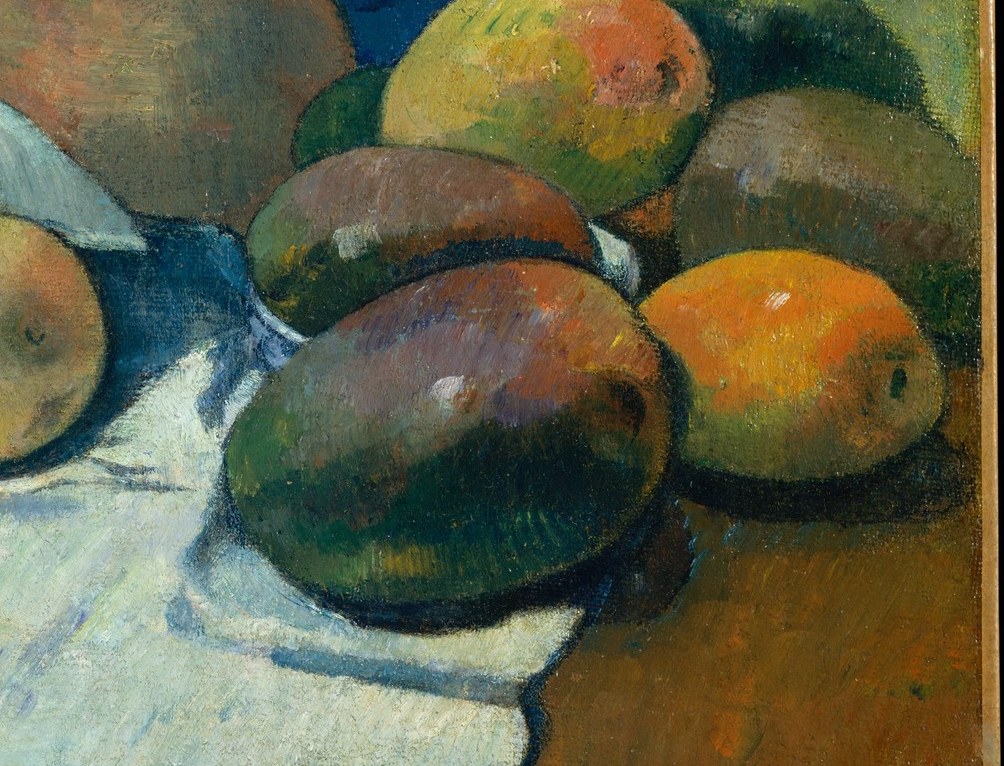
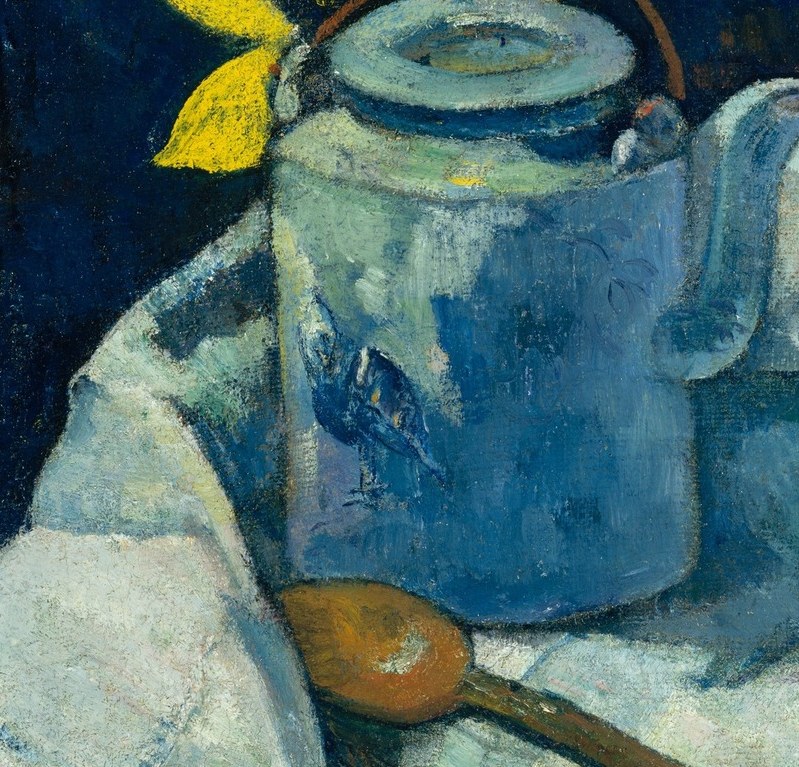
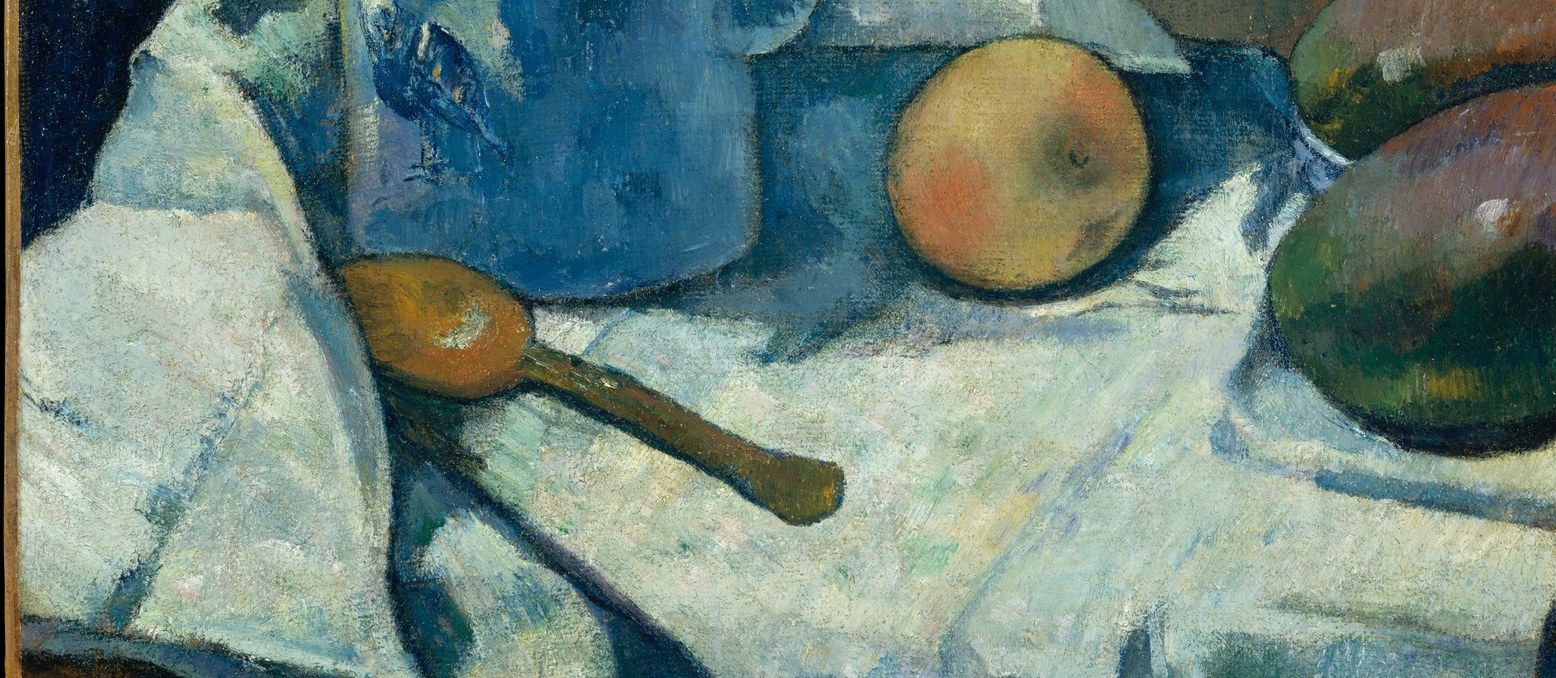
Look at the central blue-and-white teapot, a European ceramic set against a flat, non-naturalistic blue-green wall. The ripe mangoes are not Parisian apples; they are the fruit of the tropics, painted with the thick, visible brushstrokes of a man who wanted to build form through color, not illusion. The white cloth beneath is luminous, but its deep shadows are rendered in blue-gray tones, a Post-Impressionist refusal to use black or neutral grey.
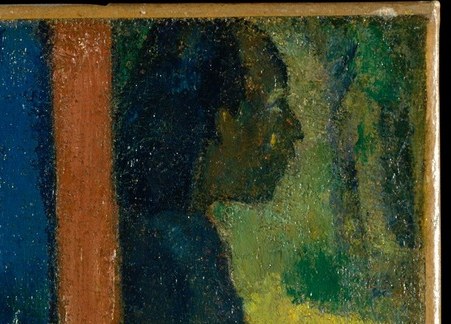
When Gauguin painted this, he had already left his life as a Paris stockbroker behind. A financial crash in 1882 pushed him into art full-time, and by the 1890s, he was seeking a radical kind of primitivism. This still life was not painted for the French Salon, which would have scorned its coarse surface and anti-naturalistic color. It was an experiment in his Synthetist style, emphasizing strong outlines and simplified forms, painted on rough sackcloth in his distant studio.
It is a still life with no desire to impress the old guard. What looks like a simple teapot is a quiet declaration that the center of his artistic gravity had moved forever.
Details
Transcript
A blue teapot. Mangoes on a cloth. It's a quiet kitchen scene. The painter was 48. He'd been a stockbroker in Paris. By 1896, he had abandoned Europe for the South Seas. A European teapot, set against a flat blue-green wall. It's a map of two worlds, painted on a strip of coarse sackcloth. No Salon would hang it. Gauguin was building his own world.