Members of the Botocudo Tribe by Catlin, George
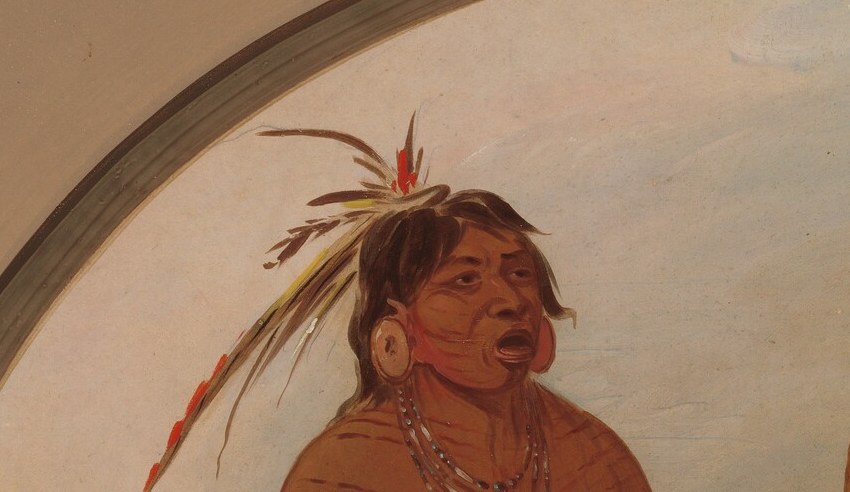
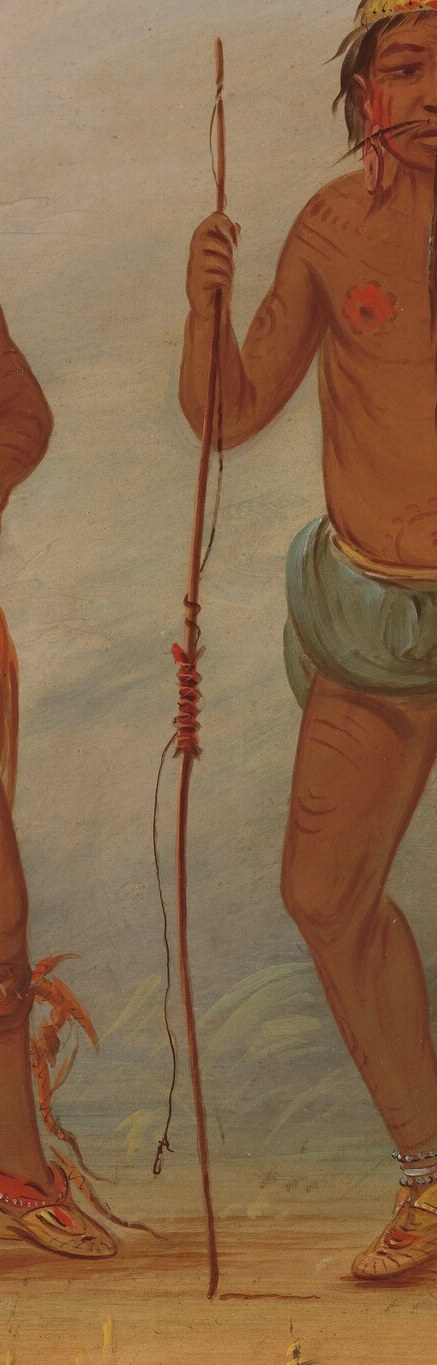
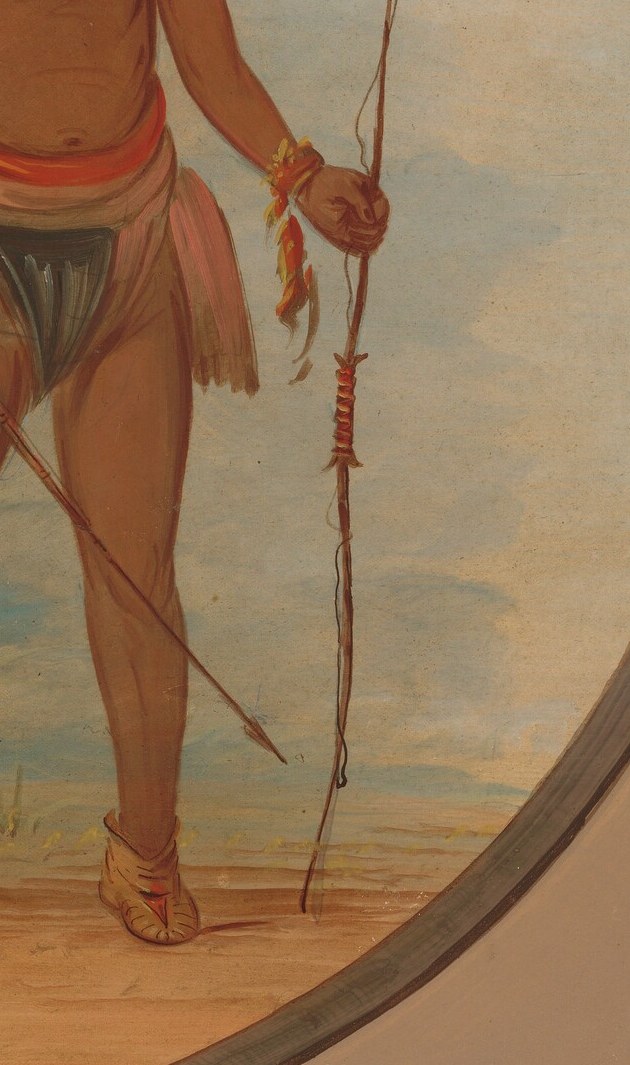
George Catlin, a lawyer-turned-artist, dedicated his life to documenting Indigenous peoples across the Americas. His painting, *Members of the Botocudo Tribe*, created between 1854 and 1869, captures four individuals from a group native to Brazil’s coastal forests, now held in a private collection.
In this work, Catlin's observational approach highlights the distinct cultural identity of each figure. Notice their unique adornments, such as the elaborate feathered headdress and the prominent shell necklace, which would have signified status or been part of their traditional trade practices.
Catlin’s extensive fieldwork, which began in the American West in the 1830s, extended to South America in the 1860s. He aimed to create a visual record of customs and appearances he feared were vanishing under colonial expansion, making his ethnographic oeuvre a crucial historical document.
Through his art, Catlin sought to honor and preserve the human presence and individuality within these cultures. What do these portraits communicate to you?
Details
Transcript
This painter spent decades documenting Indigenous peoples. He sought to record their cultures through careful observation. Here, four members of the Botocudo tribe of Brazil. Each wears distinct adornments, like this feathered headdress. And this significant shell necklace, suggesting trade or status. The artist created this to preserve their identity.