Lucretia by Rembrandt van Rijn
A woman sits alone with a dagger she has already turned toward herself. The painting, made in 1664 in the orbit of Rembrandt van Rijn, tells the Roman story of Lucretia, a noblewoman assaulted by the son of a king. Her choice was death before dishonor, and her suicide ignited a revolution that overthrew the Roman monarchy.
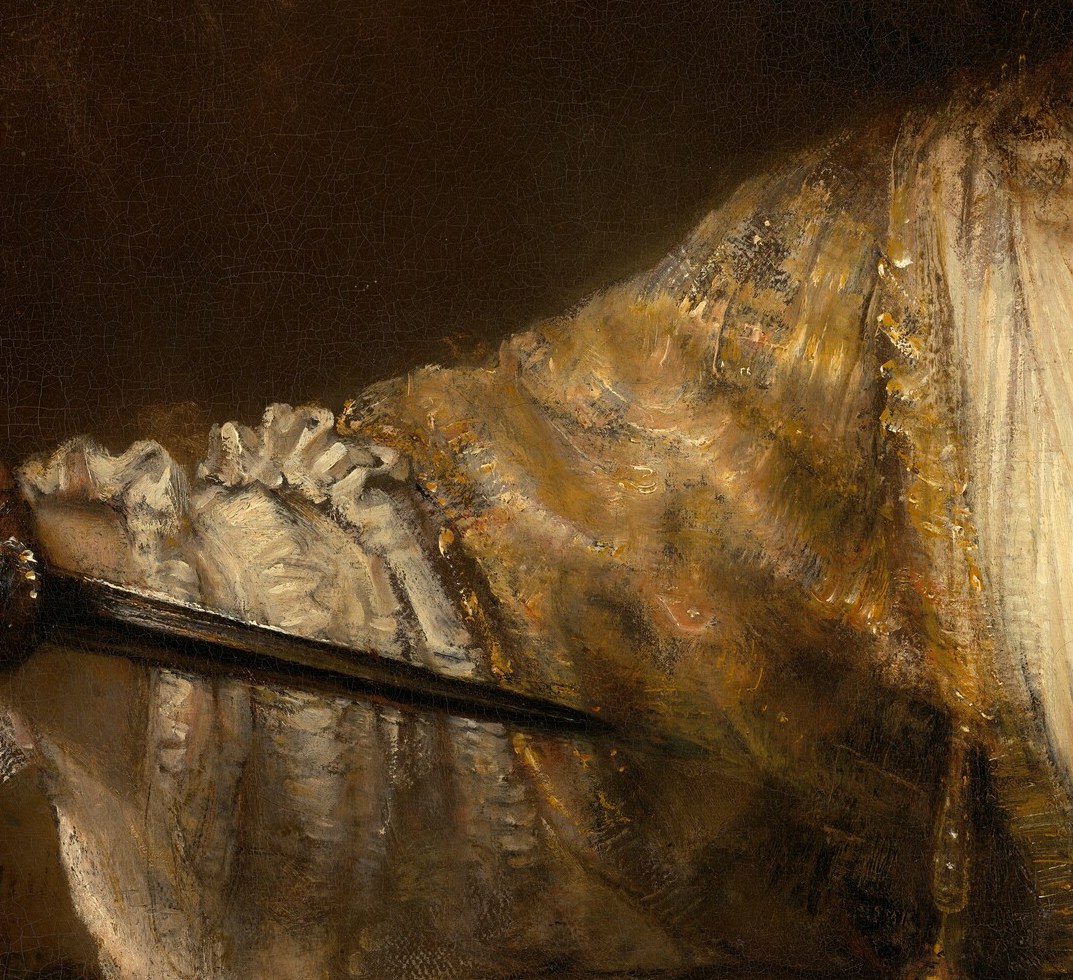
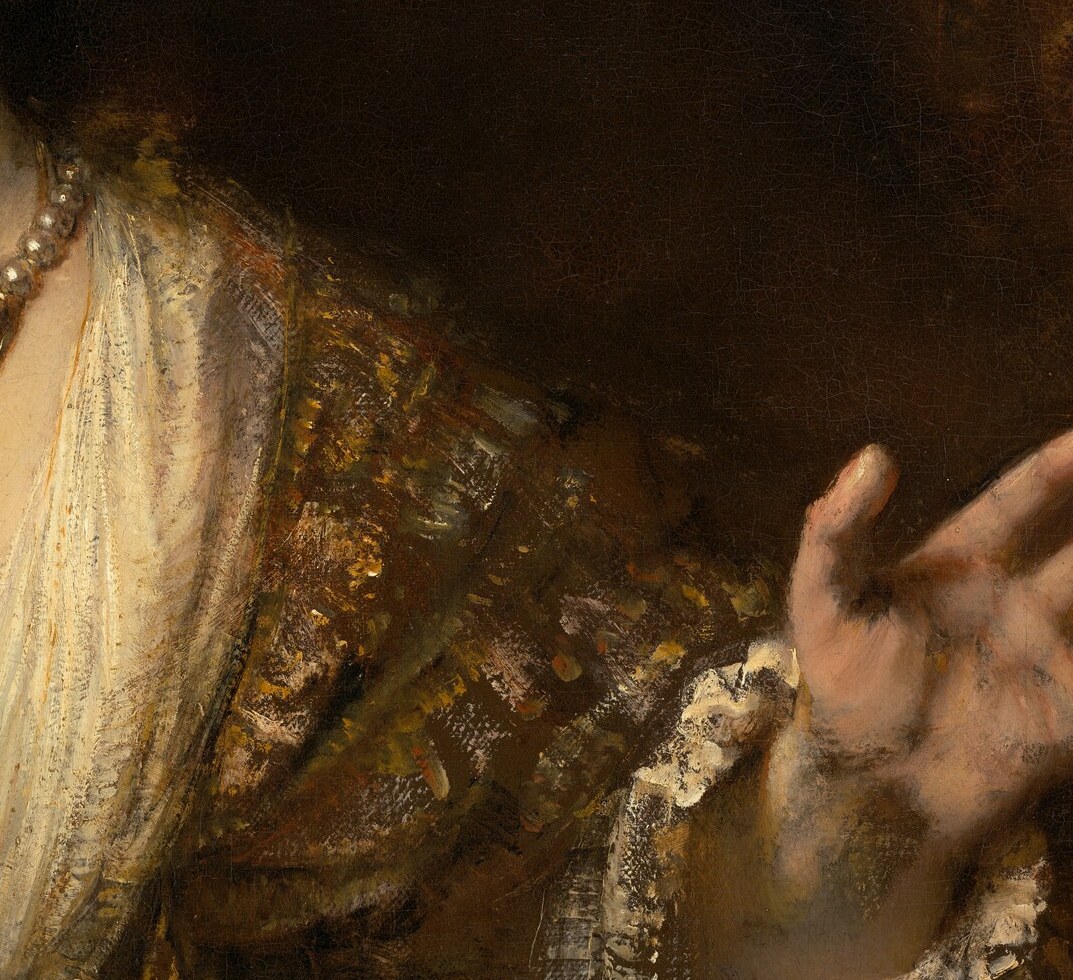
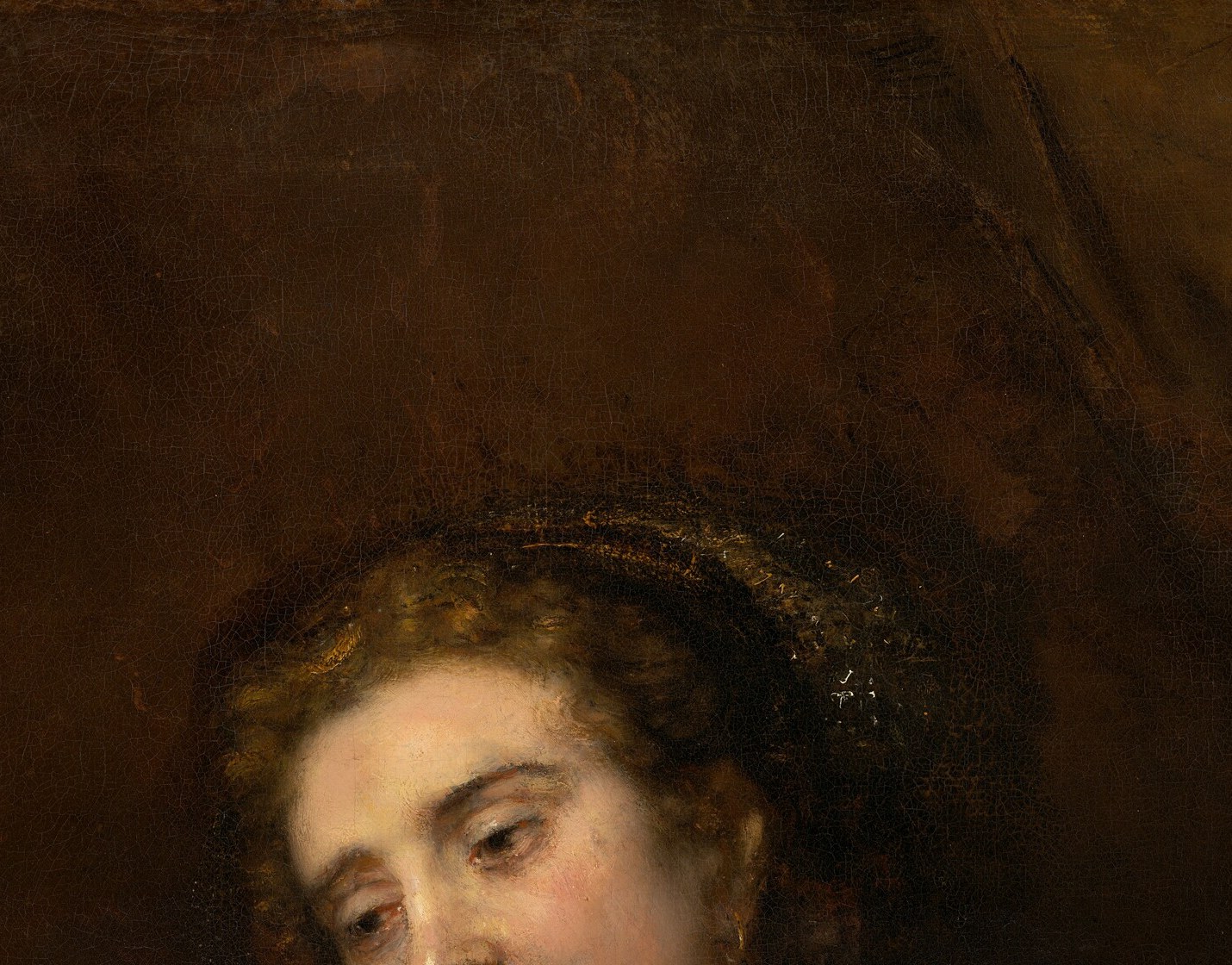
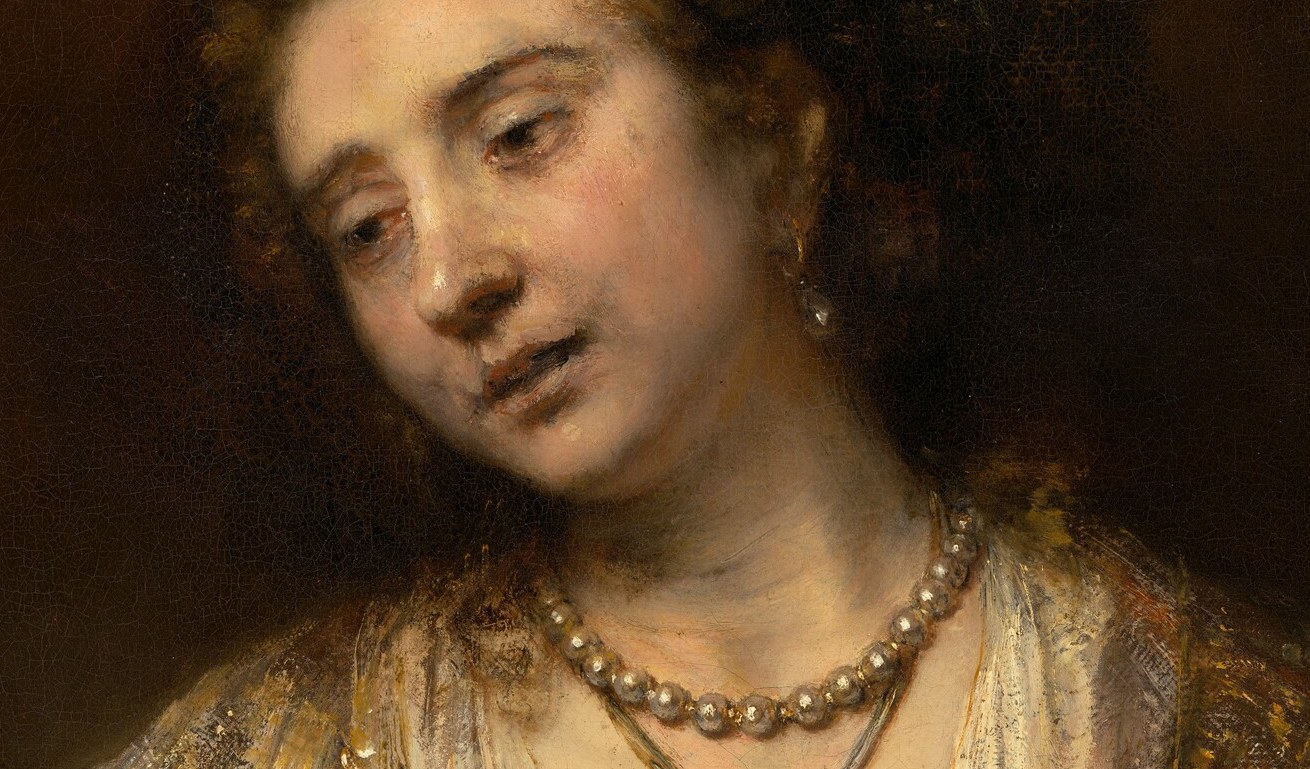
Look at her hands. The right grips the blade, the steel already drawn and angled inward, this is the instant before the act. The left hand opens outward, fingers spread, a gesture of farewell directed not at anyone in the room but at you, the viewer, pulling you into the weight of the decision. Her face tilts upward, and if you look closely at her right eye, the lash-line glistens. The pearl necklace and white chemise are visual codes for chastity; the single red pendant is the only vivid color in an otherwise golden-brown world, a quiet premonition of blood.
The painting hangs in the National Gallery of Art, and for generations it was catalogued as a Rembrandt. In 2015 the Rembrandt Research Project examined it and concluded, formally, that the brushwork, the handling of the shadows, the formal properties of the piece exclude it from Rembrandt's own hand. They pointed toward Aert de Gelder, a student, though the true author remains uncertain. It is now listed as the work of his circle.
There is a hard parallel in that. A painting whose subject is a woman robbed of her honor, robbed of her authorship three and a half centuries later. What do we lose when a name is removed, and what remains, in the paint itself, that no reattribution can take away?
Details
Transcript
She has already drawn the blade. Her left hand opens in farewell. The story is ancient Roman. The crime was a prince's assault. Her reply: death before dishonor. The pearls are her virtue. The red pendant, the blood to come. For centuries this was called a Rembrandt. In 2015, that ended. The Rembrandt Research Project looked at the brushwork, the handling, the shadows themselves, and said no. A painting about a woman stripped of honor, stripped of its own great name.