Paris, rue du Havre by Béraud, Jean
View the artwork: Paris, rue du Havre →
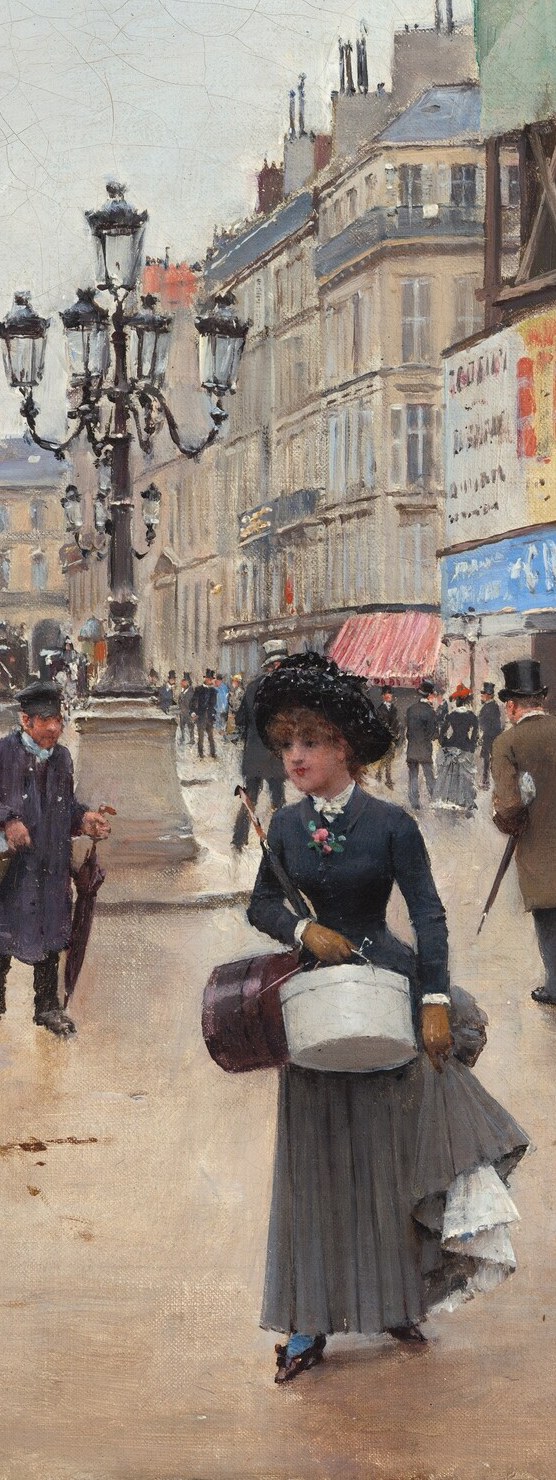
A teenage girl in black, a trottin, cuts through the crowd carrying two hat boxes. She is the quiet engine of Parisian fashion. This is Jean Béraud's "Paris, rue du Havre," painted around 1882, now in the National Gallery of Art in Washington.
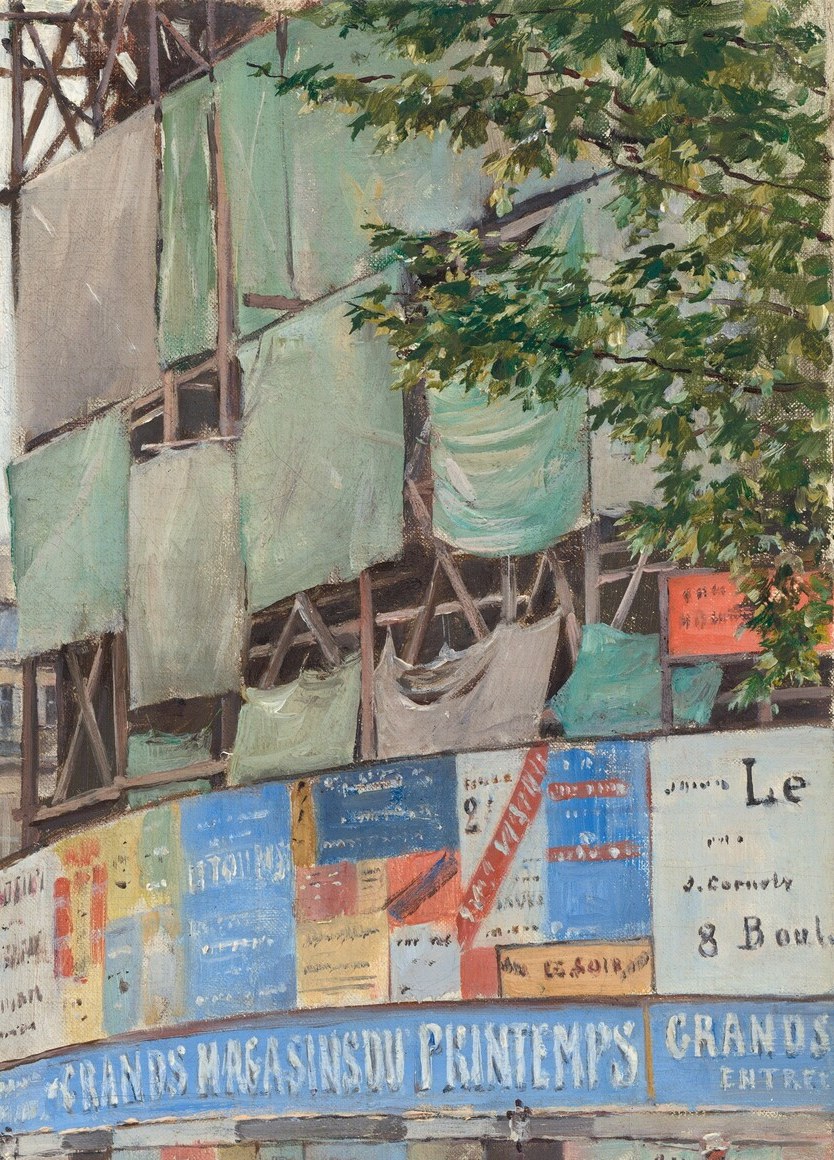
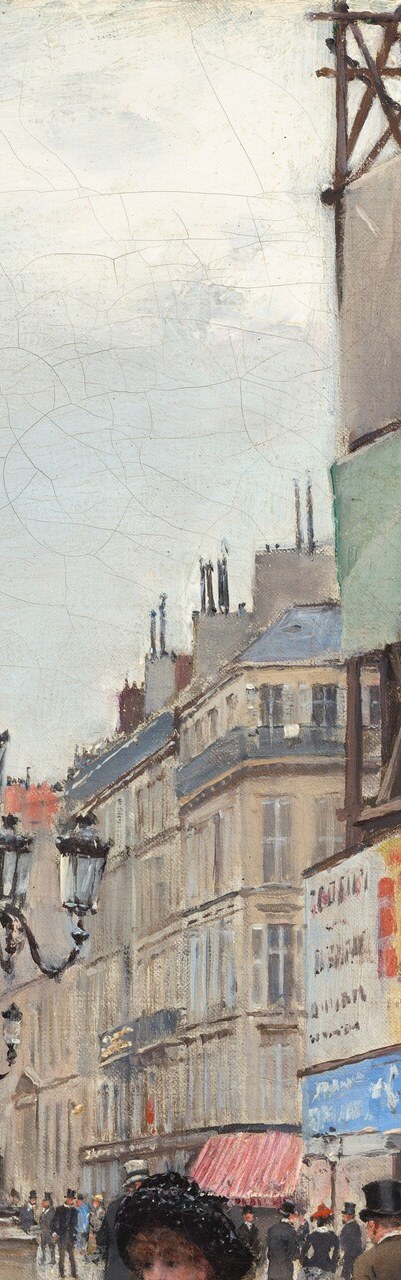
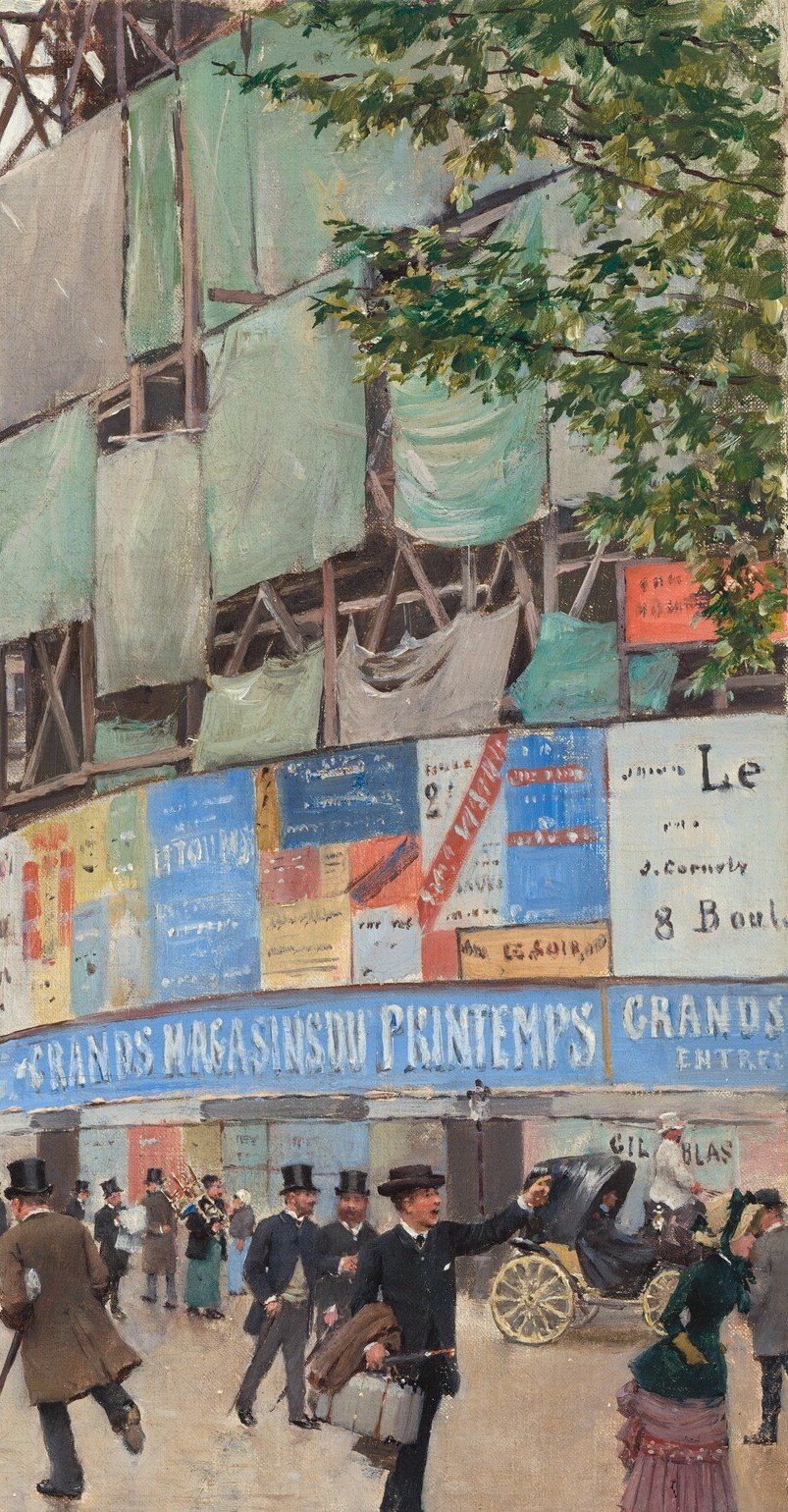
Look past her to the right. The Printemps department store is sheathed in scaffolding and advertising. An 1881 fire gutted the building; here it is already rising again. Béraud shows us a city that consumes and reconstructs itself with astonishing speed.
Béraud was born in Saint Petersburg in 1849 to French parents, but he became the great chronicler of Belle Époque Paris. He painted from inside a horse-drawn cab so he could observe the street without being seen. This small canvas, just 35 by 27 centimeters, packs an enormous amount of documentary detail.
Every element here, from wet cobblestones to gas lamps, records a precise moment in the history of modern urban life. What does a city look like the year after a disaster? It looks like this.
#arthistory #jeanberaud #belleépoque
Details
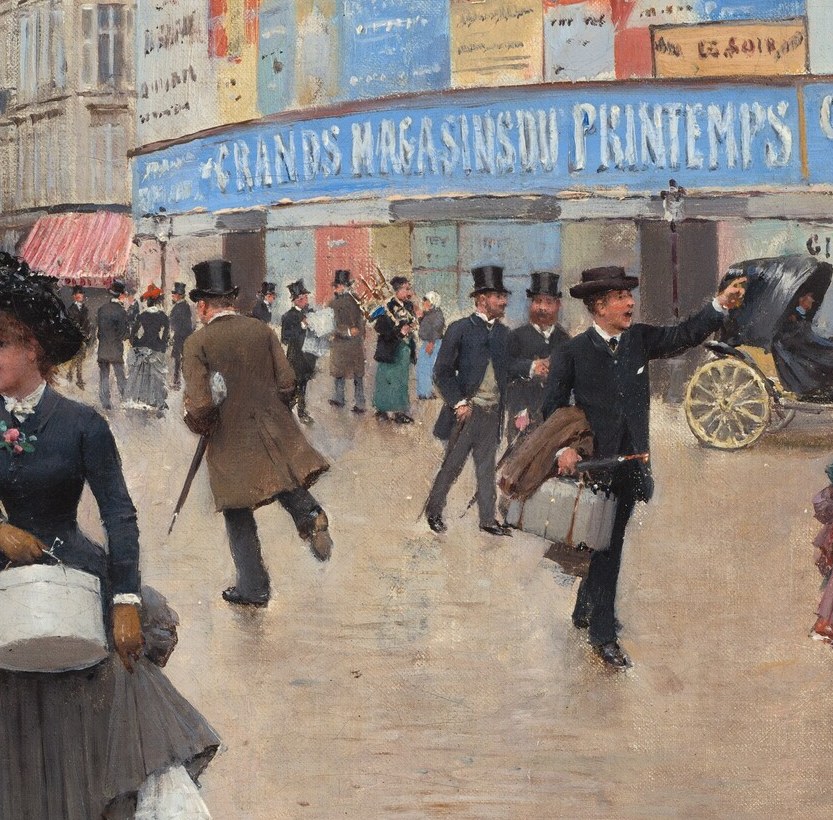
Transcript
Paris, 1882. A city paved and polished for modern life. She carries two hat boxes, walking fast. She is a trottin, a teenage errand girl for the millinery trade. Behind her, the Printemps department store is wrapped in scaffolding. A fire nearly destroyed it the year before. The city is rebuilding. The painter watched from a cab, chronicling the new Paris. She passes through it all, delivering fashion to the city.