Artwork
Paris, rue du Havre
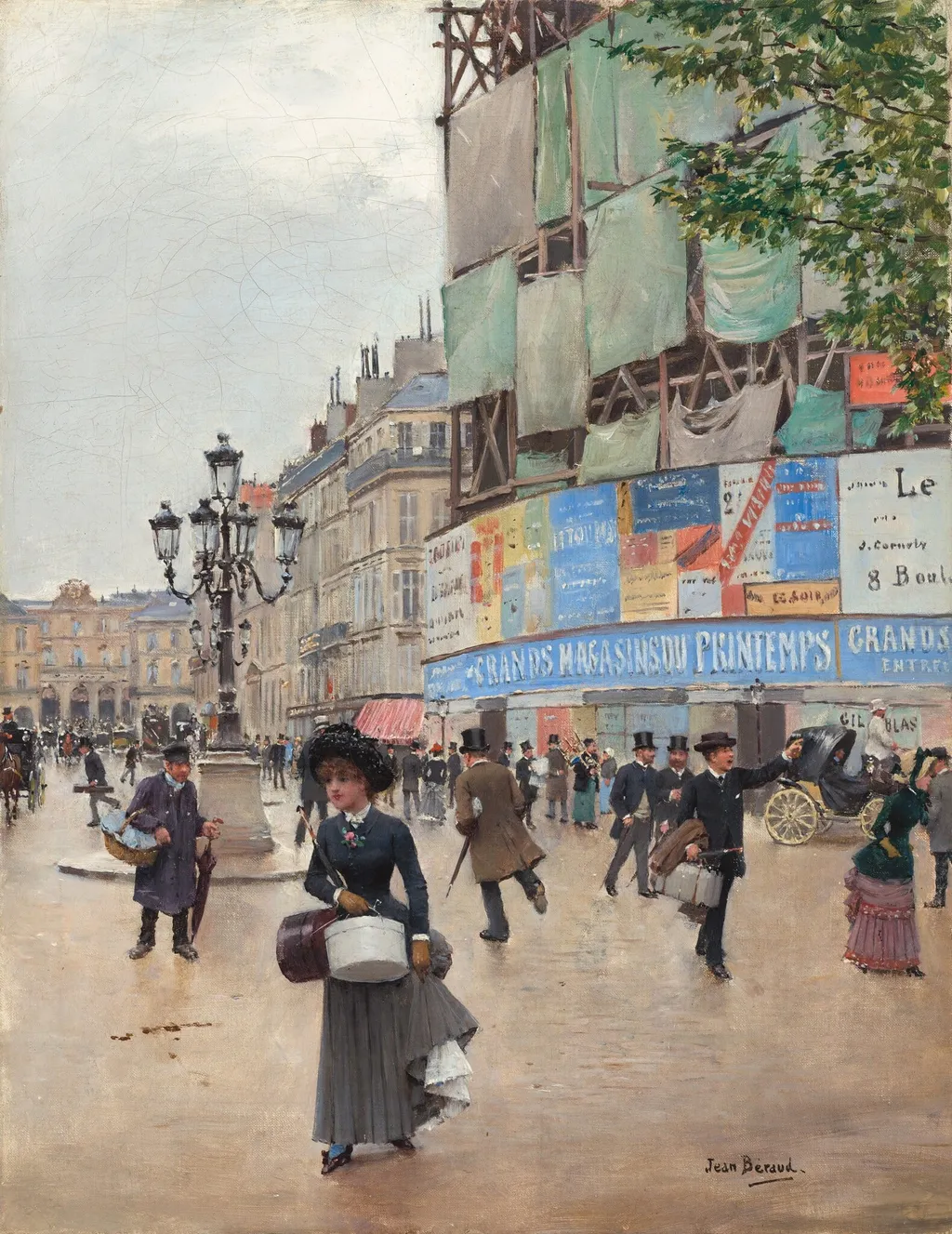
Paris, rue du Havre is an oil painting by the Impressionist artist Jean Béraud. It dates from 1882 and is held in the collection of the National Gallery of Art.
- Inscription
- Inscribed:lower right: Jean Beraud.
About this work
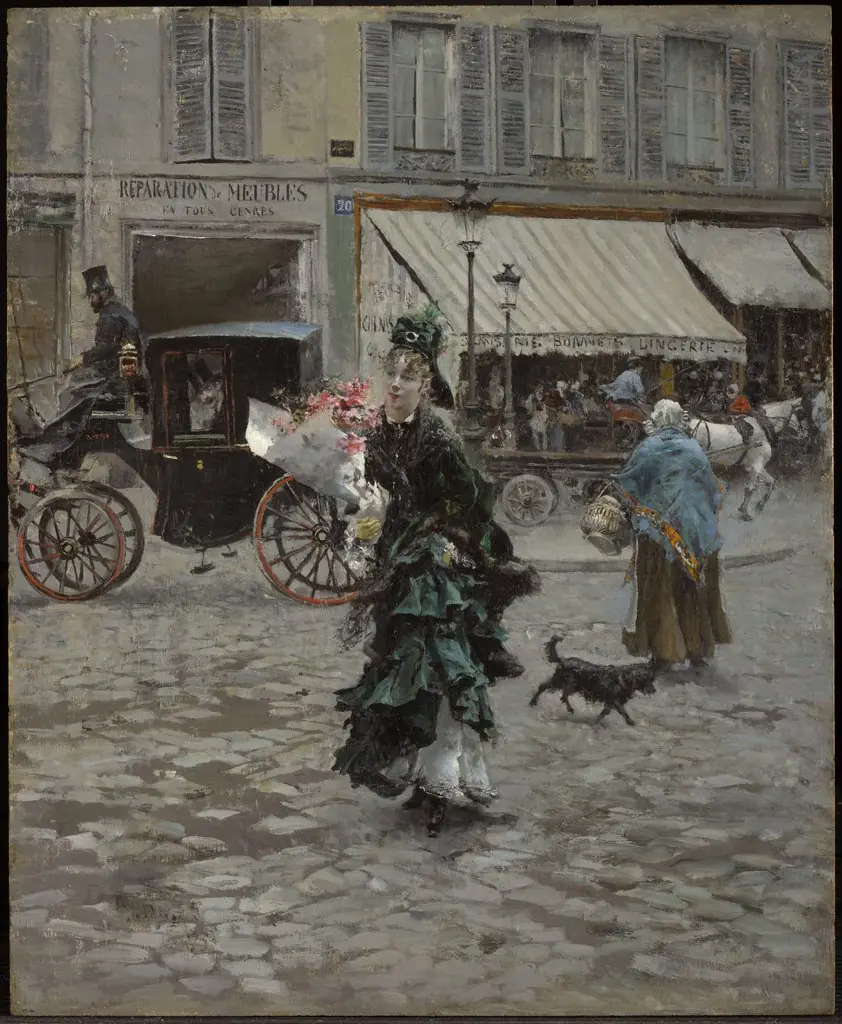
A woman in black carrying two hat boxes crosses a busy Paris intersection while the Printemps department store rises behind her, wrapped in scaffolding and posters as it rebuilds from the 1881 fire. Jean Béraud painted the compact oil around 1882, catching the rhythm of Haussmann's boulevards and the new culture of urban shopping in the capital.
Subject & Meaning
The composition includes a scaffold, streetlight, and posters, as well as men in top hats and women, capturing the everyday life of late-19th-century Paris.
The painting depicts a bustling street scene on the rue du Havre in Paris, with the Gare Saint-Lazare visible in the background. The composition includes a scaffold, streetlight, and posters, as well as men in top hats and women, capturing the everyday life of late-19th-century Paris. This combination of architectural elements, advertising, and fashionable pedestrians embodies the modernity and urban dynamism of the Haussmannized city, reflecting the social and commercial activity characteristic of the period.
Technique & Style
Executed in oil on canvas, the painting measures 35.2 × 27.3 cm. Its formal qualities convey a keen observation of contemporary urban life, with meticulous attention to details such as a scaffold, streetlight, and poster. The composition centers on the rue du Havre, featuring well-dressed men in top hats and women, with the Gare Saint-Lazare visible in the background. This approach reflects Béraud's characteristic blend of realism and documentary interest in Parisian street scenes.
History & Provenance
Jean Béraud painted Paris, rue du Havre in 1882. Its recorded provenance begins with Jacques Helft and Co., New York, which owned it by 1943 and lent it to an exhibition in New York that year. It was subsequently sold to Ailsa Mellon Bruce (1901–1969) of New York, who donated it to the National Gallery of Art in Washington, D.C., in 1970. No commission is documented, and the accession number is not specified in the available sources.
Overview
Jean Béraud's oil on canvas, Paris, rue du Havre, painted around 1882, offers a compact yet detailed glimpse into Belle Époque urban life. This small painting, measuring approximately 35 by 27 centimeters, captures a bustling intersection near the Gare Saint-Lazare. Béraud, known for his meticulous depictions of the French capital, presents a scene rich with the energy and evolving character of modern Paris, blending precise observation with a focus on contemporary subjects.
Context
Béraud established himself as a prominent observer of Parisian modernity, chronicling the daily routines and social rituals of the Belle Époque. His works often feature the grand boulevards and emerging commercial spaces that defined the transformed city under Haussmann's urban planning. Paris, rue du Havre exemplifies this focus, documenting both the architectural changes and the burgeoning culture of urban consumption that characterized late 19th-century Paris.
Legacy
The painting's significance is underscored by its exhibition history, which includes diverse contexts over several decades. It was featured in French relief exhibitions as early as 1943 and more recently in the 2017 exhibition "Degas, Impressionism, and the Paris Millinery Trade." These presentations highlight its enduring relevance for understanding both Béraud's artistic output and the broader cultural landscape of 19th-century Paris.
Own this work as a print
Artist & collection

Artist
Jean Béraud (French: ; 12 January 1849 – 4 October 1935) was a French painter renowned for his numerous paintings of life in Paris and especially its nightlife.