Landscape at Sunset by Carl Gustav Carus
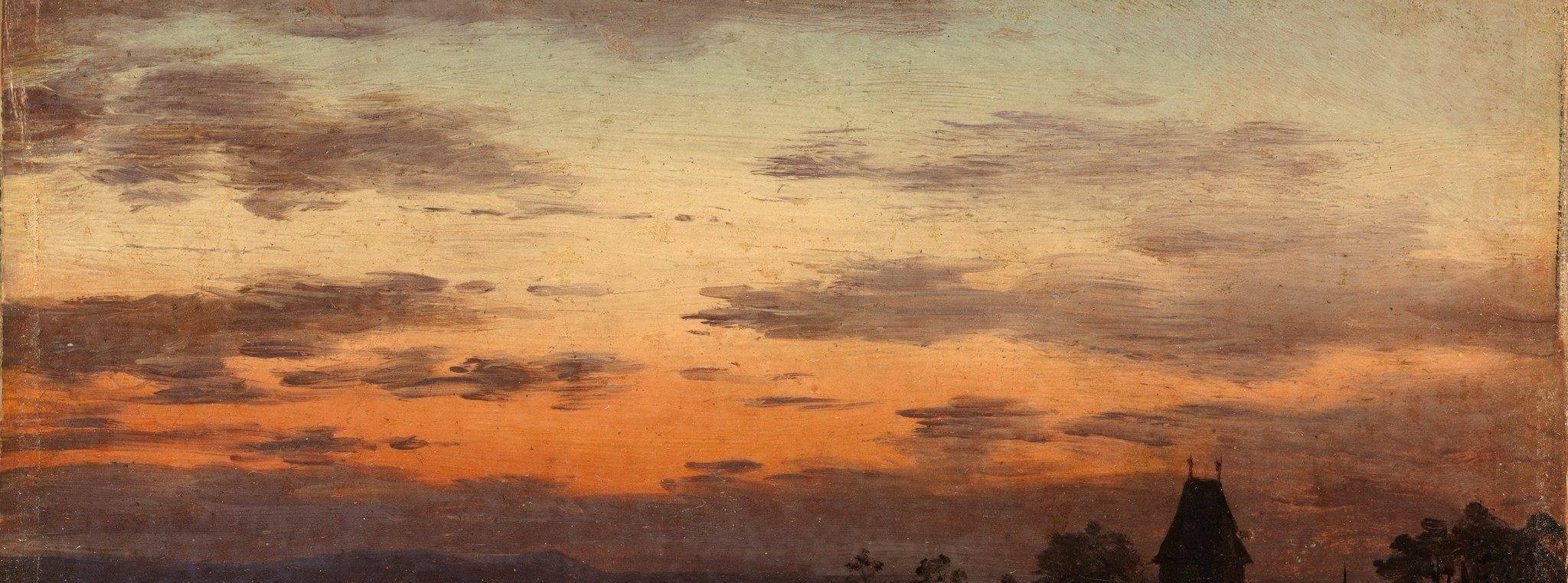
Carl Gustav Carus, a German Romantic painter, captures nature's symbolic power in his 1830 masterpiece, *Landscape at Sunset*, now at The Metropolitan Museum of Art. This painting is more than just a beautiful scene; it's a visual poem about existence.
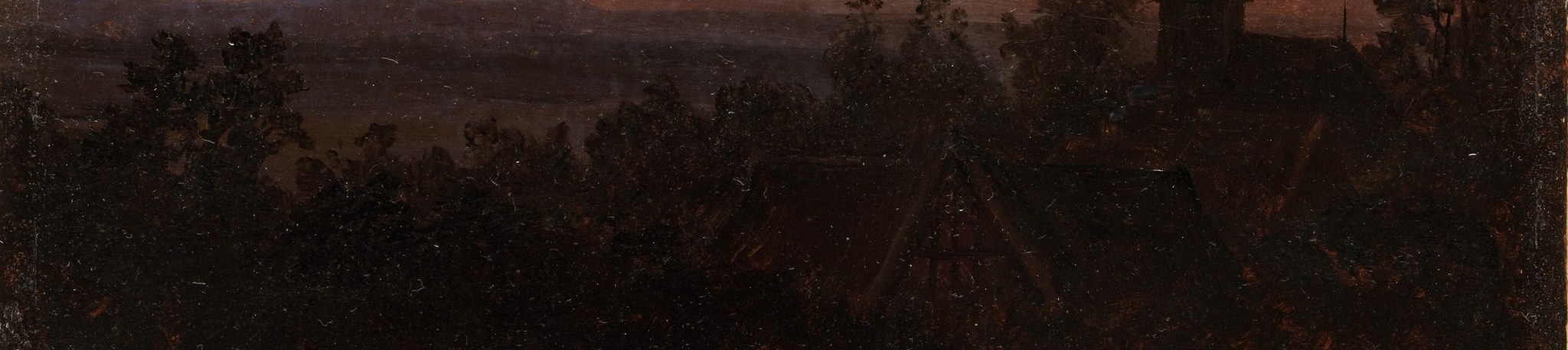
Observe how the vibrant sunset speaks of fleeting beauty, while the encroaching dark clouds suggest the mysteries of the unknown. Hidden within the vast landscape, a subtle church spire emerges from the dense trees, a powerful symbol of human spirituality within the overwhelming force of nature.
Carus, a polymath who was also a physician and naturalist, was a student of Caspar David Friedrich and a friend of Goethe. His work embodies the German Romantic movement's deep engagement with both scientific observation and profound artistic expression. He used loose brushstrokes to create a textured, atmospheric quality, allowing light and shadow to blend seamlessly and evoke strong emotional responses.
What other hidden meanings might you find in this evocative landscape?
Details


Transcript
This German Romantic painter saw nature as a vast, symbolic language. The dramatic sunset represents life's fleeting beauty. The dark, encroaching clouds hint at the unknown or inevitable. Look closely at the trees, a small human detail emerges. A church spire, almost absorbed by nature, symbolizes human spirit. This blend of elements invites contemplation of the sublime in nature.