清 高岑 擬古山水圖 冊 絹本|Landscapes in the styles of old masters by Gao Cen
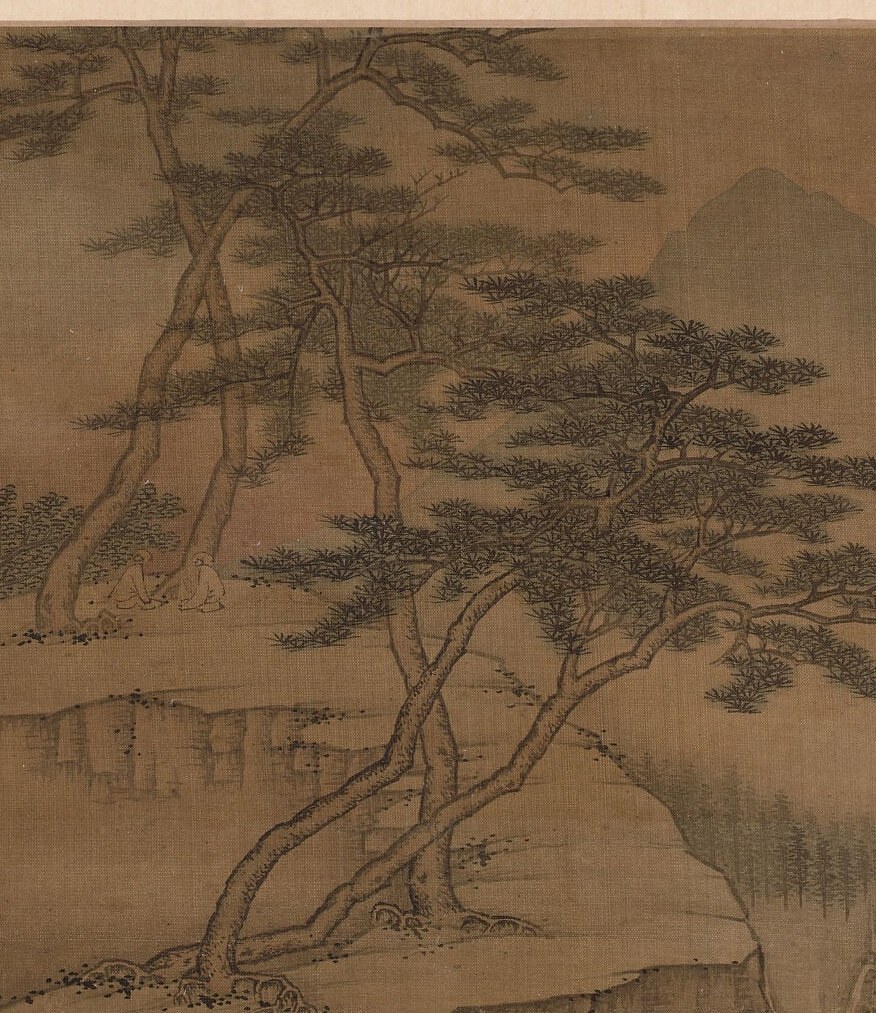
This is a leaf from Gao Cen's 1667 album "Landscapes in the styles of old masters," now in the collection of the Metropolitan Museum of Art. It was cut from its original binding sometime before World War II, a destructive act that, ironically, may have saved it from the widespread looting of Chinese antiquities during the conflict. The album survived, fragment by fragment, dispersed across collections.
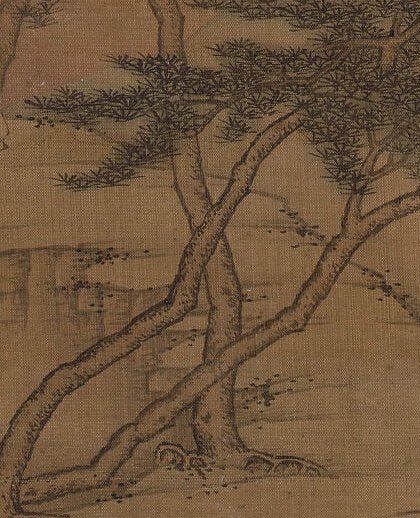
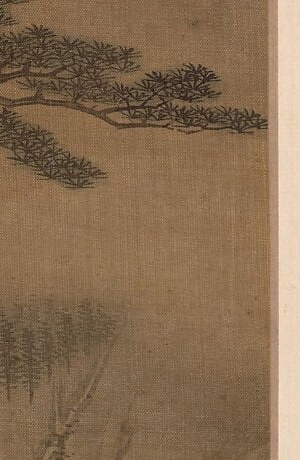
Look first at the great pine’s twisted trunk. Gao Cen painted it with the muscular cun texture strokes of a Song master, but the silhouette is pure 17th-century Nanjing. Then let your eye drift to the extreme right margin. A grove of bamboo is nearly invisible, its ink so dilute that the strokes dissolve into the raw silk ground. It is a passage meant for only the most patient gaze.
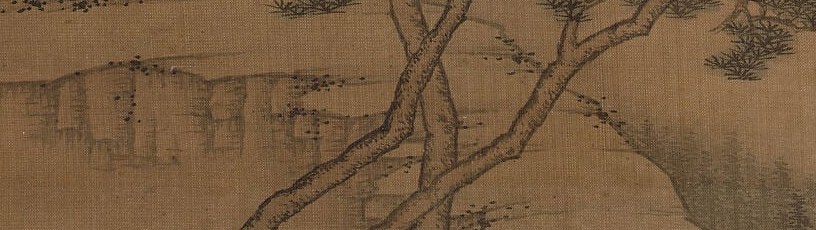
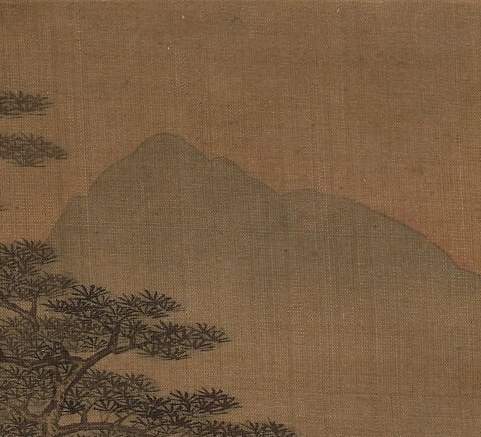
Gao Cen was a leading figure of the Eight Masters of Jinling, working in the early Qing dynasty while many of his contemporaries rejected the past. This album was his deliberate, scholarly act of resistance: he copied the ancient styles not from nostalgia, but to prove that the old brush rhythms still held power. The untouched silk across the foreground is not emptiness; it is mist, water, and the breath of a vanished Song landscape.
There is a quiet defiance in a painting that can fade from view. What does it ask of us, to look at what is barely there?
Details
Transcript
The painting was cut from its album before the war. That act of slicing saved it from looting. This pine was painted to mimic a Song master. Its trunk bends with a desperate, muscular torsion. But step closer to the right edge. These reeds almost disappear into the silk. Gao Cen let the untouched ground speak as mist. He honored the ancients by mastering silence.