Expedition Encamped on a Texas Prairie. April 1686 by Catlin, George
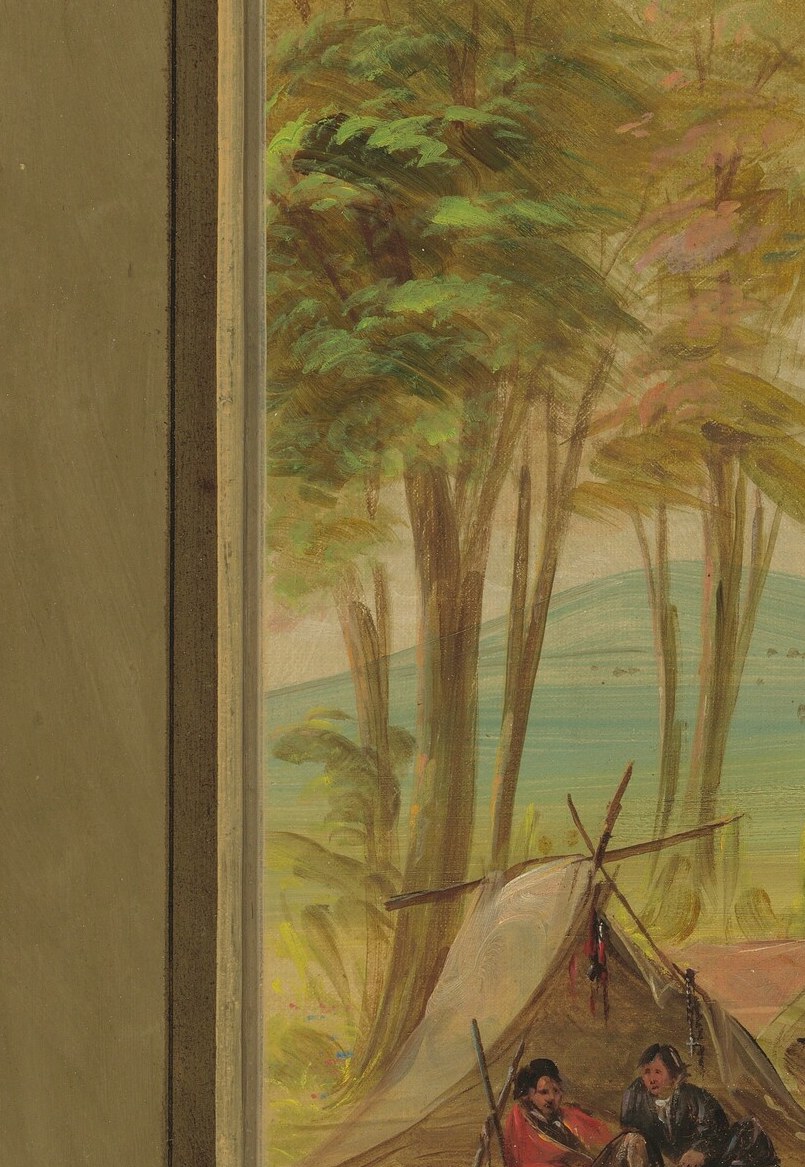
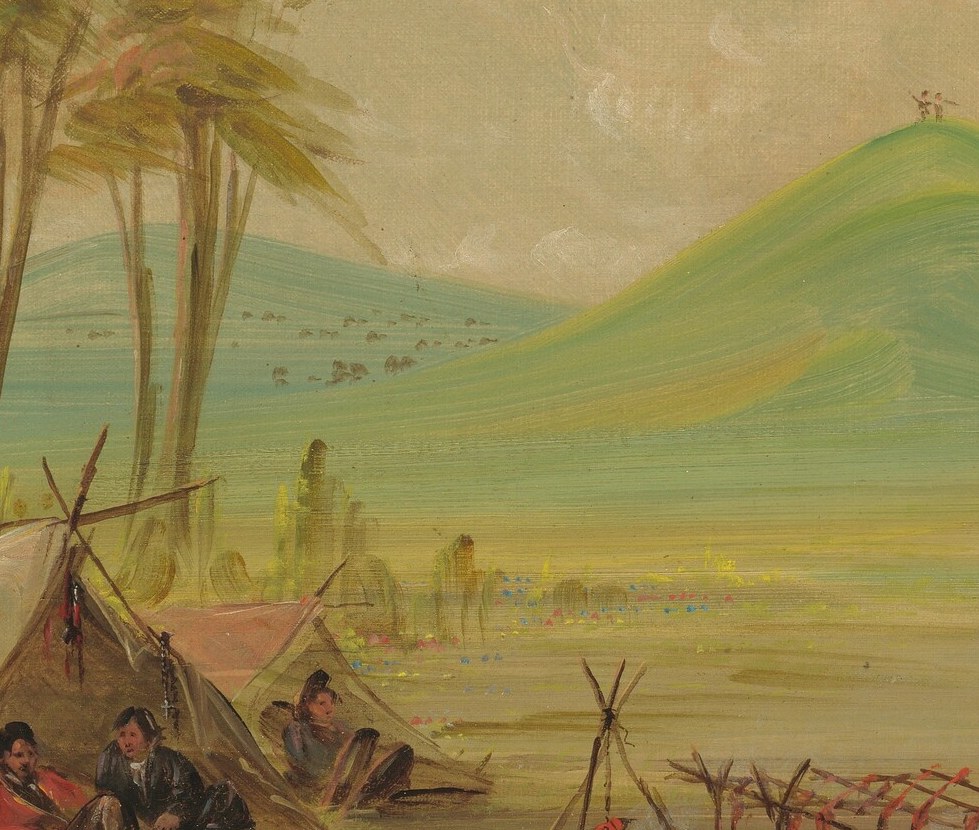
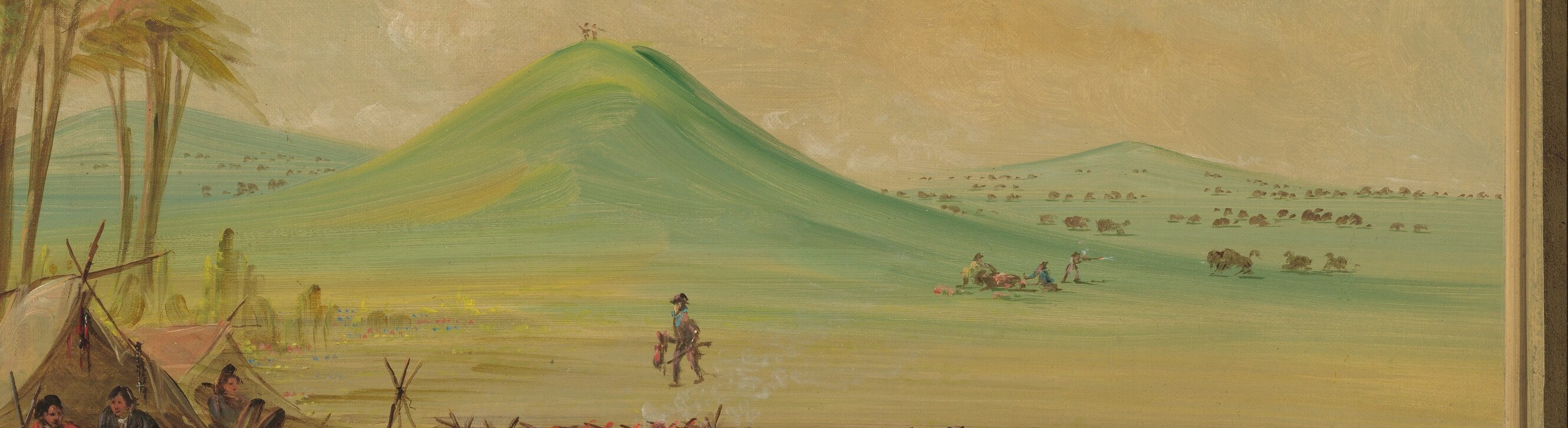
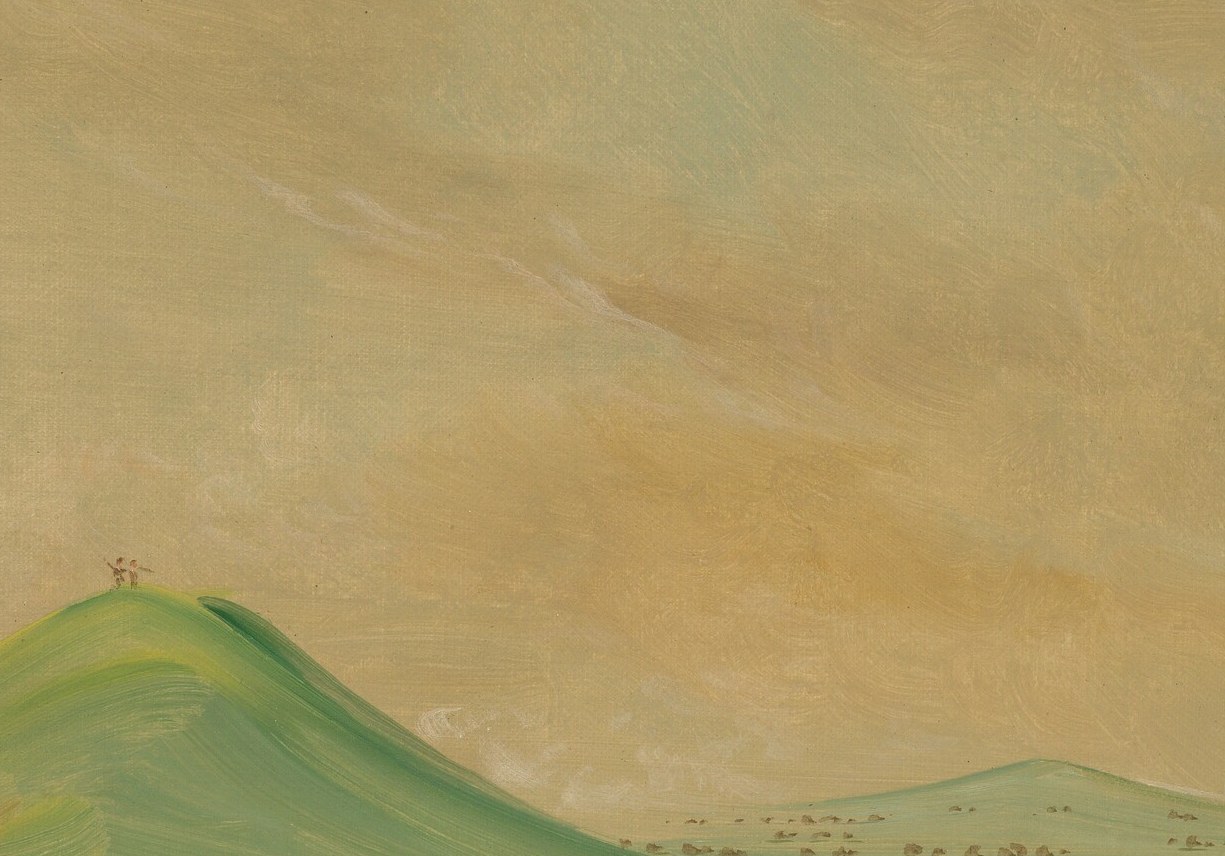
This is George Catlin's "Expedition Encamped on a Texas Prairie. April 1686." Painted in 1848, it hangs in the Smithsonian American Art Museum and imagines a French expedition pausing on the Texas plains, more than a century and a half before the artist was even born.
Look at the solitary figure standing apart from the group near the camp. While others work around the drying rack and shelter, he simply faces the open prairie. Catlin places him small against that luminous green-gold expanse, his posture suggesting a private moment of recognition: the vastness of the land, the distance from home, the sheer scale of what they are attempting.
Catlin made his name traveling the American frontier five times in the 1830s, painting Native American life. But this work is different. He painted it from imagination in his studio, looking backward to a 17th-century expedition, projecting himself into the isolation those early travelers must have felt in a Texas that no European had yet settled.
He never stood on that prairie in 1686. But looking at that lone figure, you understand exactly what he thought it must have felt like.
Details
Transcript
April, 1686. A French expedition stops on a Texas prairie. They built a shelter from whatever they could find. And they went to work drying meat to survive. But one man has stopped working. He just stands and looks out at the emptiness. The painter, George Catlin, was not born until 1796. He imagined this loneliness 150 years after it happened.