Haystacks (Effect of Snow and Sun) by Claude Monet
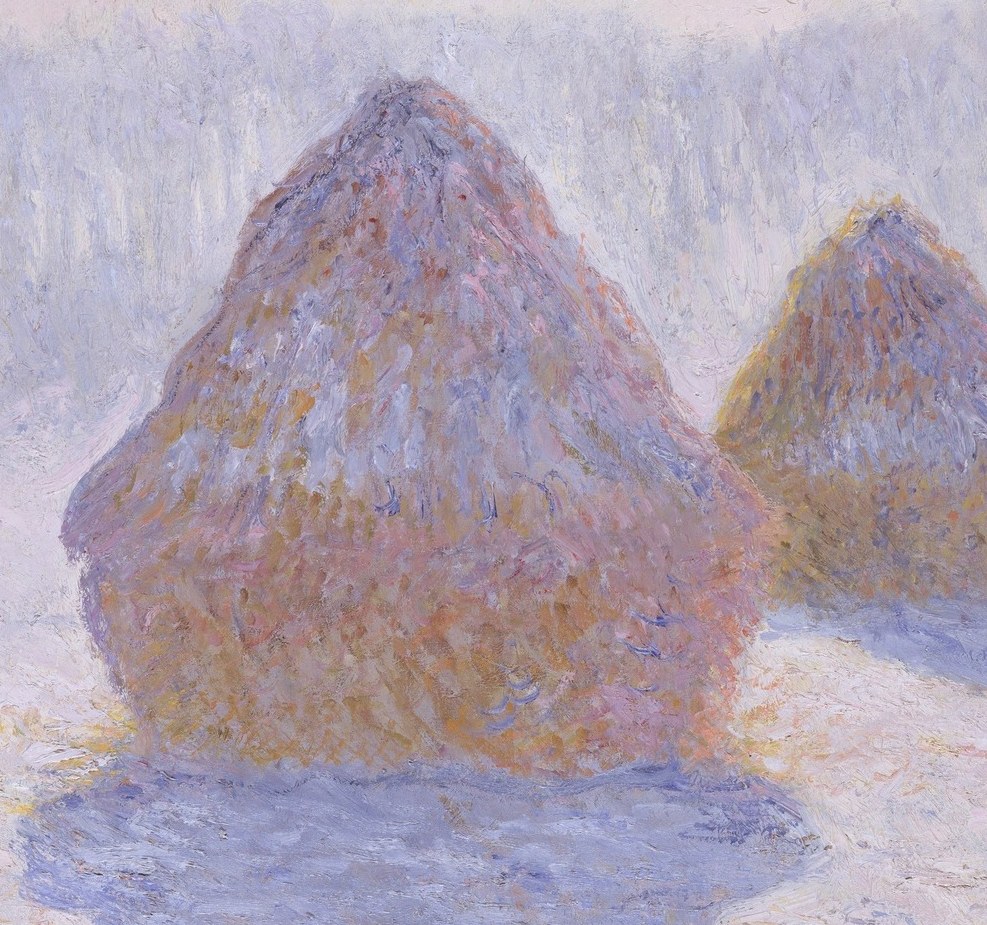
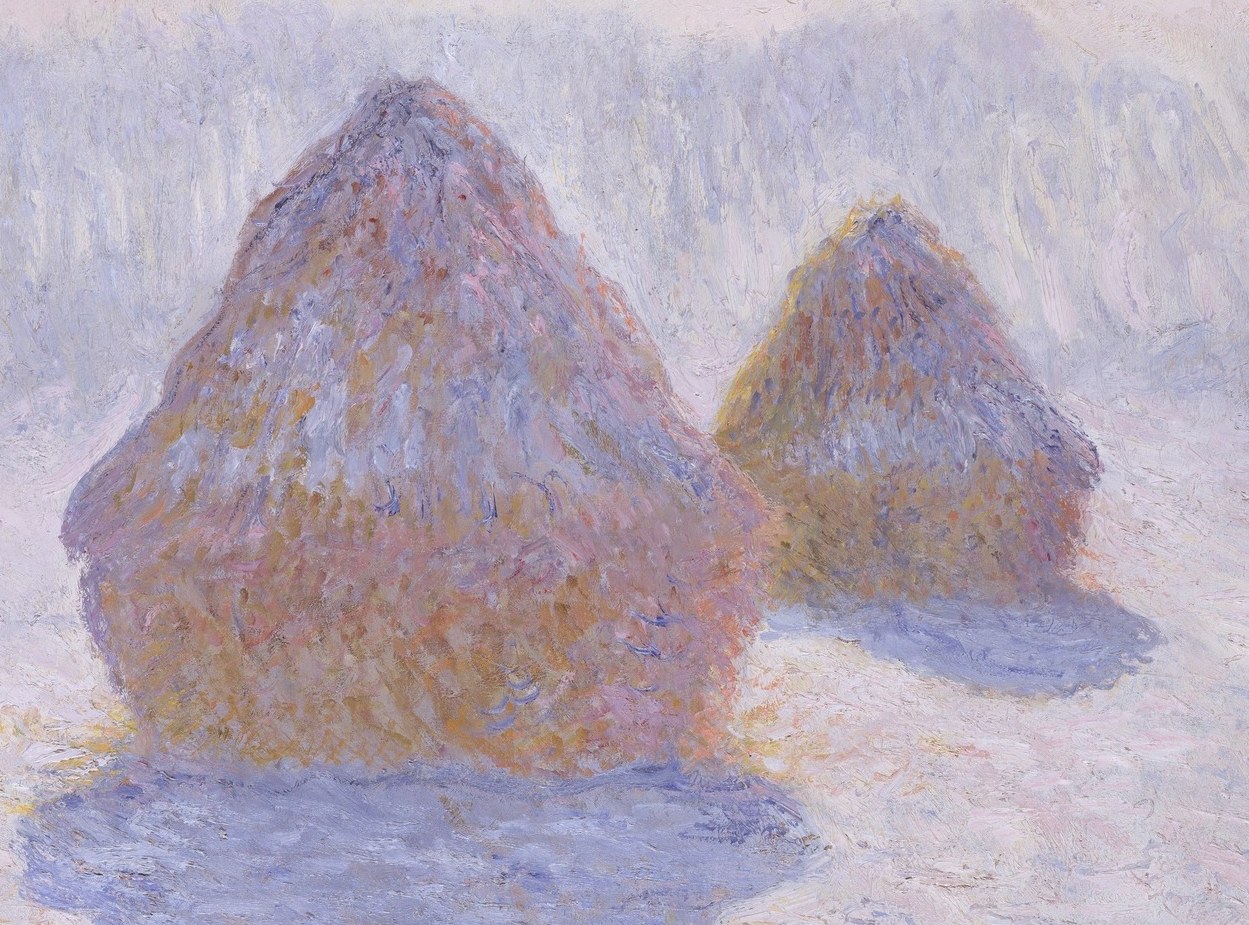
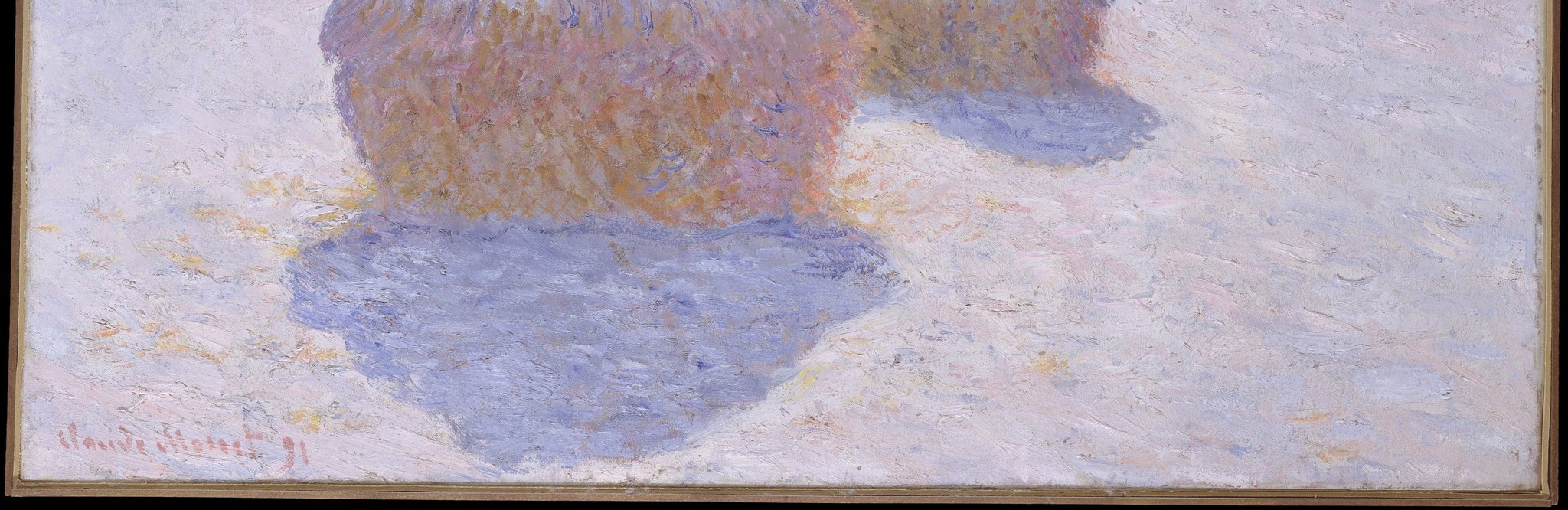
Claude Monet's "Haystacks (Effect of Snow and Sun)" (1891) is a profound study of light and atmosphere, held at The Metropolitan Museum of Art. This painting is part of his famous series, where he explored the same subject under different conditions.
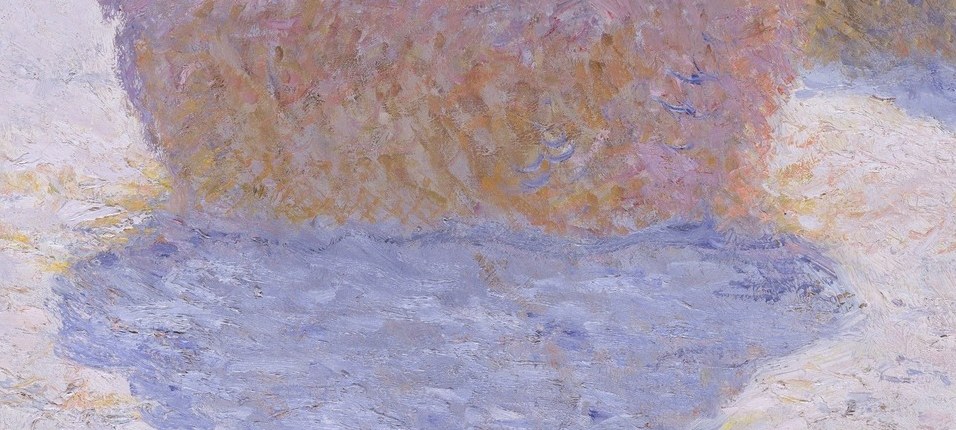
Look closely at the interplay of warm yellows and oranges on the haystacks against the cool blues and purples in the snow's shadows. Monet's brushstrokes capture the ephemeral quality of winter light reflecting off the snow, turning an ordinary rural scene into a vibrant display of color.
Monet created this series in Giverny, France, depicting the haystacks that dotted the agricultural landscape. He painted these forms repeatedly to observe how light transformed their appearance throughout the day and across seasons, a hallmark of his Impressionist philosophy. This particular work captures a specific winter day, where snow covered the fields.
What do you notice first about the light in this painting?
Details
Transcript
This field, in rural France, saw cold winters. Farmers built haystacks to feed livestock through the snow. This painter studied how light changed across the day. Notice the subtle blues and purples in the snow's shadows. He painted these haystacks over thirty times. Capturing just one fleeting moment of winter light.