Still Life with Apples and Peaches by Cezanne, Paul
Paul Cézanne's *Still Life with Apples and Peaches* (c. 1905) contains one of the most productive visual arguments in the history of painting: that a picture surface doesn't have to obey the rules of windows. Rather than accept the single-point perspective that had organized European art since the Renaissance, Cézanne built a space where a table tilts up, a bowl is seen from two angles, and a pitcher stands in its own gravity. The painting is in the collection of the National Gallery of Art in Washington, D.C., a late work from an artist then in his mid-sixties who knew exactly what he was doing.
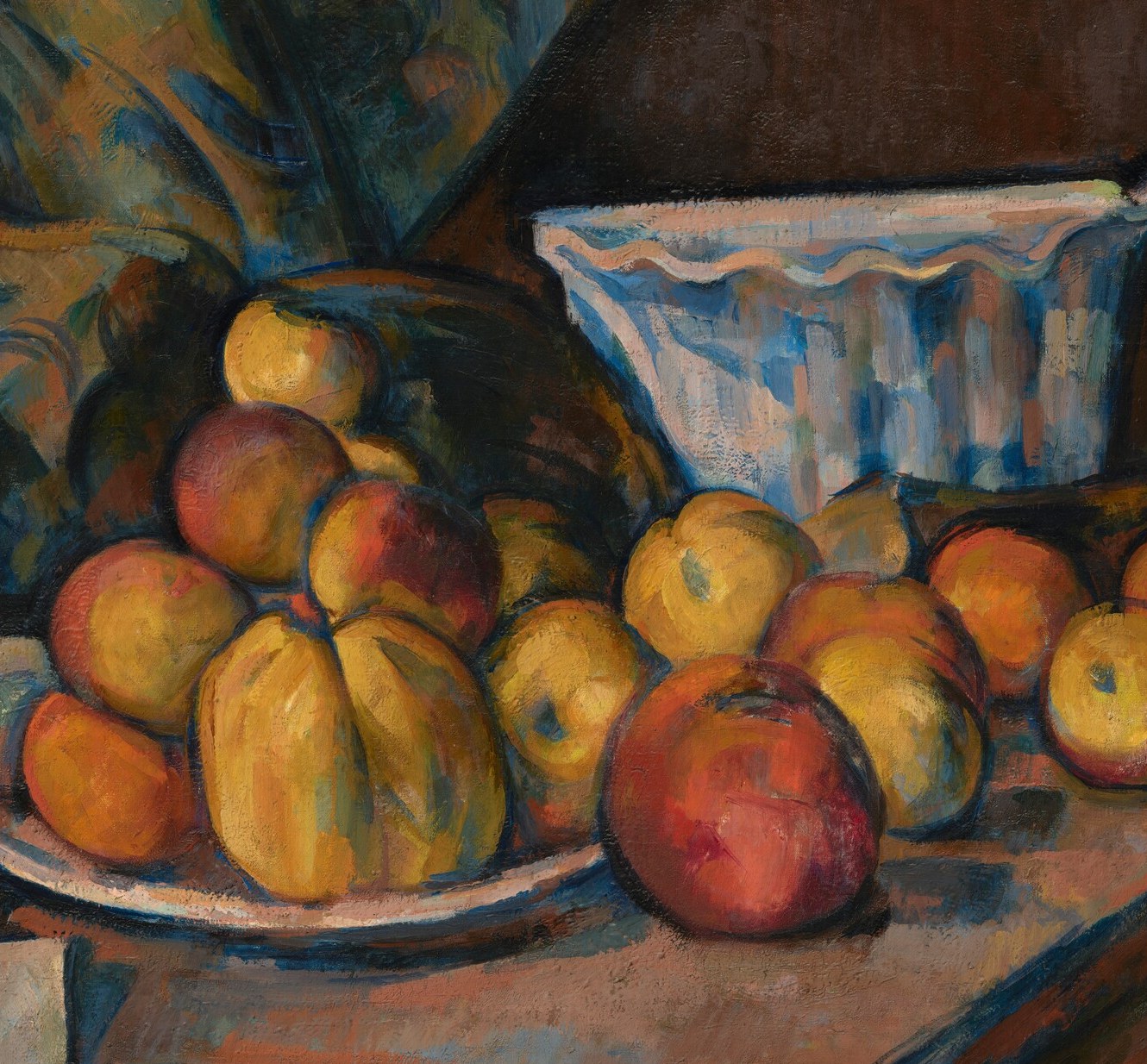
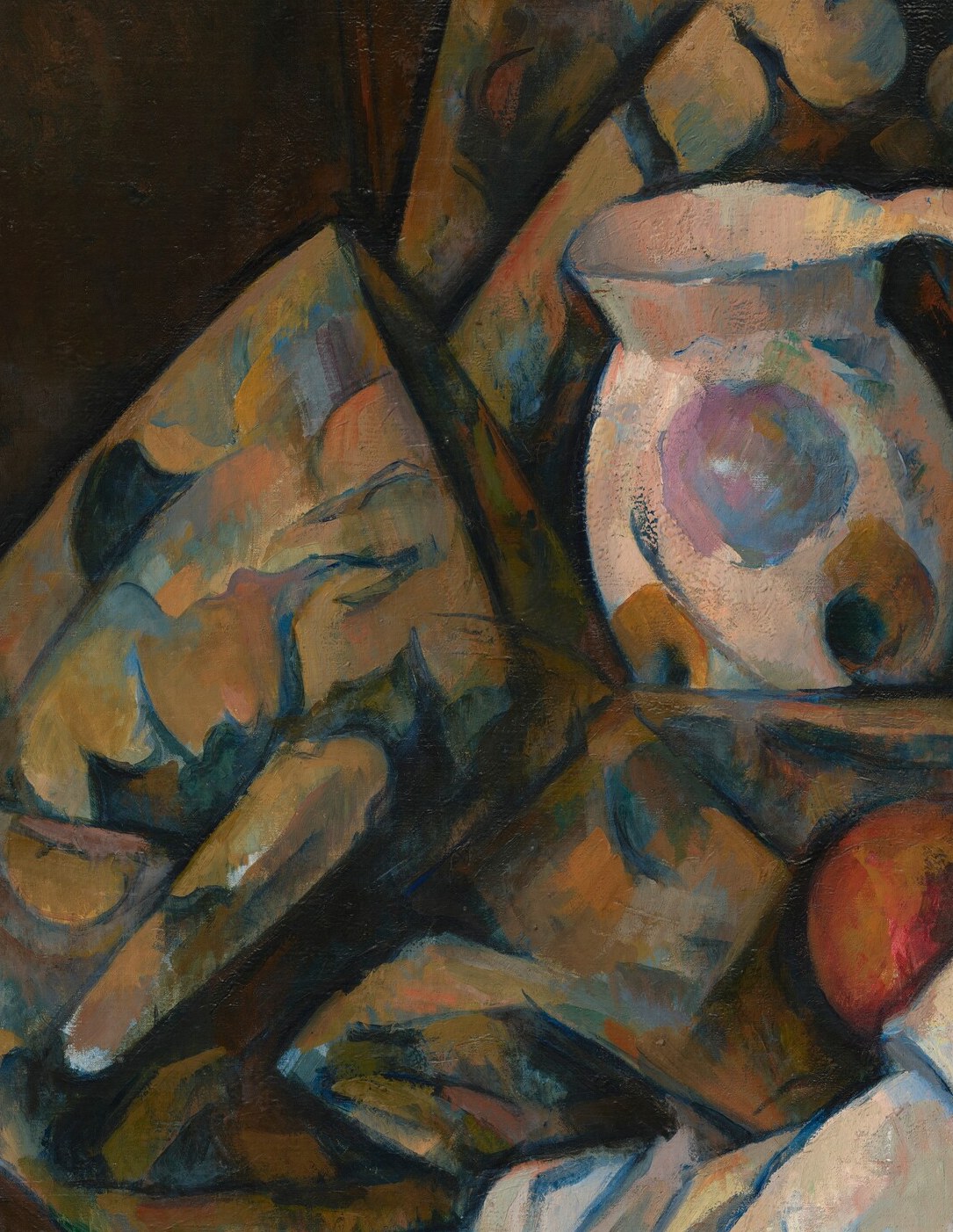
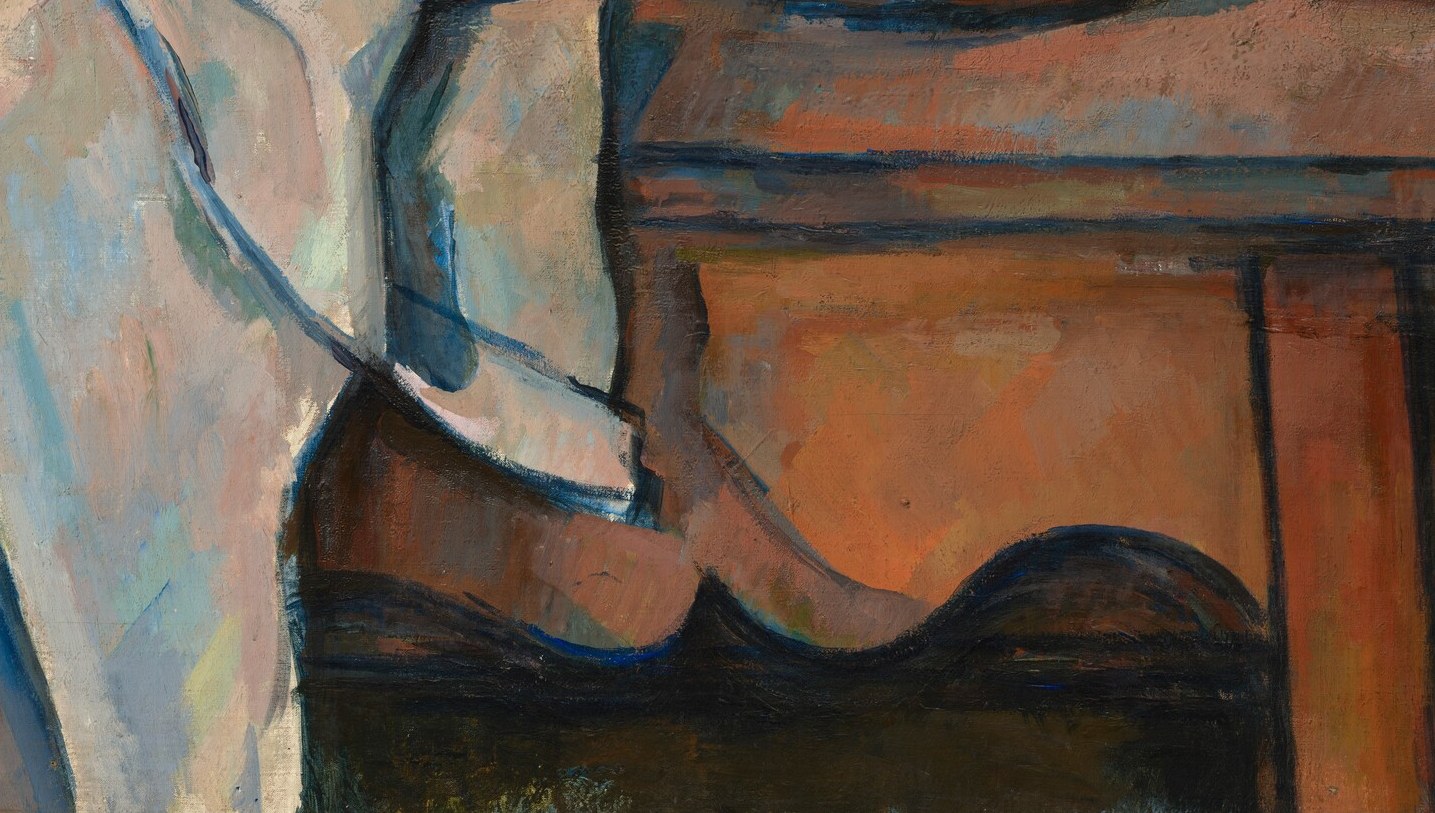
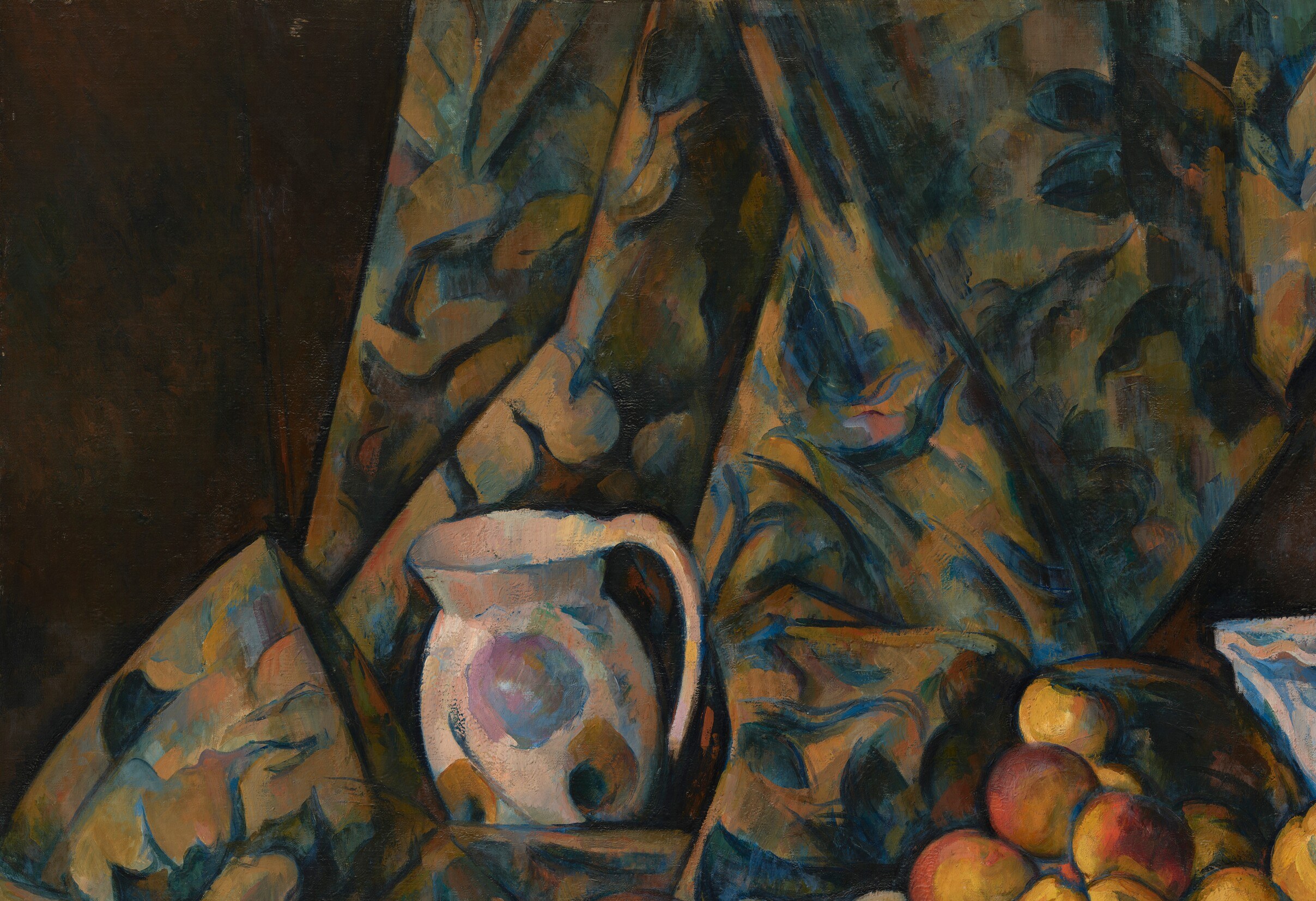
Run your eye along the table edge. Instead of receding into depth, the wooden front plane rises toward you, flattening the picture. The compote bowl shows the most radical move: its elliptical rim is not a true oval but a distortion, drawn simultaneously from above and from the side. The white pitcher repeats the trick, its base and opening answer to different sightlines. Cézanne is not making mistakes. He is telling you that painting is a flat object before it is a window.
This was the visual research that changed the course of art. A generation later, Picasso and Braque would cite Cézanne as the father of Cubism, the first painter to systematically break an object into multiple viewpoints held on a single plane. What looks like a quiet tabletop in Provence is, in fact, the laboratory where modern art learned to walk away from illusion.
Cézanne worked on this painting near the end of his life, in the same Aix-en-Provence studio where he had spent decades pursuing what he called his "petite sensation", the direct experience of seeing, before the mind organizes it into rules. The fruit on this table is not still. It is held in a permanent tremor between stability and collapse, and that tension is exactly where the twentieth century begins.
Details

Transcript
In 1905, the rules of painting said a table must recede. Cézanne said no. The table tilts upward. It defies the horizon. Now look at the bowl. Its rim refuses a single viewpoint. The ellipse is warped. You see it from above and from the side. Even the pitcher is drawn from two angles at once. Cézanne wasn't failing at perspective. He was replacing it. From this tension, Cubism would be born.