Obweebetuck by Julian Alden Weir
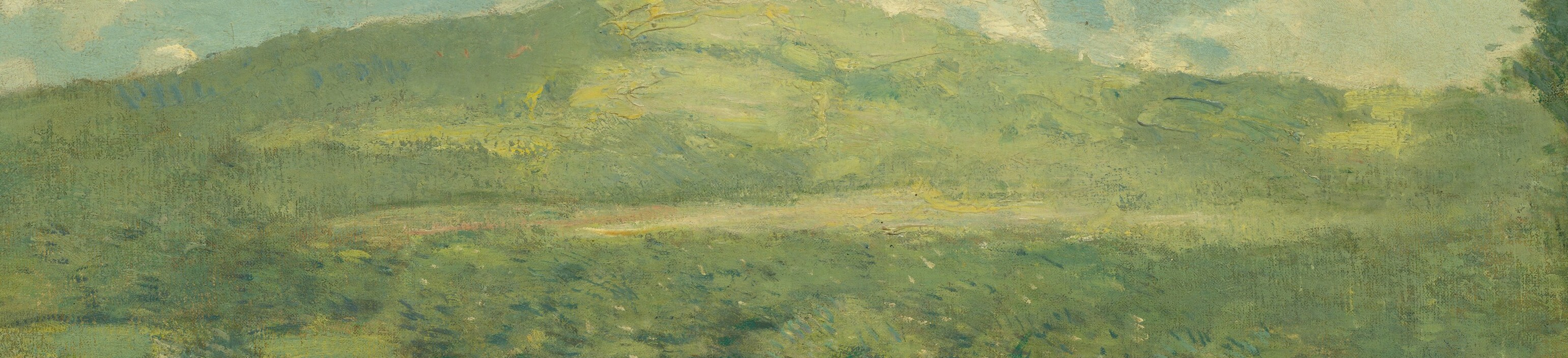
Julian Alden Weir's painting, Obweebetuck, c. 1908, captures a serene forest scene near his Connecticut home. This oil on canvas, held in a private collection, beautifully exemplifies a shift in early 20th-century American landscape painting.
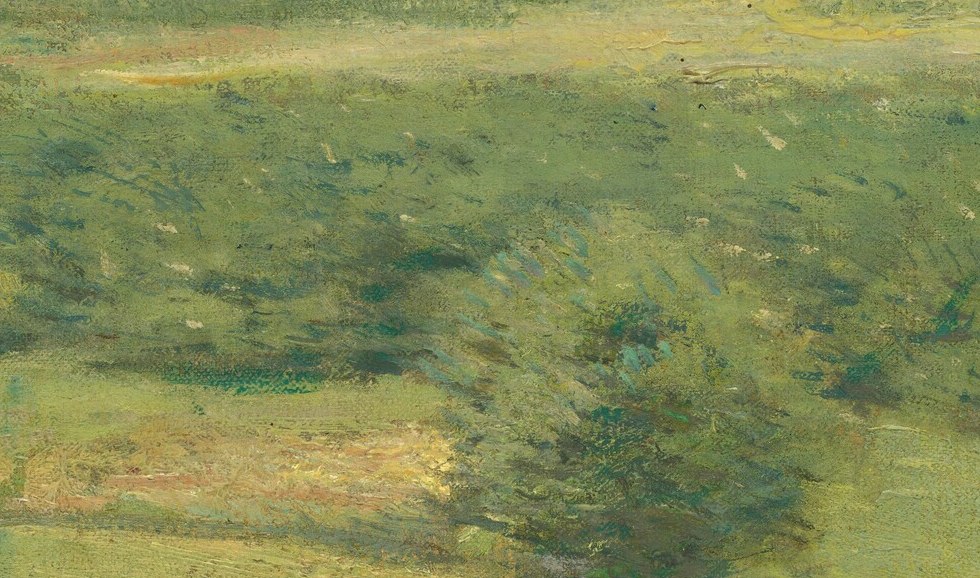
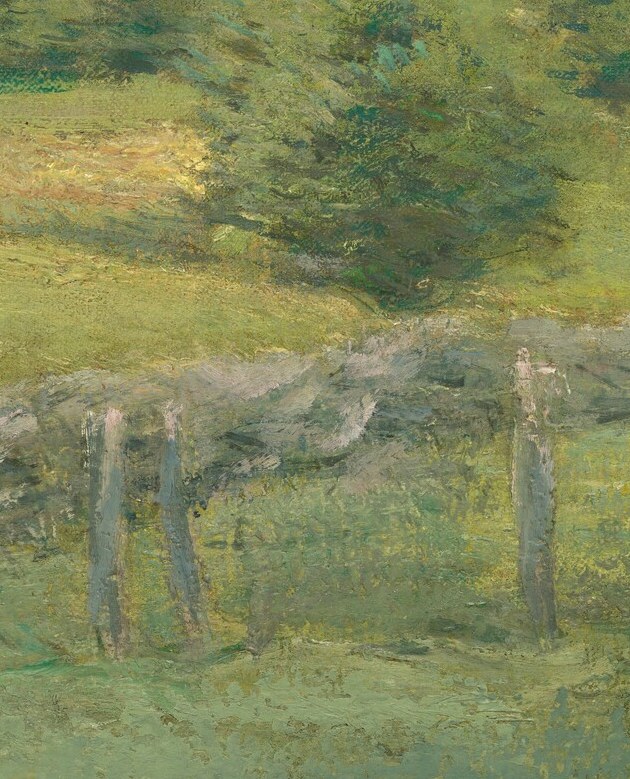
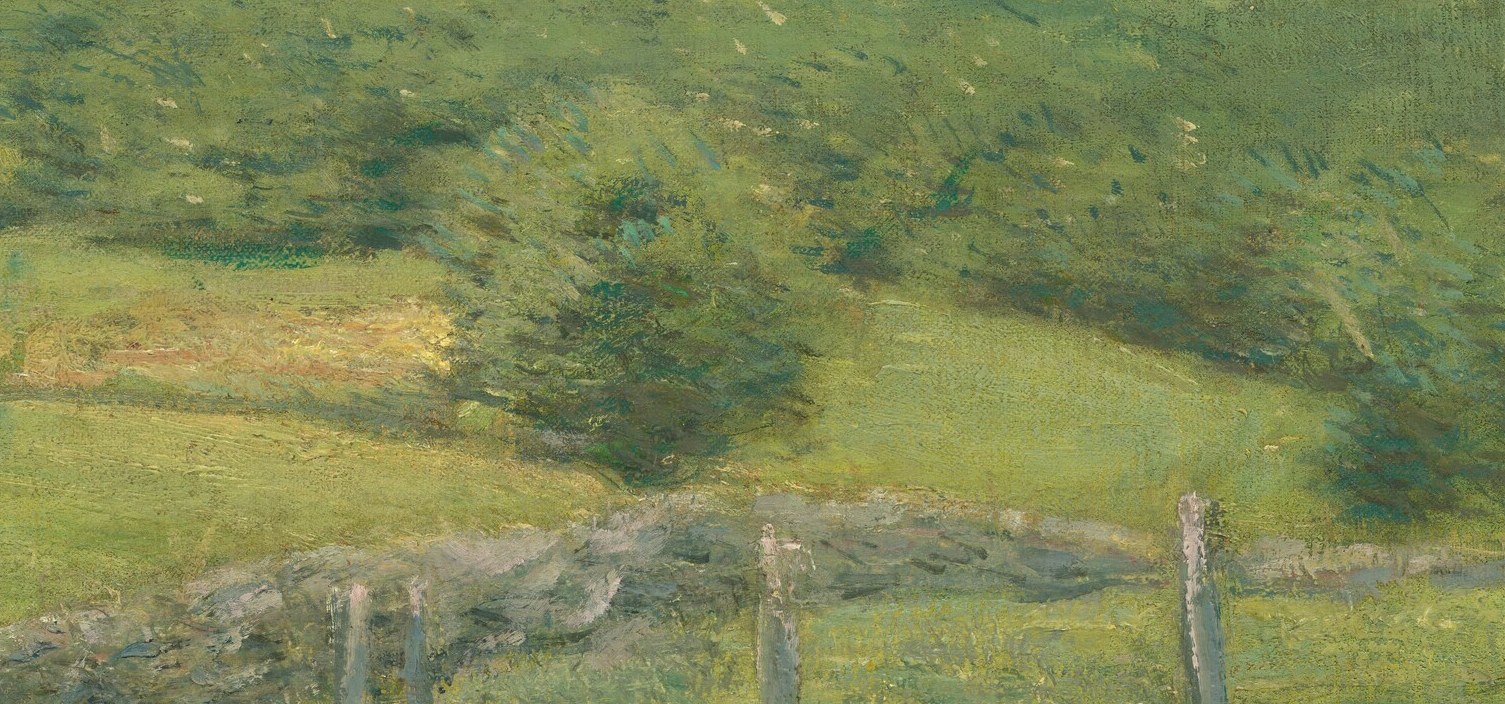
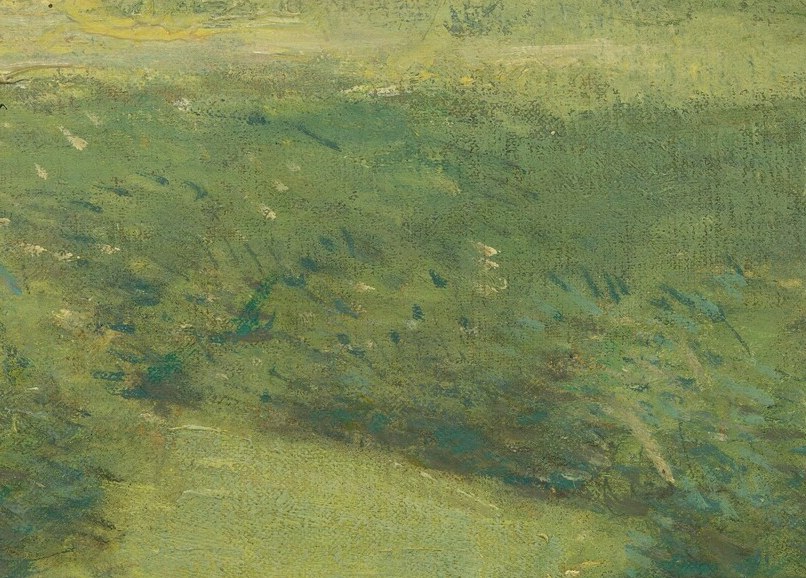
Look closely at the woman in the white dress, resting quietly on a tree stump. The artist's focus on the dappled sunlight filtering through the dense trees and the tactile texture of the foliage are key to its beauty.
Weir, a founding member of "The Ten," moved away from strict academic detail. He embraced impressionistic influences, applying paint thickly to create a vibrant, luminous surface, reflecting a broader trend among his American contemporaries.
This painting invites viewers into a moment of repose in nature, a peaceful escape from the bustling modern world.
Details
Transcript
Around 1908, American artists embraced natural light. This painter often worked near his Connecticut home. A woman rests, surrounded by dense, textured woods. Look closely at the dappled sunlight on the leaves. He used thick paint to capture light and texture. The quiet scene reflects a shift in American painting.