Rest by Nicolaes Pieterszoon Berchem
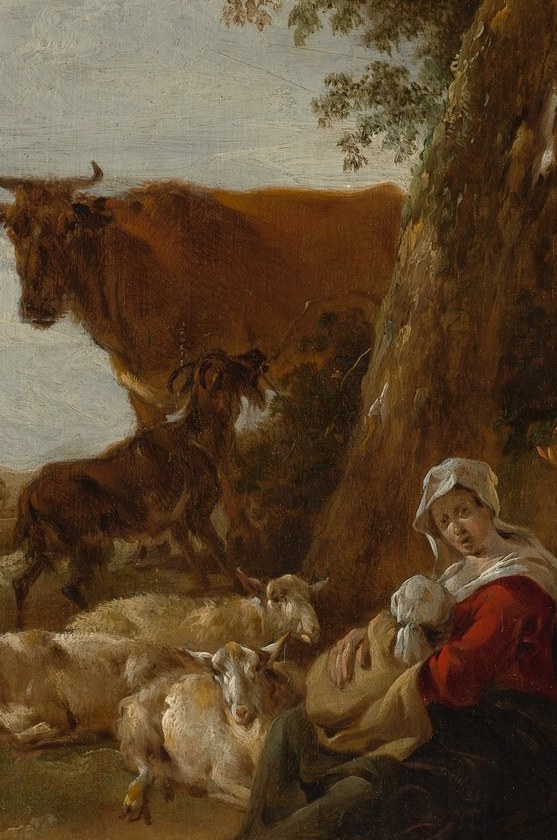
This is Nicolaes Berchem's 'Rest,' painted in 1644. It hangs today in a museum collection, a quiet pastoral scene of a woman milking, a man leaning on his staff, and animals settling into an afternoon lull. But the painting's title is a gentle deception: almost every figure in the scene is working or standing watch, not sleeping.
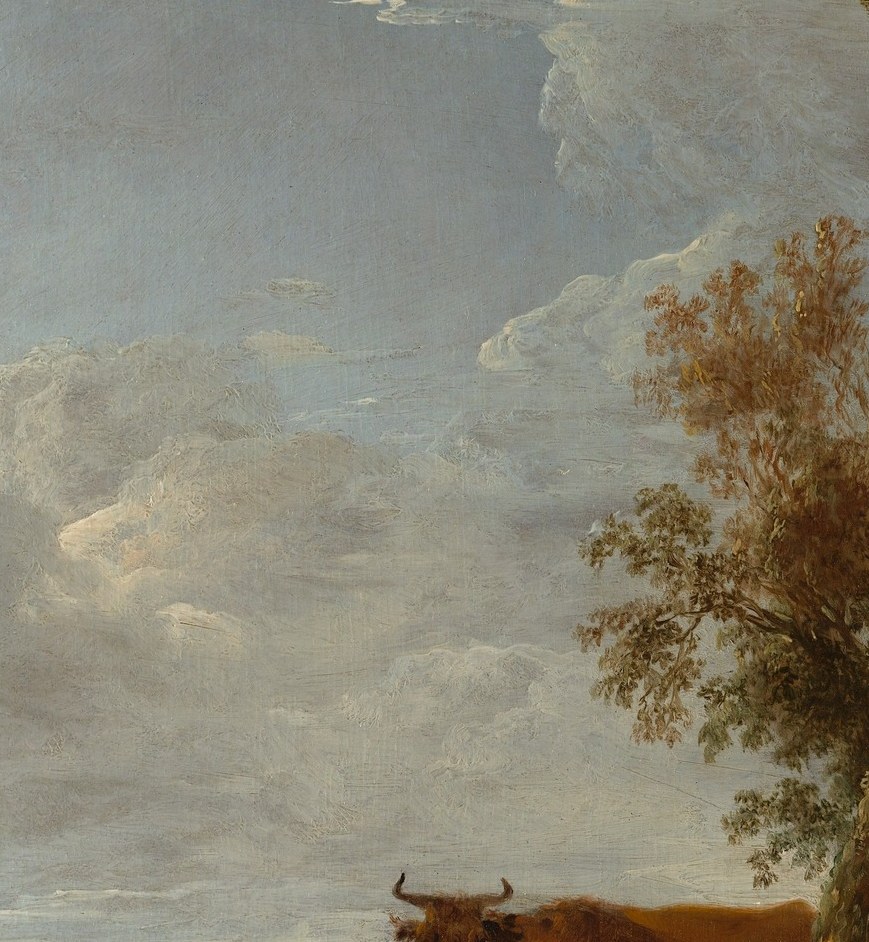
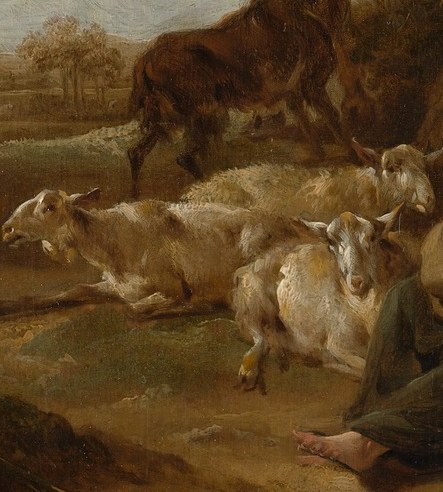
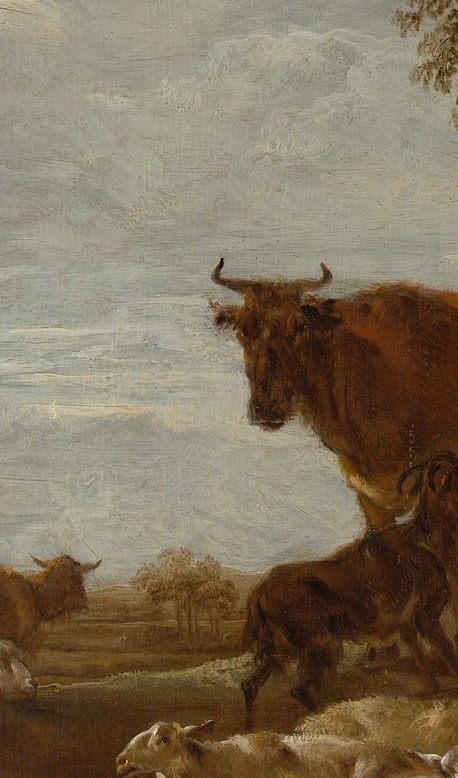
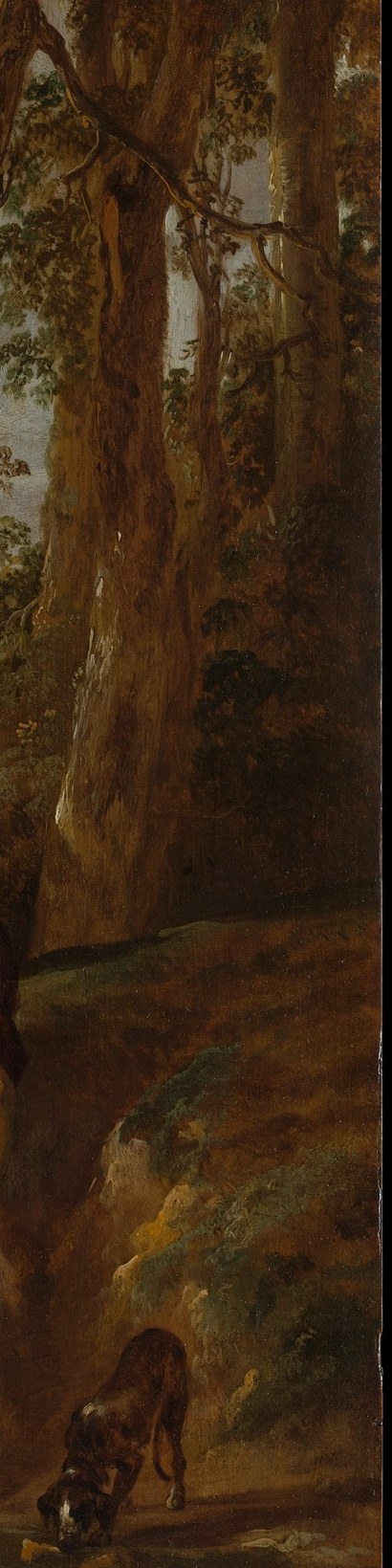
Look at the cow's massive bulk filling the canvas, its horns framed against a patch of bright sky. Then let your eye drift to the dog at the lower center, resting with one eye still alert, and the hazy ruins on the right that place this scene somewhere far from the Netherlands. Those ruins are a signature of the Italianate painters: a memory of a grander, warmer, sunnier world.
Berchem was part of the 'Dutch Italianate' movement. He traveled to Italy around 1642-1645, sketching Roman ruins and the golden light of the Campagna, then returned to Haarlem and spent the rest of his career painting that dream for Dutch collectors. He became one of the most commercially successful artists of the Dutch Golden Age, with his biographer claiming he produced over 850 paintings, plus hundreds of etchings and drawings.
The warm ochre light that washes across the cow's flank and the woman's blue dress in 'Rest' is not a literal Dutch afternoon. It is a forty-year memory of a brief visit, refined into a formula so popular that Berchem could barely paint fast enough. The rest in the painting is not the figures' rest. It is the painter's: a lifelong, profitable act of returning to a place he never lived again.
Details
Transcript
They called it 'Rest.' But this is not an afternoon nap. She works. The cow holds still. Even the dog is only resting its eyes. The painter, Nicolaes Berchem, was the Dutch Golden Age's most bankable pastoralist. He studied Italy as a young man, filled sketchbooks with ruins and golden light, then returned to Haarlem. For fifty years, he sold a dream of the south to northerners who had never seen it. Eight hundred fifty paintings. An industry built on a memory.