Cosimo I de' Medici (1519–1574) by http://www.wikidata.org/.well-known/genid/14463fda31b3bc014bb1c72458b0d7b0
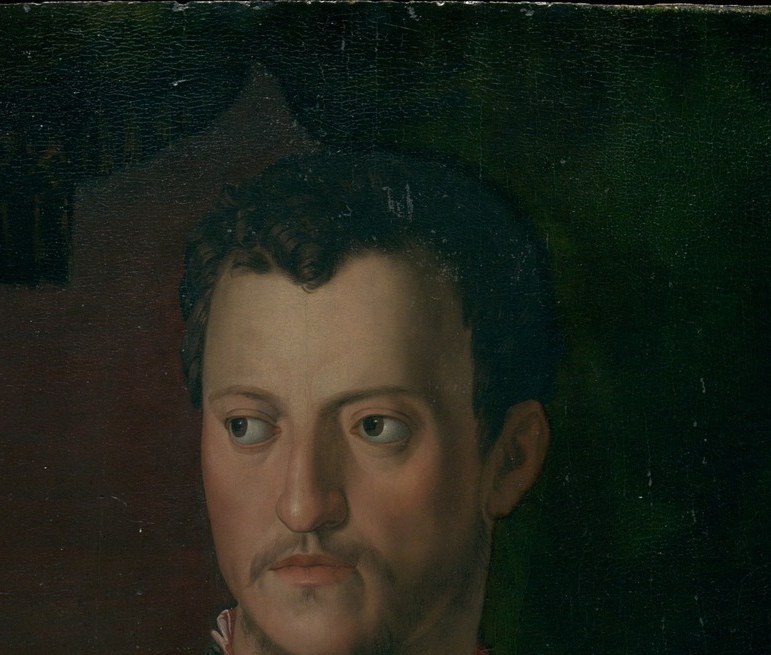
This is a posthumous portrait of Cosimo I de' Medici, the first Grand Duke of Tuscany, painted around 1600. It hangs in the Uffizi Gallery. What looks like a straightforward celebration of military power is actually a carefully managed illusion, painted decades after Cosimo's death.
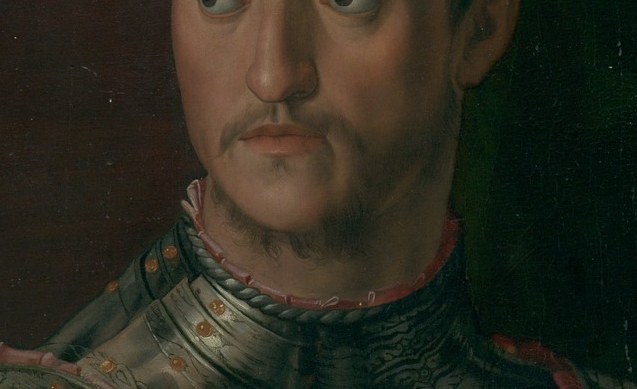
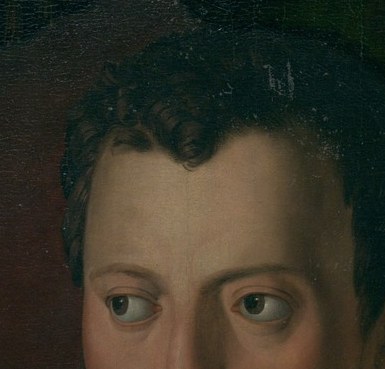
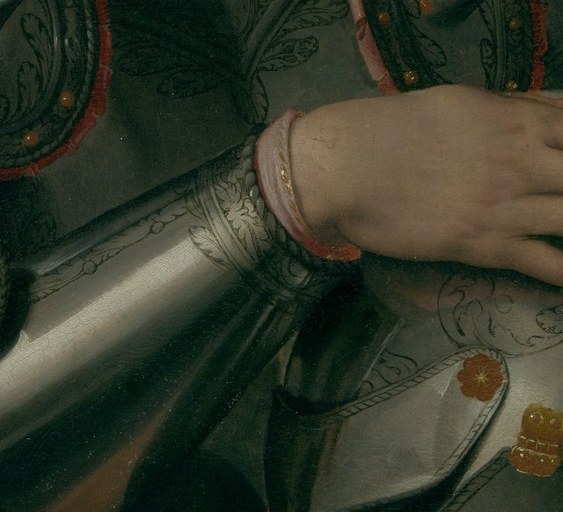
Look first at his face. The gaze is direct and unflinching, a Medici trick of court portraiture meant to project dynastic authority. Then look at the armor, especially the gorget at his throat. The painter had to convince us that living flesh meets cold steel, and the transition is seamless. But notice how the armor encloses him, how rigid the neck is.
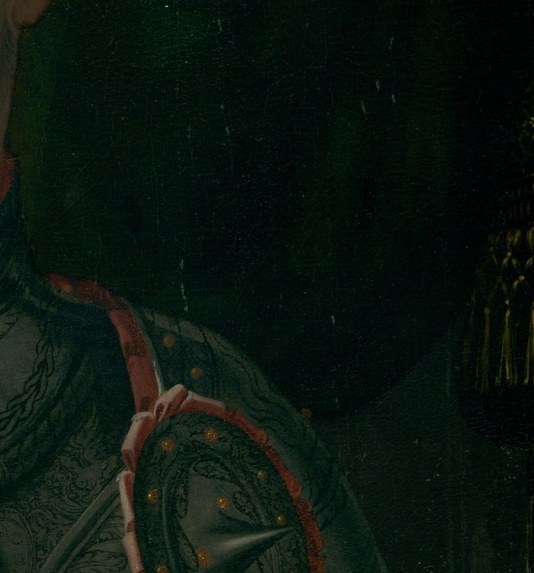
By the end of his life, Cosimo suffered from severe gout and a narrowing of the esophagus. He could barely swallow and was in constant pain. This portrait was painted from earlier likenesses after his death, deliberately erasing his physical decline to preserve the image of an unbreakable ruler. The red sash is the only hint of the living body beneath all that metal.
A portrait like this was never just a picture. It was a political tool, a mask of health cast over a failing body to reassure a dynasty that its founder remained strong. When you see that stern gaze, you are seeing a man rebuilt in paint.
Details
Transcript
Cosimo I de' Medici ruled Florence with an iron fist. But look closely at this armor. Specifically, the fit around his neck. By 1600, he could barely swallow solid food. His stern expression was not just authority. It was pain. The portrait was painted to project eternal strength. An illusion made of oil, metal, and will.