A Caribbe Village in Dutch Guiana by Catlin, George
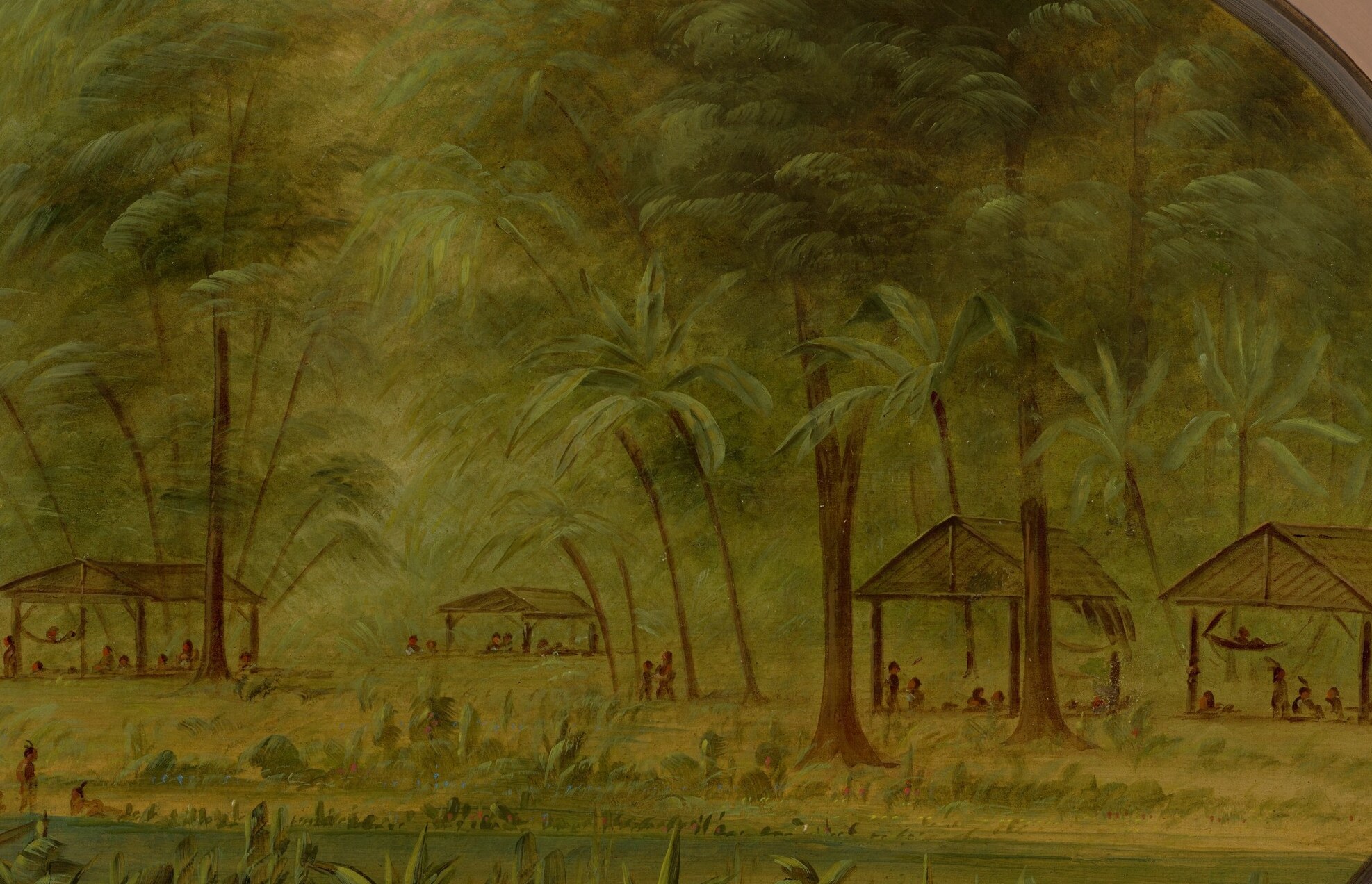
George Catlin, famous for his portraits of Native Americans, also documented indigenous life in other parts of the world. This painting, "A Caribbe Village in Dutch Guiana," created by Catlin between 1854 and 1869, captures a tropical settlement with remarkable detail.
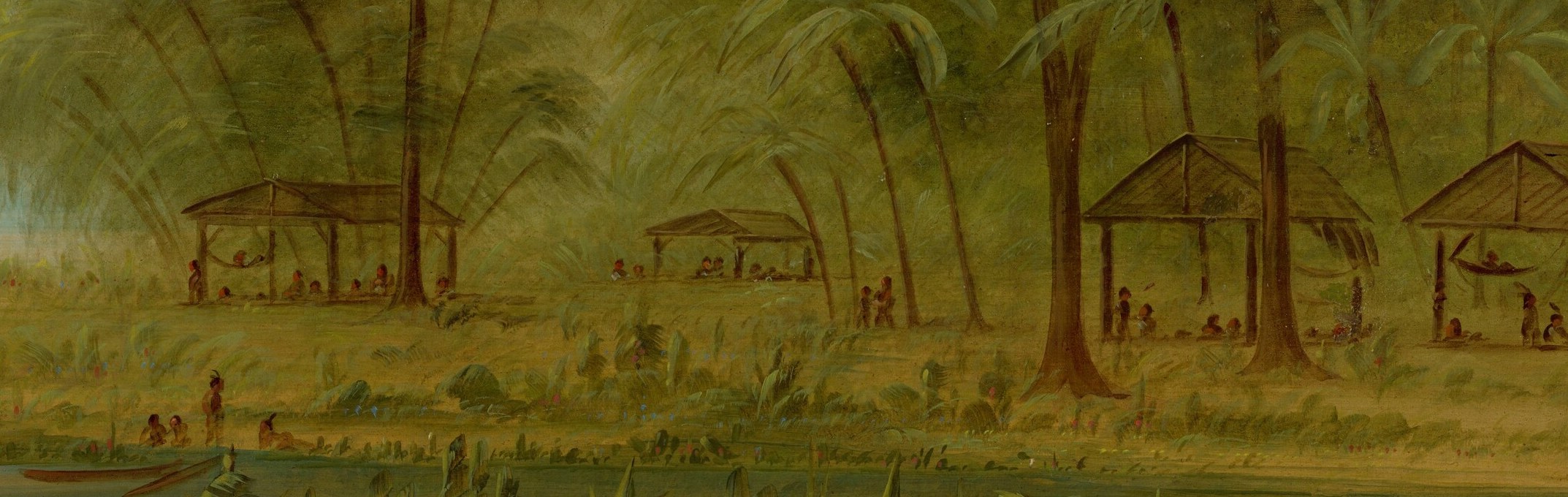
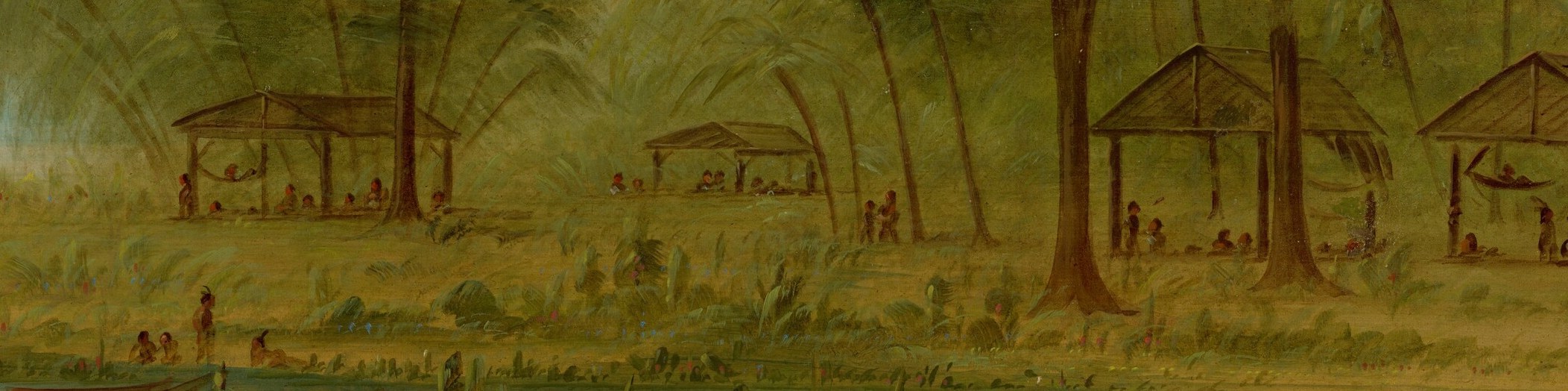
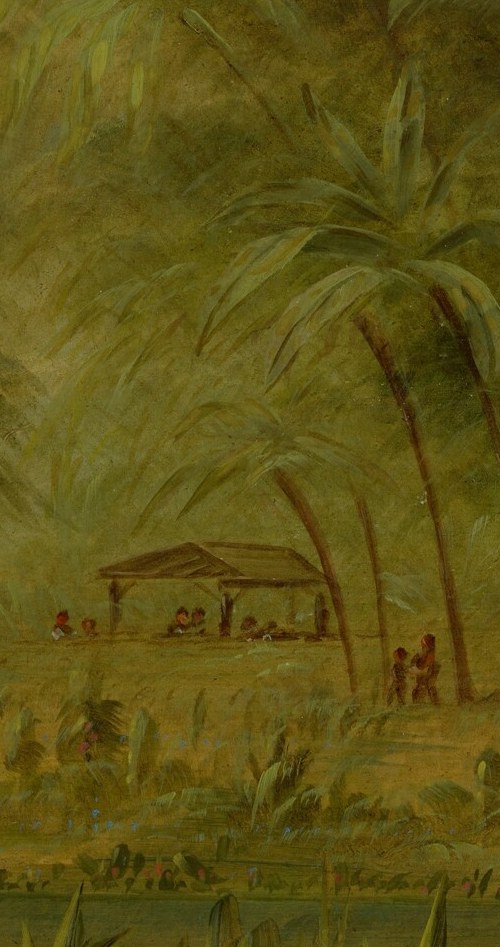
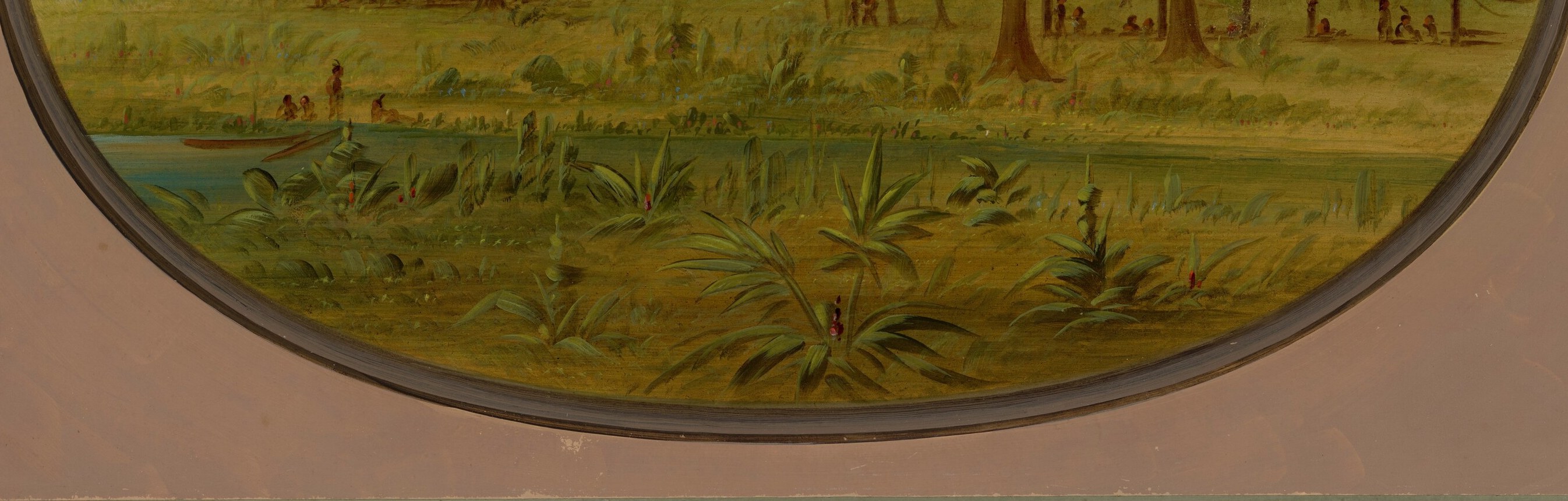
The painting, an oil on card mounted on paperboard, shows modest wooden dwellings shaded by tall palm trees. Small figures beneath the huts hint at daily life and social interaction, while lush tropical foliage conveys the humid atmosphere of the region. A calm body of water and a small dugout canoe suggest a community closely tied to its environment.
Catlin, an American lawyer and traveler, undertook a South American sketching expedition before creating this work. He first completed the image in 1854 and later revised it in 1869, a testament to his practice of developing on-site drawings into finished oil paintings. This piece expands the geographic scope of his visual record, moving beyond his well-known depictions of the American West.
What details do you find most striking in this glimpse of a distant world?
Details
Transcript
This painter, known for Native American portraits, also traveled widely. He created this Caribbe village scene after a South American journey. Palm trees shade the modest homes, conveying a humid atmosphere. Look closely at the figures beneath the huts, engaged in daily life. He first completed this scene in 1854, revising it in 1869. His work often combined immediacy of sketches with studio finishing.