Felipe III rey de España sedente by Bartolomé González y Serrano
Bartolomé González y Serrano’s 1615 portrait, *Felipe III rey de España sedente*, found at the Museo del Prado, presents King Philip III of Spain with all the usual trappings of royal power. Yet, it hides a surprising, humble detail.
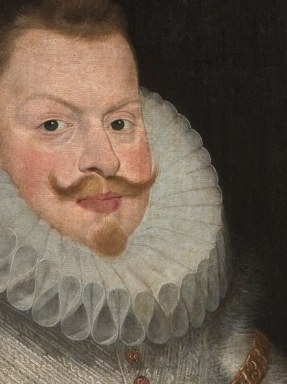
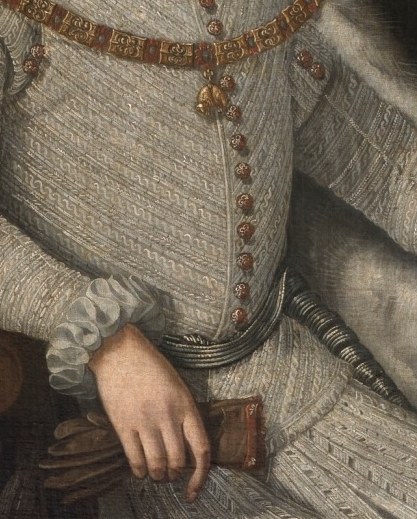
The King is depicted in his finest attire, adorned with the chain of the Order of the Golden Fleece, an embroidered doublet, and seated in an ornate chair, while a plumed helmet rests on a nearby table. Every element speaks to his status and authority, from his direct gaze to his hand resting confidently on his sword hilt.
Bartolomé González y Serrano was a prominent court painter, continuing the tradition of Spanish royal portraiture that emphasized dignity and legitimacy. This painting, created in 1615, was part of the Spanish royal collection, serving as both a record and a symbol of dynastic continuity.
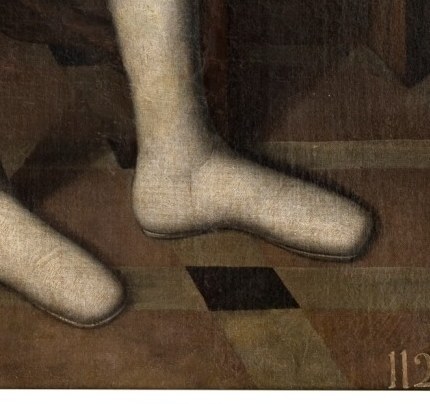
However, a closer look at the painting reveals an unexpected detail: the King's bare feet. This unusual choice contrasts sharply with the lavish display of wealth and power, perhaps hinting at a deeper meaning of humility or spiritual connection amidst his regal duties. What do you think this detail means?
Details
Transcript
This is Philip III, King of Spain, in 1615. His royal status is clear, from his ruff to his Golden Fleece. He was painted by Bartolomé González y Serrano, a court painter. Even his hands suggest authority, resting on his sword. Every detail proclaims his power and wealth. But look closely at his feet.