Girl with a Flute by Dutch 17th Century
Once thought to be a rare work by Johannes Vermeer, *Girl with a Flute* (c. 1669-1675) is now attributed to a member of his studio. This small oil on panel painting, held at the National Gallery of Art in Washington, D.C., offers a fascinating glimpse into the artistic practices of the Dutch Golden Age.
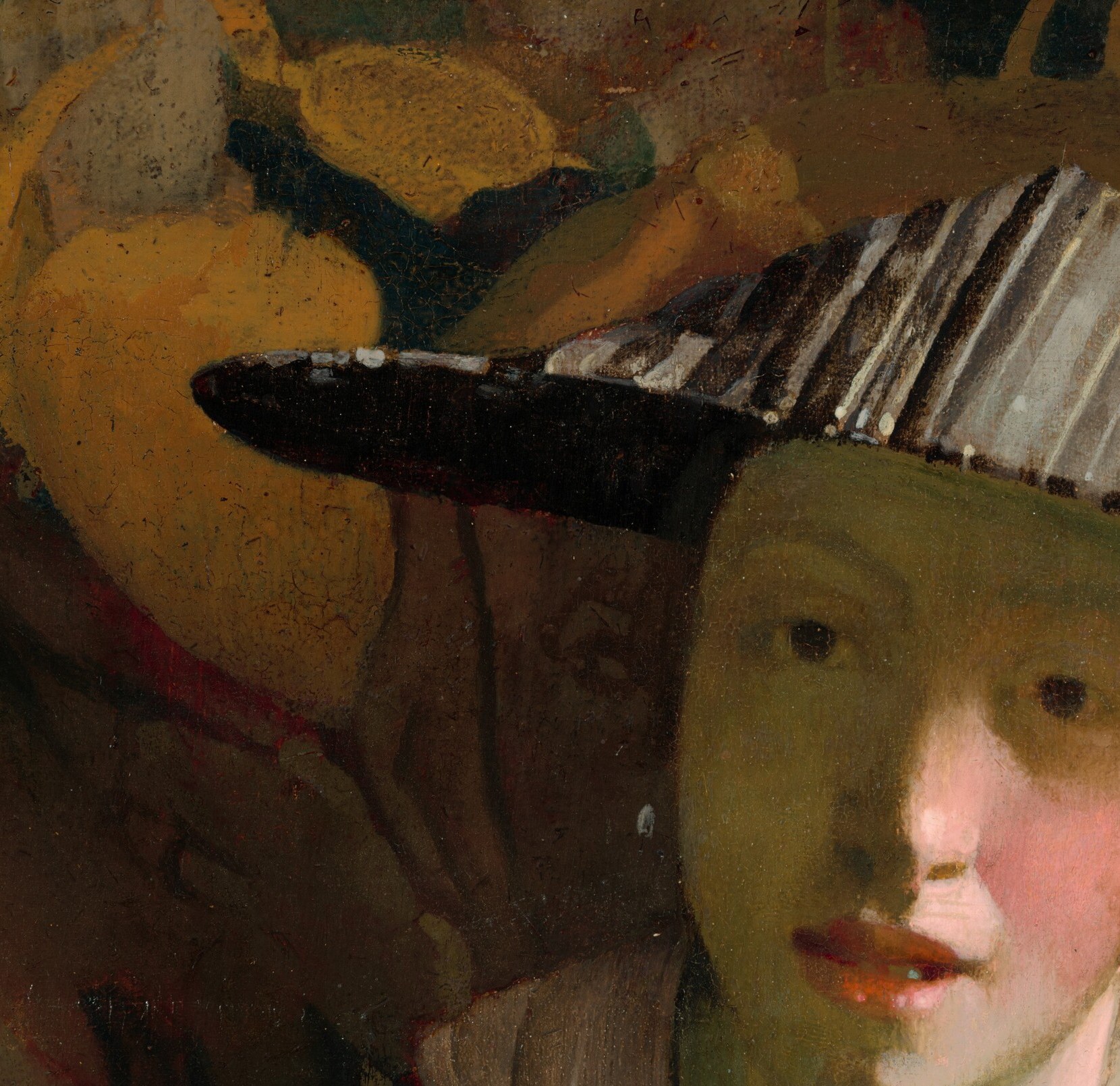
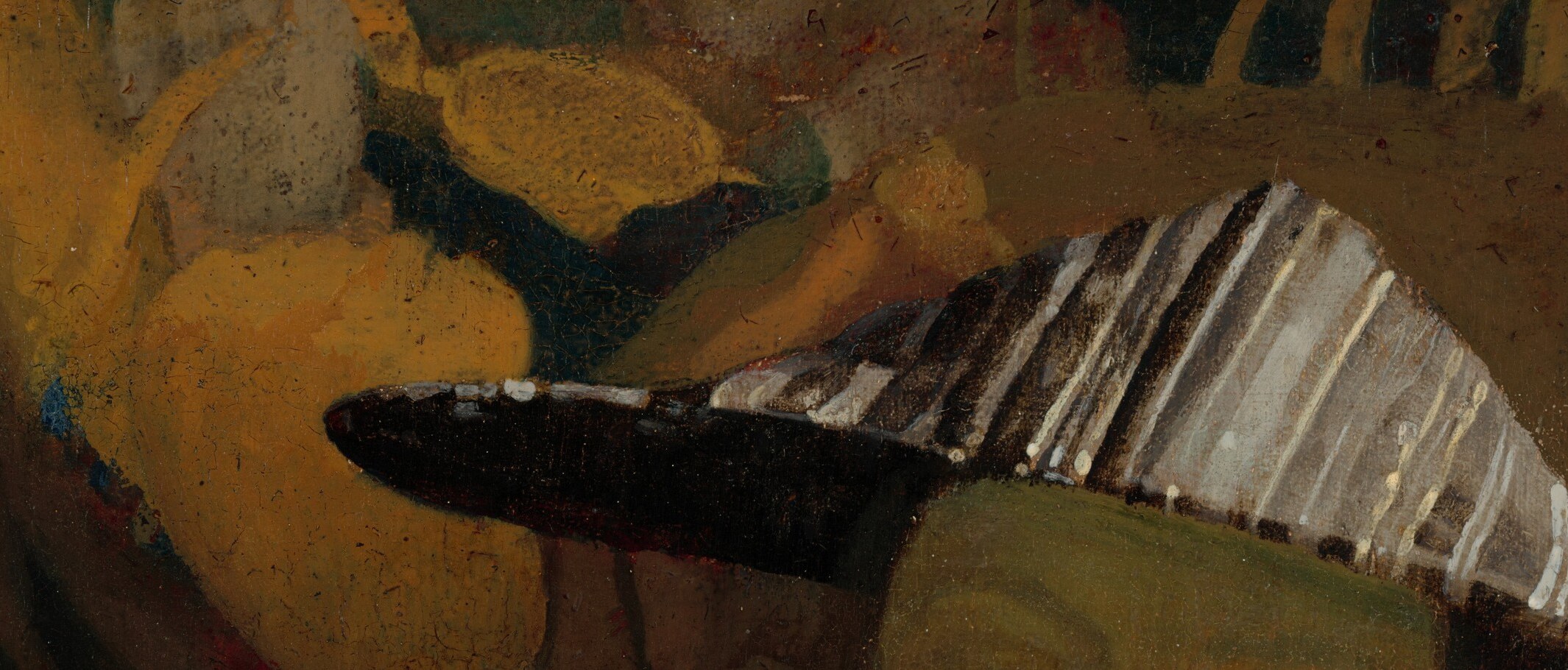
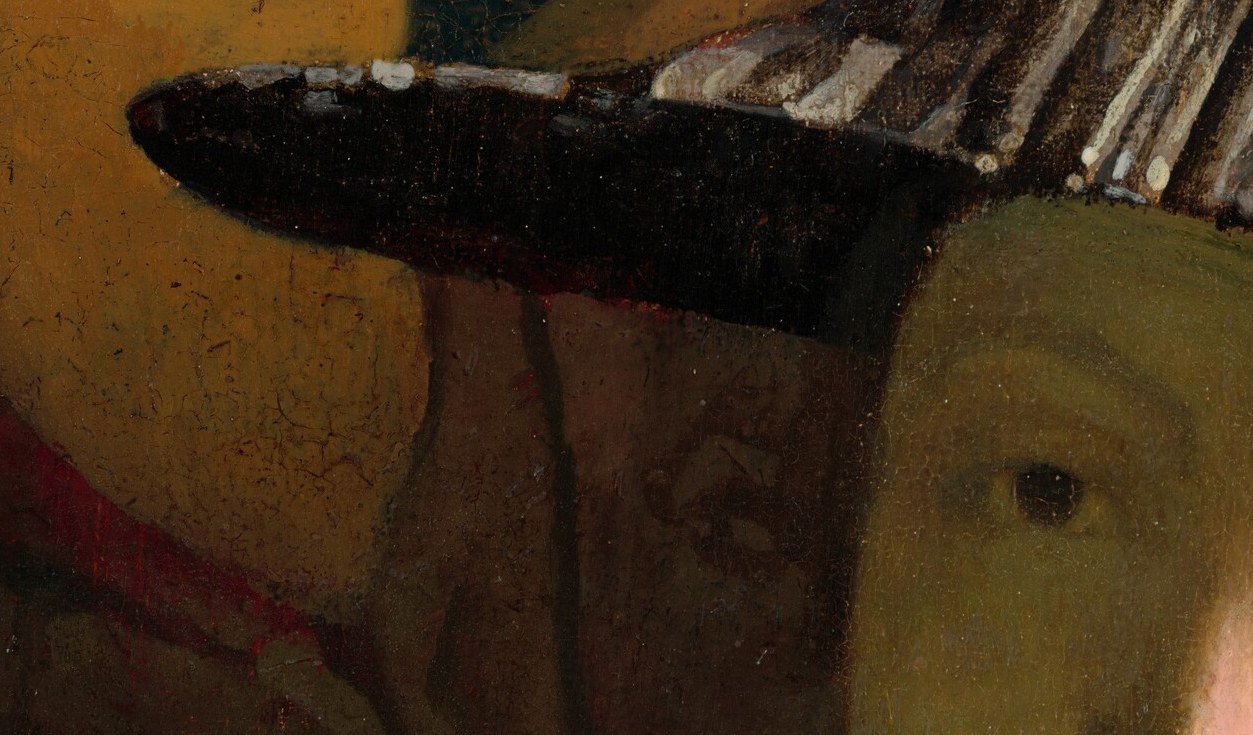
Observe the girl's captivating gaze and the theatrical wide-brimmed hat, which draws the eye. The bright ultramarine blue of her jacket is a pigment famously used by Vermeer, suggesting a close connection to his workshop.
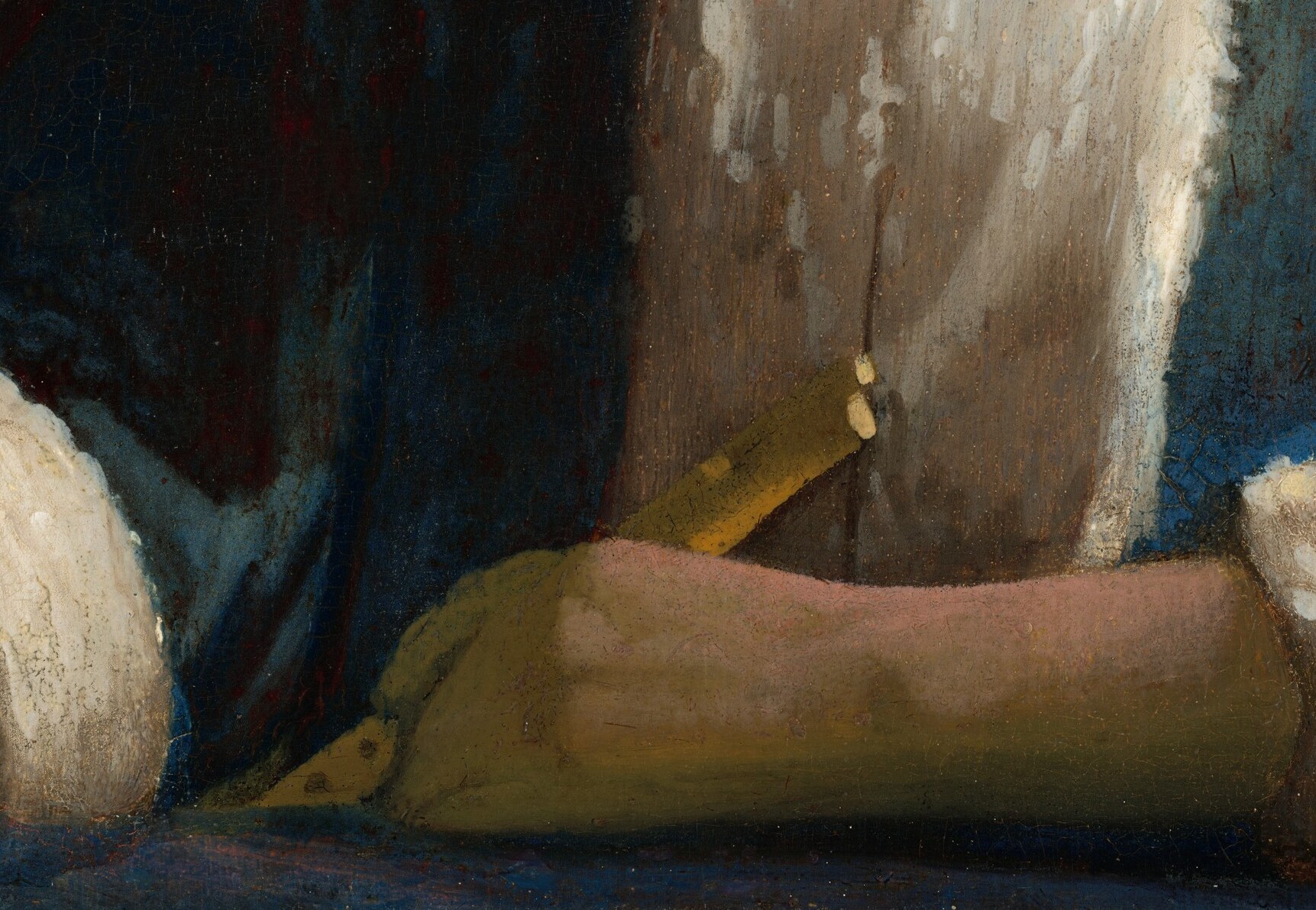
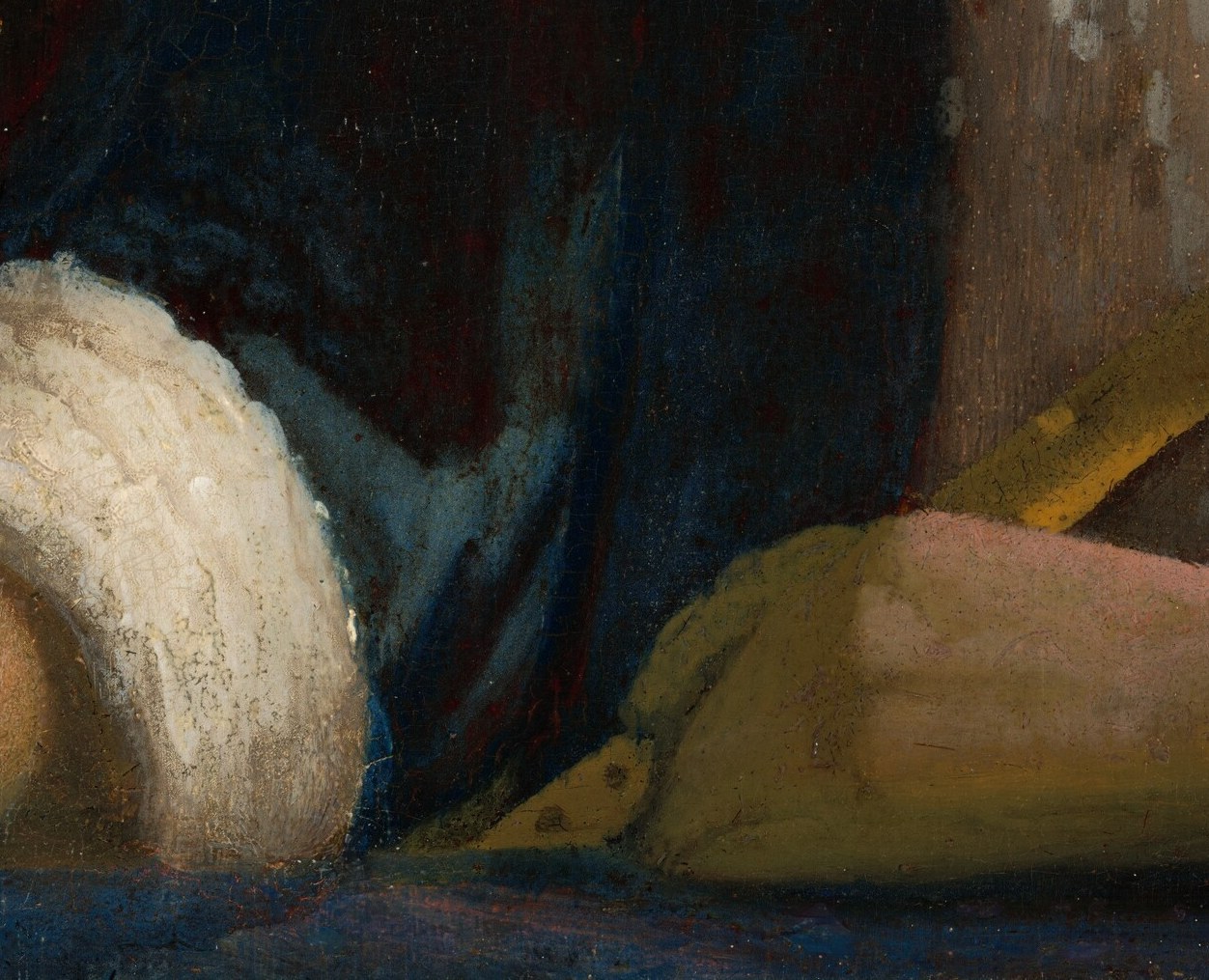
Art historical scholarship has re-evaluated the painting, noting subtle differences in technique, such as the looser handling of the hands holding the flute, which point to a talented contemporary working within Vermeer's sphere rather than the master himself. Yet, the painting's quiet introspection and the distinctive play of light remain hallmarks of the Delft school.
Even without Vermeer's direct hand, this work continues to prompt questions about collaboration and attribution in 17th-century art. What do you think this painting communicates in its stillness?
Details
Transcript
This young girl, caught in a moment of quiet thought. She wears a theatrical hat, unusual for its time. Her eyes meet yours, direct and unblinking. For decades, this painting was believed to be by Vermeer. But the loose grip on the flute suggests a different hand. Now, it's attributed to a member of his studio. Still, that direct gaze holds a profound intimacy.