Monkeys in the school by David Teniers the Younger
David Teniers the Younger, a Flemish Baroque master, frequently used monkeys in his art to satirize human behavior. His 1660 painting, "Monkeys in the school," now at the Museo del Prado, is a prime example of this witty approach.
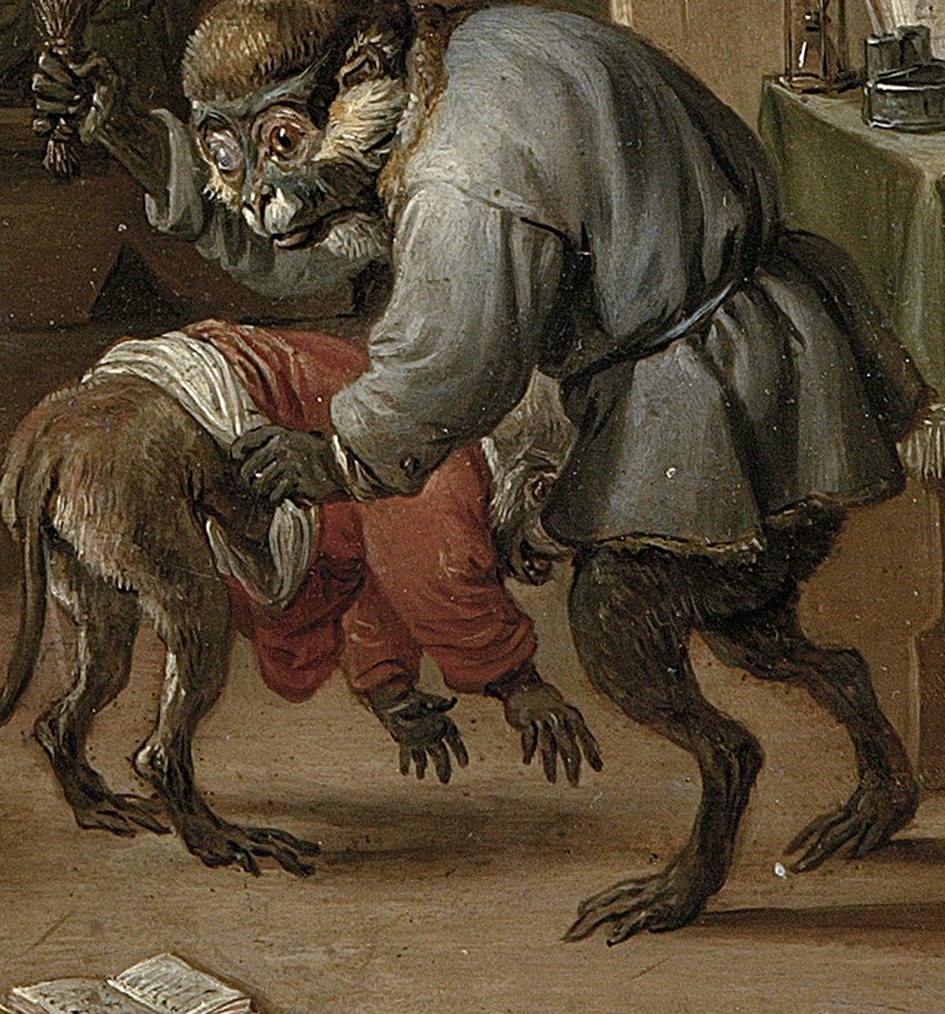
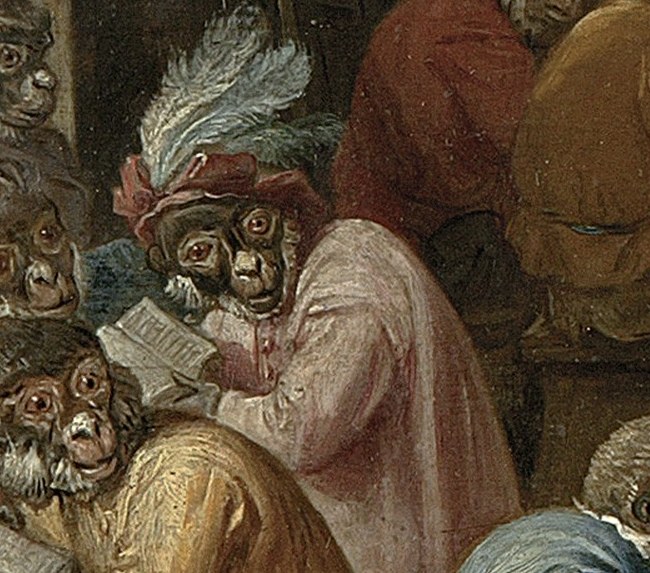
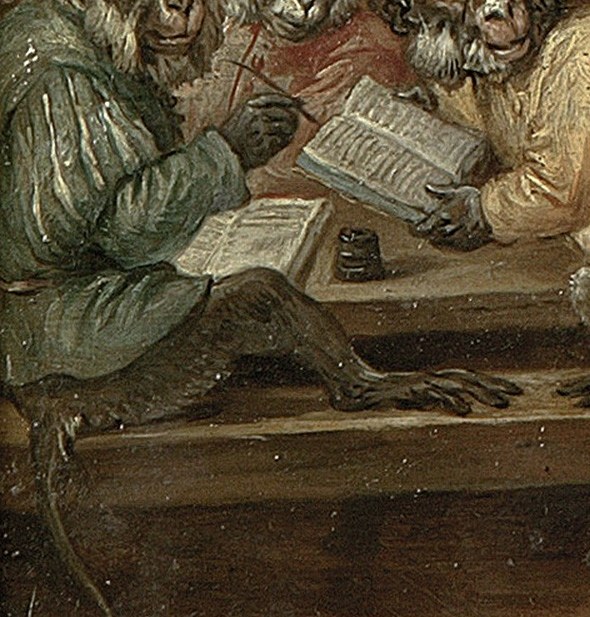
In this busy classroom scene, anthropomorphic monkeys mimic human scholars. From a 'teacher' adjusting a student's robe to a monkey in a feathered hat, each figure reflects human pretensions and vanities. The room is filled with familiar objects of learning: books, inkwells, and even an hourglass.
Teniers the Younger was known for his prolific output across many genres, but his satirical monkey scenes were particularly popular. They offered a humorous yet sharp critique of society, appealing to collectors who enjoyed art that blended wit with moralizing commentary.
Through these playful depictions, Teniers invited viewers to reflect on their own follies. What human behaviors do you see mirrored in these simian scholars?
Details
Transcript
This painter often depicted monkeys, acting very human. Here, they mimic a school. Look at this teacher, adjusting a robe. Others study intensely, or pretend to. See his feathered hat? He is surrounded by the tools of human learning, even an hourglass. The artist used these scenes to playfully mock human folly. This genre was popular, blending humor with social commentary. But the humans in his paintings are not so different.