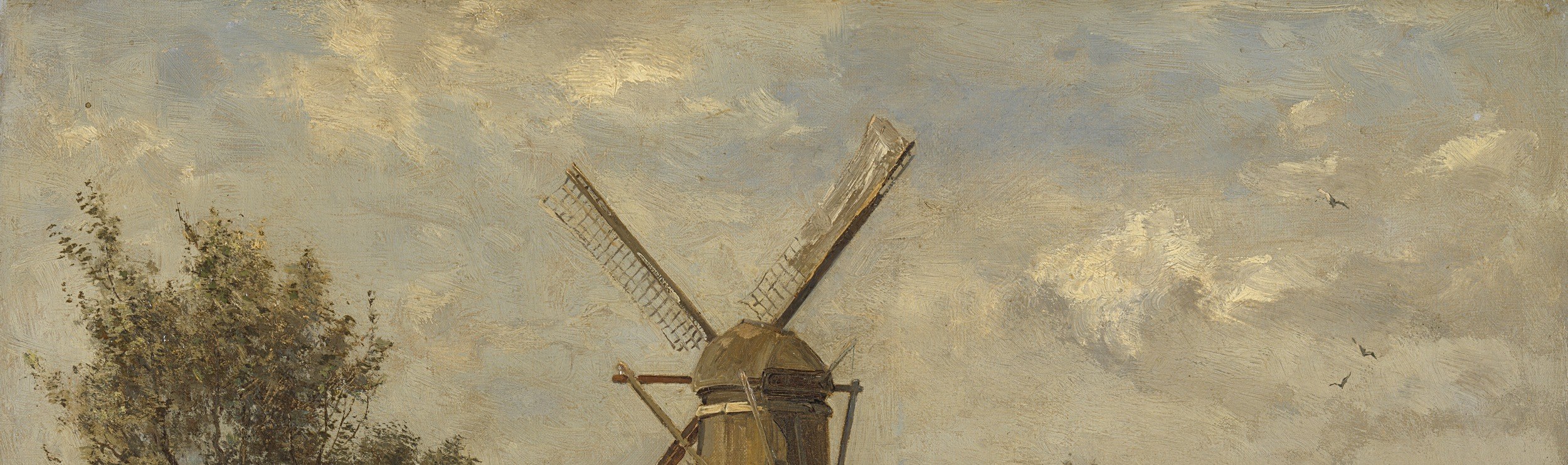
Windmill on a pond by Paul Joseph Constantin Gabriël
This is Windmill on a Pond, painted in 1896 by the Dutch artist Paul Joseph Constantin Gabriël. At first glance it reads as a serene landscape, a windmill, still water, a vast grey sky, the kind of picture you scroll past in two seconds. But the painting quietly rewards anyone who stops.
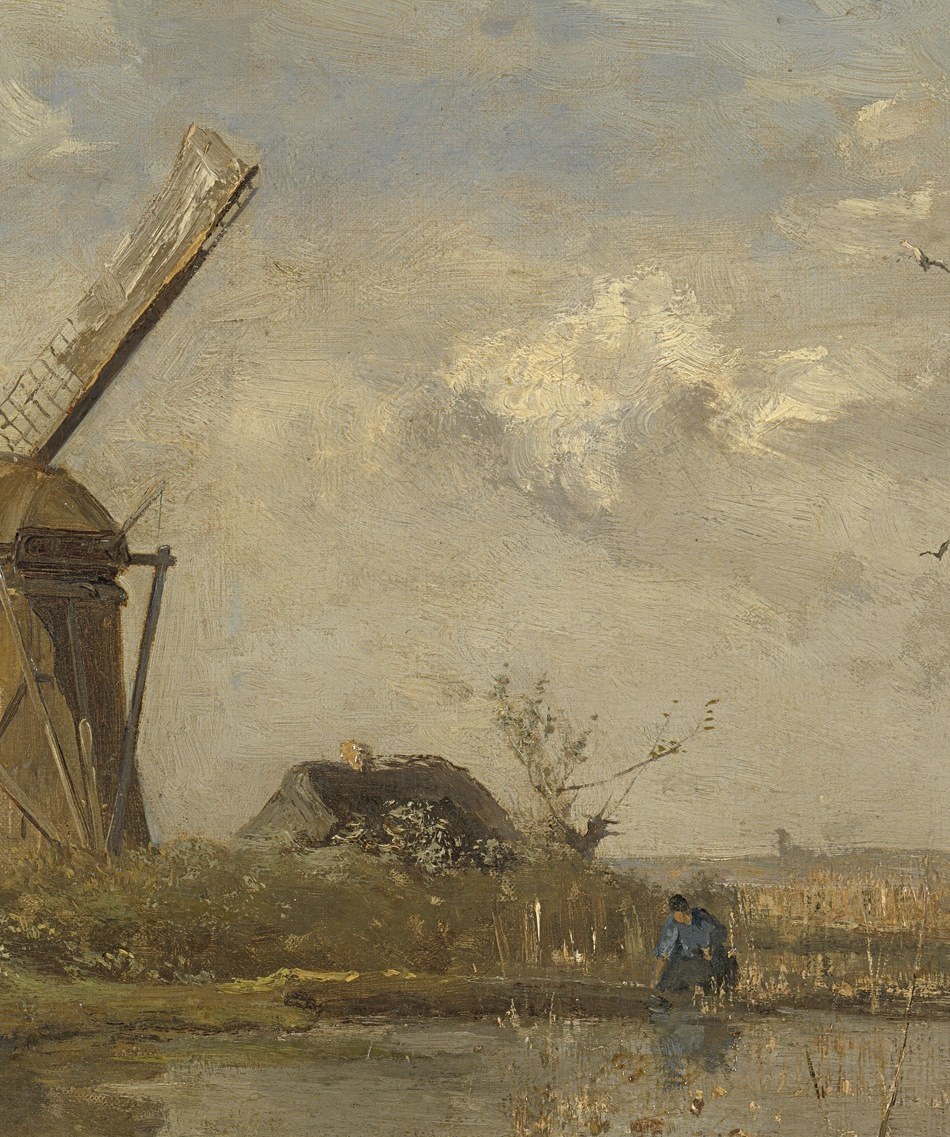
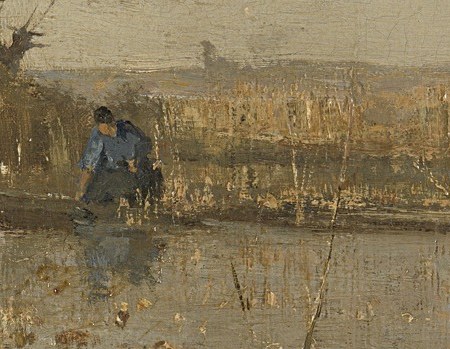
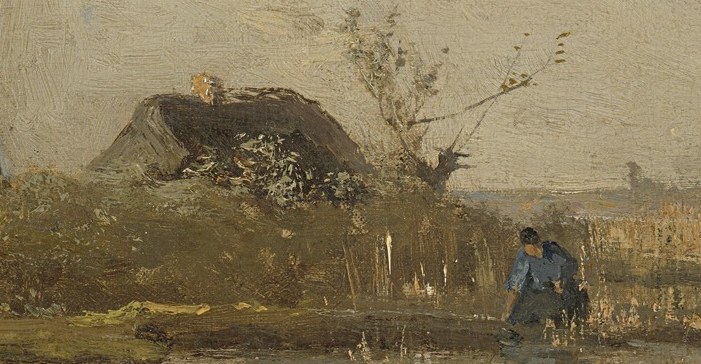
The eye naturally goes to the windmill and the seated figure on the left. Most people never notice the second figure: a tiny worker standing at the mill's base, right at the water's edge. And tucked behind the mill itself, almost hidden, is the thatched roof of a farmhouse. These two small details change the whole painting. This is not a picturesque ruin or an empty scene. It is a working farm, a lived place, on an ordinary overcast day.
Gabriël was a key member of the Hague School, a group of Dutch painters who turned away from romantic drama and toward the quiet truth of the Dutch landscape. He was 68 when he made this work, painting in the polders he had known his entire life. His real subject was never just the land but the light and air that moved across it. You can see that mastery in the luminous cloud patch just above the horizon, and in the delicate strokes of reflected light on the pond.
Next time you see a Dutch landscape, slow down and look into the margins. The real story is often small, quiet, and easy to miss.
Details
Transcript
It looks like a postcard of Dutch calm. A windmill, a pond, a vast silver sky. One figure rests on the bank, perfectly still. But this is not an empty scene. Gabriël was 68 when he painted this, deep in the Dutch countryside he had drawn all his life. Now look down, just beside the mill's base. A second figure, a worker at the water's edge. This is a working farm. And tucked behind: a thatched roof you can easily miss. Someone lives here.