Bazille and Camille (Study for "Déjeuner sur l'Herbe") by Monet, Claude
Claude Monet's "Bazille and Camille (Study for 'Déjeuner sur l'Herbe')" from 1865 captures a pivotal moment in the artist's early career. This oil on canvas, housed in the National Gallery of Art, Washington D.C., is a fascinating glimpse into a grand ambition that was never fully realized.
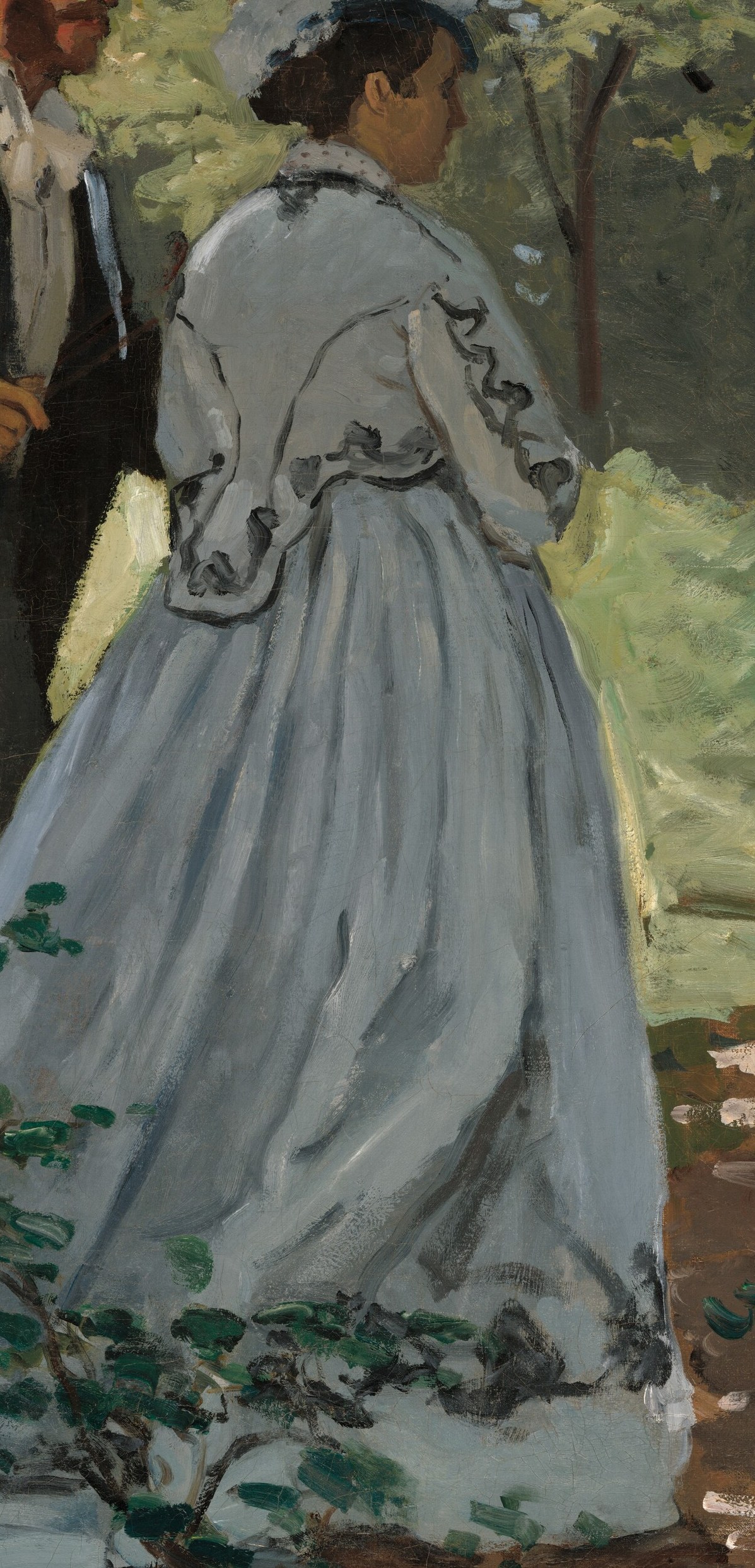
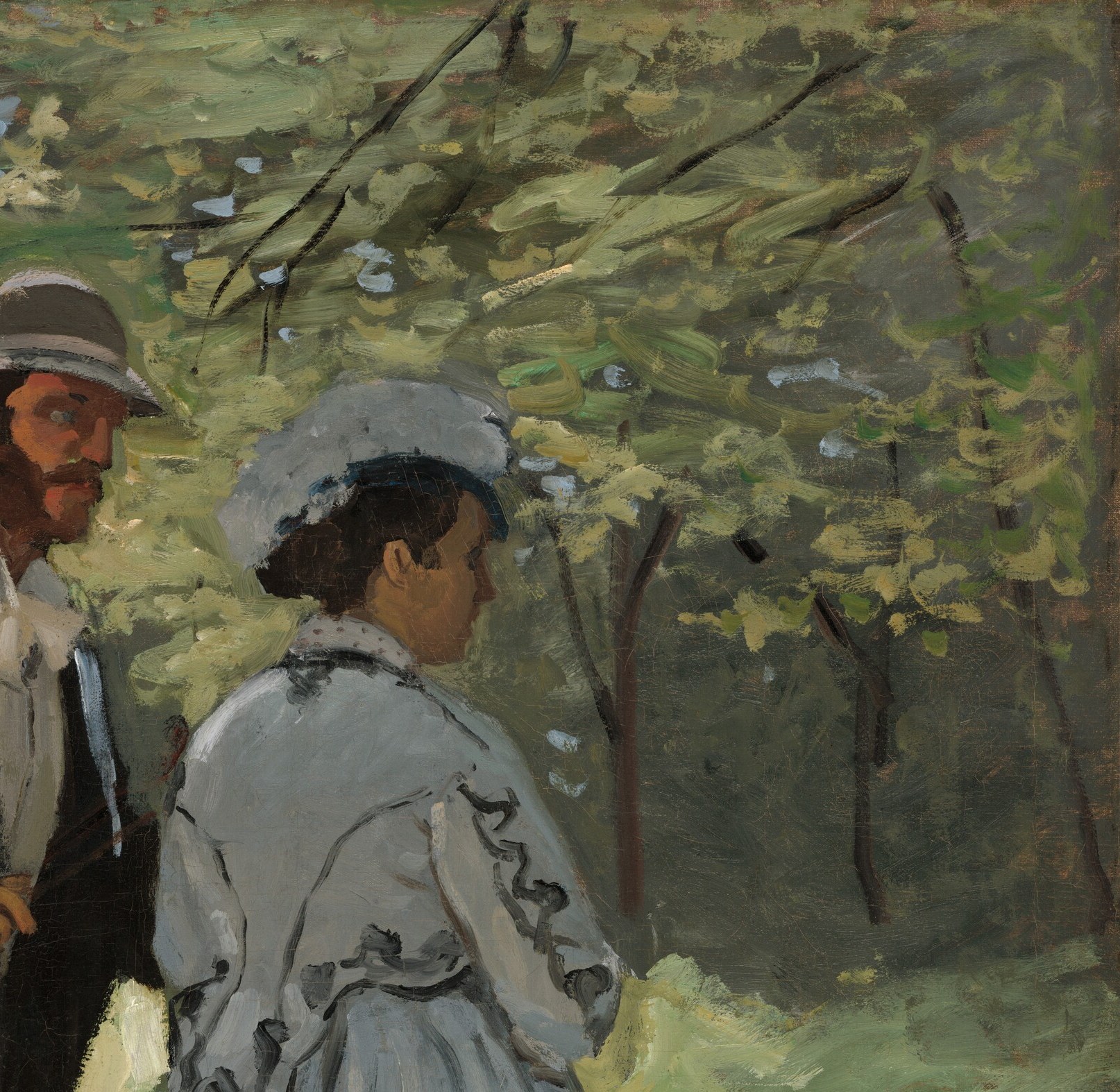
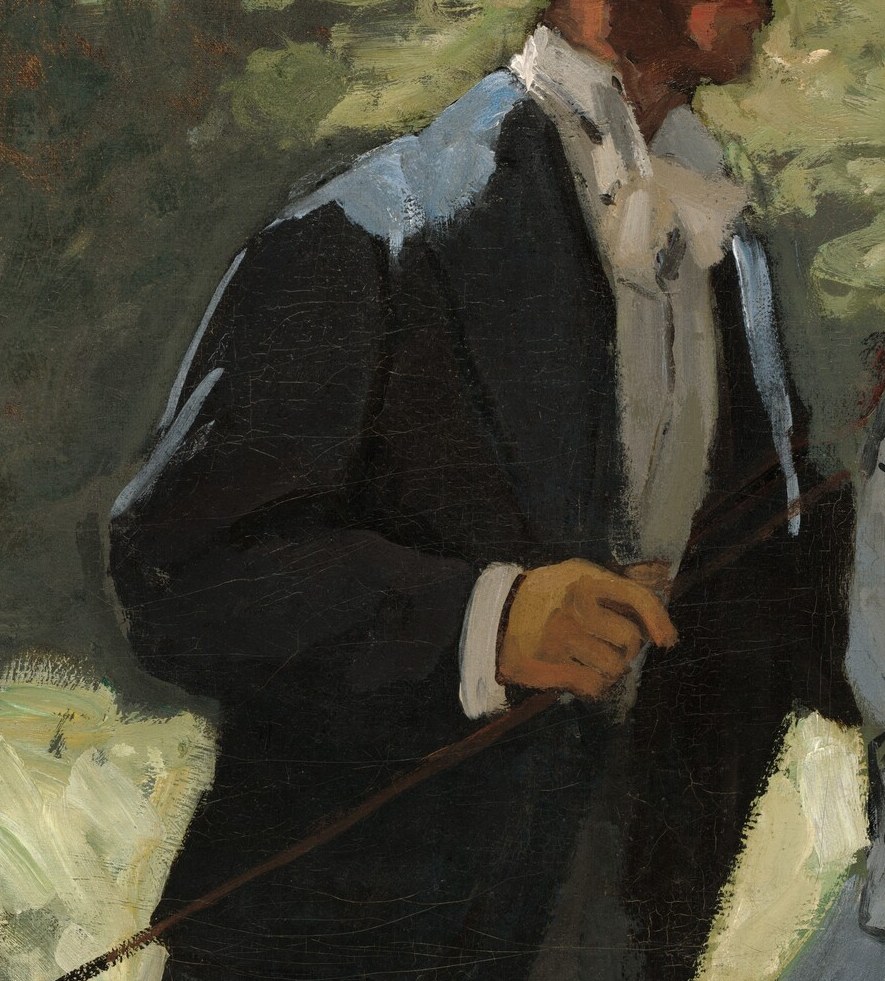
Here, Monet explores the effects of natural light on his figures, a hallmark of his burgeoning Impressionist style. Look closely at the dappled sunlight filtering through the leaves onto Camille Doncieux, his future wife and muse, in her light blue dress. Beside her stands fellow artist Frédéric Bazille, both serving as models for a much larger, unfinished project.
Monet intended to create an enormous painting, nearly 15 feet long, depicting a modern 'Luncheon on the Grass.' Though the large canvas was abandoned, this study, and others like it, allowed him to refine his techniques for portraying contemporary life outdoors. It shows his early aspiration to make large-scale genre scenes, a path that would eventually lead to his iconic Impressionist works.
This painting is a testament to experimentation and the genesis of an artistic vision. What do you notice about the way Monet captures the light?
Details
Transcript
In 1865, a young painter dreamt of a grand, modern masterpiece. This is Camille, his first model and future wife. He was experimenting with light, painting her outdoors. The man in the hat is Frédéric Bazille, a fellow artist. This was a study for a huge work, 15 feet long. It was never finished, but these figures found a new life.