Untitled by Ragunath
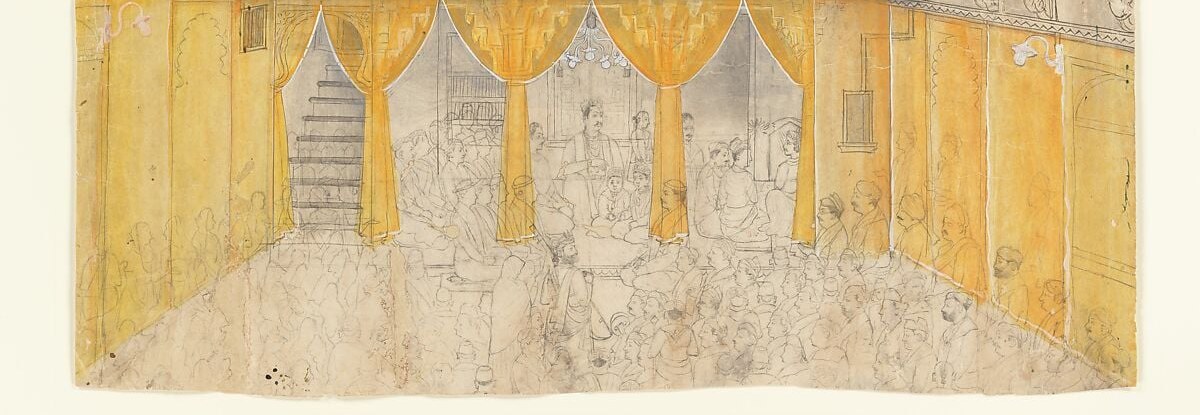
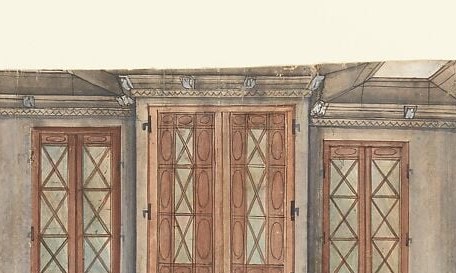
This untitled palace scene by the Rajasthani painter Ragunath, from around 1880 to 1900, is a showcase of luminous control. The painting belongs to a tradition where artists worked not for galleries but directly for royal courts, and the sophistication of the technique reflects that patronage.
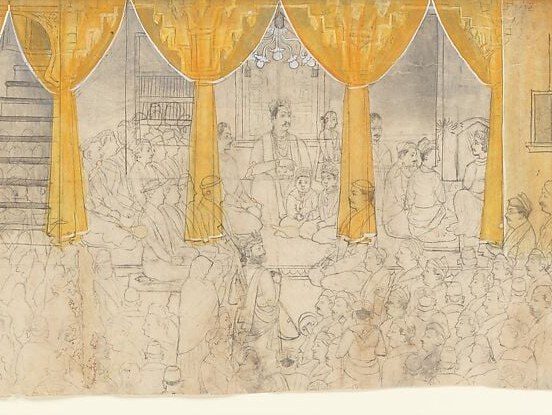
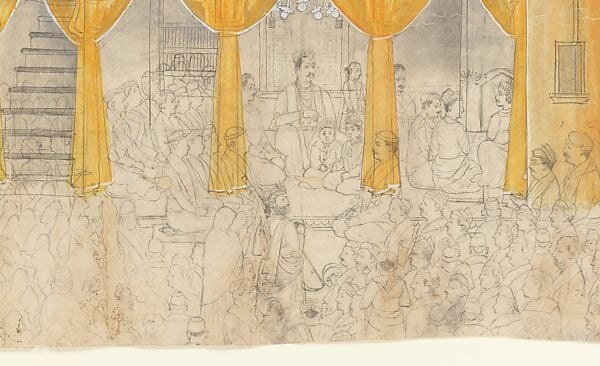
Look straight at the golden-yellow curtains hanging in the lower archways. The color is intense, but what matters is how the light behaves inside the folds. The shadows are cool, the highlights warm, and the transitions between them are seamless. That gradation is the signature of glazing: the painter laid down thin, transparent washes of opaque watercolor, one over another, letting the white of the paper do the lighting from underneath.
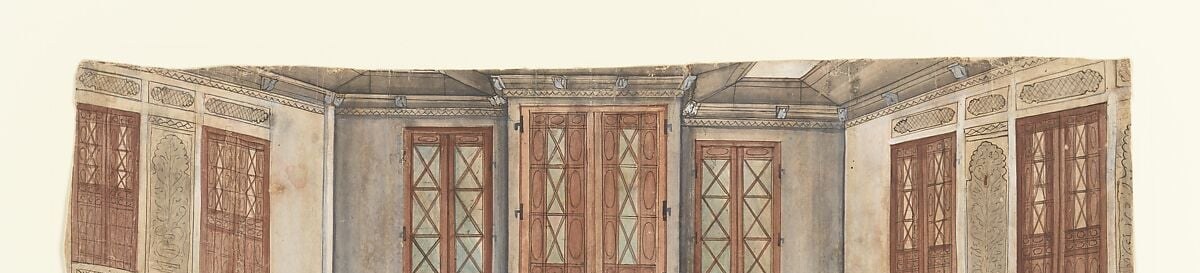
Ragunath worked in Rajasthan during a period when court painting was absorbing influences from Mughal naturalism while retaining its own love of flat color and bold pattern. A painting like this was made to be held in the hand and examined closely. The pleasure is in the precision: the latticed jali windows, the carved ornamental surrounds, the way the stone pilasters recede behind the fabric.
Most people scroll past the curtains and see only the scene they frame. The real performance is the cloth itself, and it is still holding the light a hundred and thirty years later.
Details
Transcript
Nothing in this palace is as solid as it looks. Cool gray marble. Carved stone. Heavy architecture. Then the eye hits yellow. These curtains were painted for a king's palace in Rajasthan. The artist used opaque watercolor, glazed in thin transparent layers. Light passes through each wash, hits the white paper, and reflects back. That is why the folds glow rather than just being bright.