Four Dogrib Indians by Catlin, George
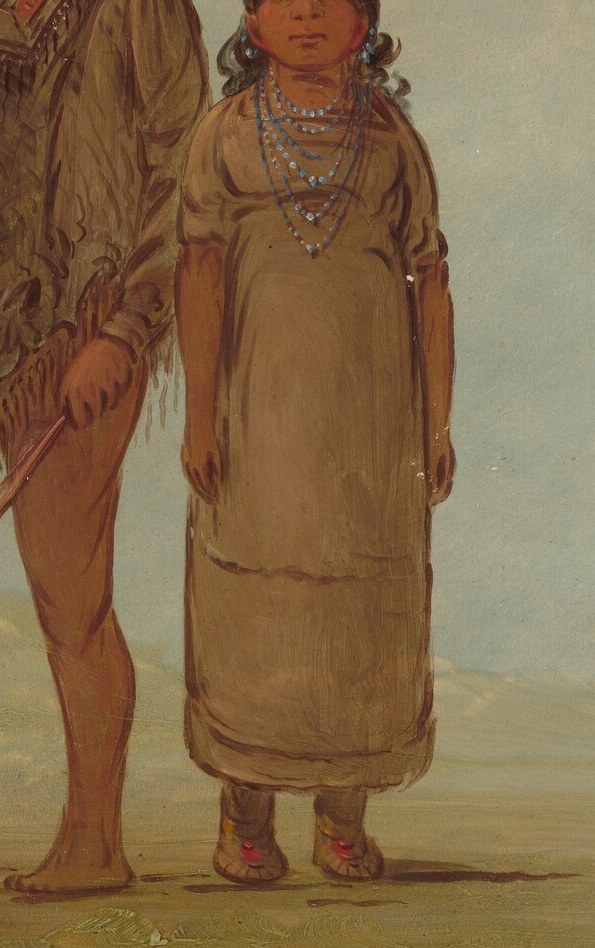
This painting, "Four Dogrib Indians" by George Catlin, dated 1855/1869, offers a rare visual record of Indigenous culture from the American frontier. Housed in a museum specializing in American folk and ethnographic art, it's a testament to Catlin's dedication to documentation.
Look closely at the figures' attire. From the intricate beaded necklace to the brightly colored shawl and feathered headdress, these details provide a unique glimpse into the material culture and craftsmanship of the Dogrib (Tłı̨chǫ) nation in the mid-19th century.
Catlin, originally a lawyer, embarked on several expeditions across the western United States in the 1830s. His goal was to systematically record tribal life through painting and writing, offering Eastern audiences one of the few contemporary representations of Indigenous peoples. This work is a crucial part of that extensive effort.
What do these visual records tell us about the people depicted and the artist's mission?
Details
Transcript
This painter, a former lawyer, traveled the American West extensively. He sought to document Indigenous cultures through paintings and writing. These are four members of the Dogrib, or Tłı̨chǫ, nation. Their attire and adornments provide a visual record of their culture. This bright shawl, for example, shows prized possessions and craftsmanship. The artist created this as part of a systematic effort to record tribal life.