The Defense of Champigny by Édouard Detaille
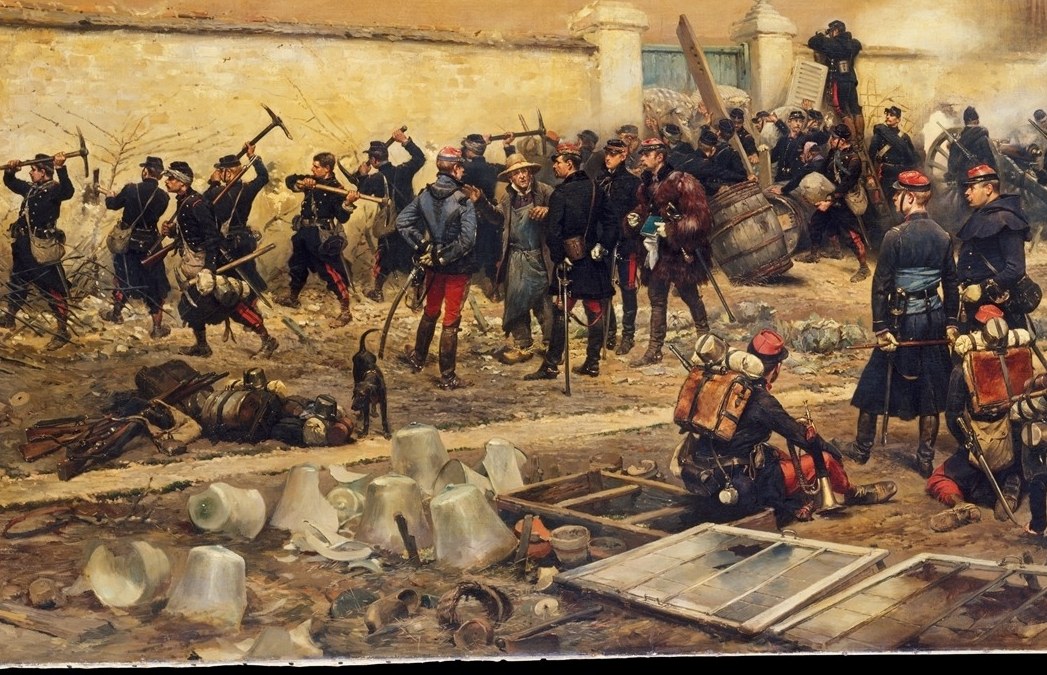
Édouard Detaille painted The Defense of Champigny in 1879, and it belongs to the Metropolitan Museum of Art. It shows a specific French defeat during the Franco-Prussian War, the Battle of Villiers, but it is not really about who won. It is a staggering technical achievement disguised as a history painting.
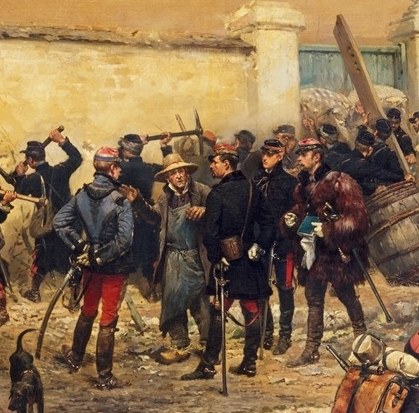
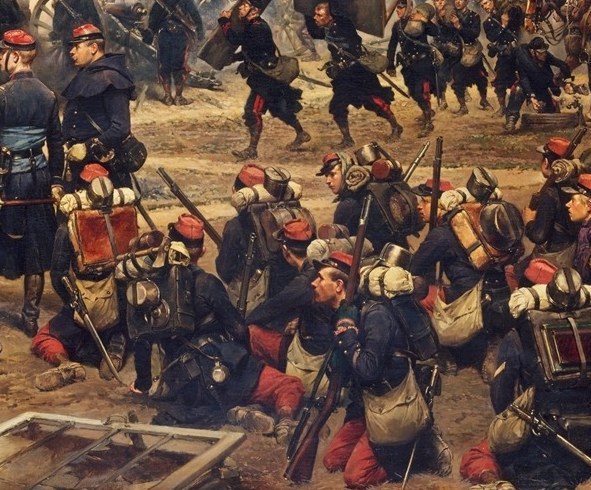
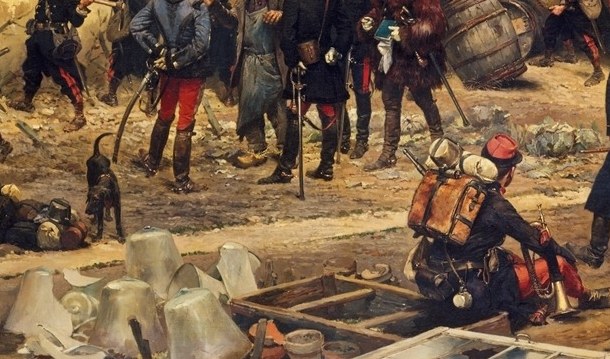
Look at the mass of infantry at the center left. From a distance it reads as a single charging body, but move closer and every soldier becomes an individual. Detaille painted distinct faces, different postures, and unique responses to the chaos. The officer near the center catches the eye, but the real feat is the anonymous rifleman beside him, just as fully realized.
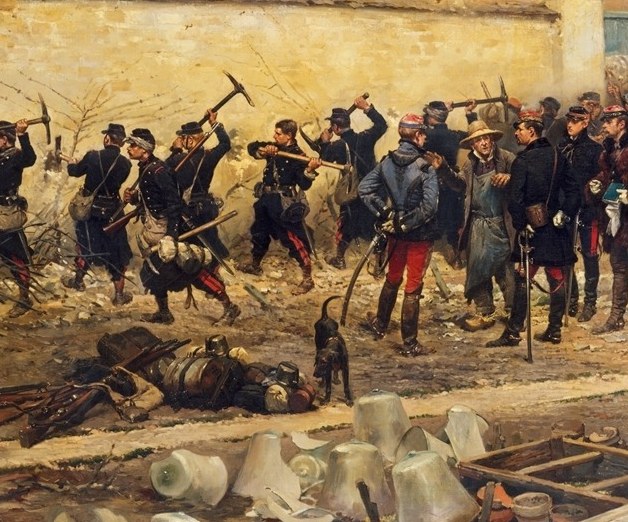
The context shapes what we see. France lost the war in 1871. Detaille spent the next eight years constructing this scene, consulting veterans and sketching surviving uniforms. The bare winter trees and the fallen soldiers in the foreground are not decorative. They are choices made by a painter who wanted a defeated nation to see its own sacrifice reflected back with dignity.
Does a painting gain or lose power when the artist knows his side lost the battle?
Details
Transcript
It looks like a photograph of a battle. But this is oil paint on a massive canvas. The painter was called the semi-official artist of the French army. He worshipped accuracy. Every uniform, every rifle, every strap is correct. Now look at the faces. Zoom in on any one of them. Each soldier is a distinct portrait. Fear, exhaustion, resolve, all different. He painted this in 1879, eight years after France lost the war it depicts. This isn't a celebration of victory. It's a monument to the men who fought.