Le Pont Neuf by Hippolyte Petitjean
This painting is a crime scene. 'Le Pont Neuf' by Hippolyte Petitjean, painted in 1912 and now at The Metropolitan Museum of Art, was made during a legal battle that destroyed the artist.
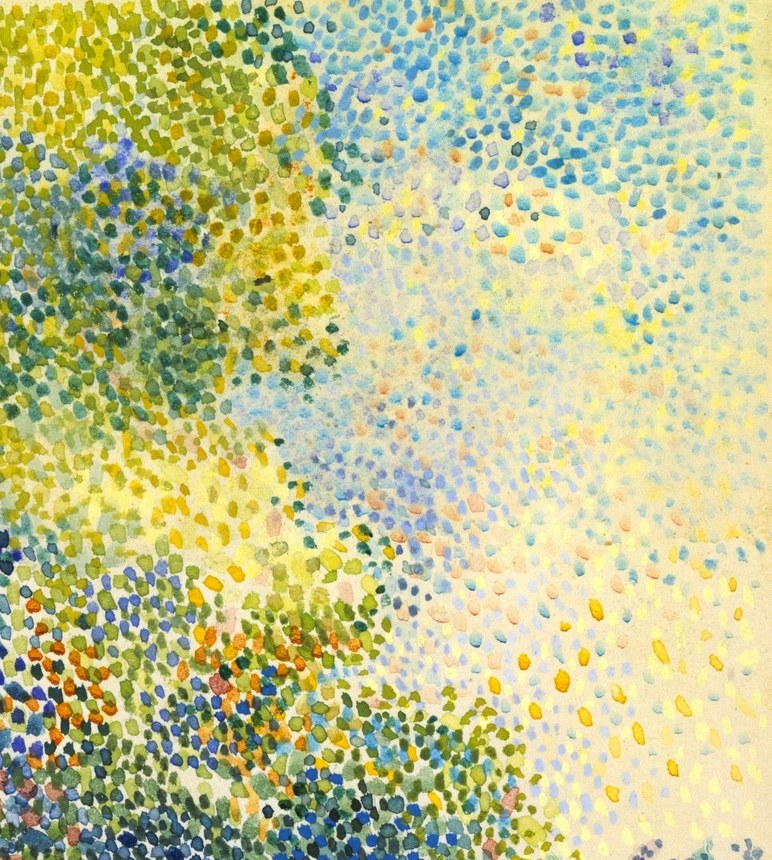
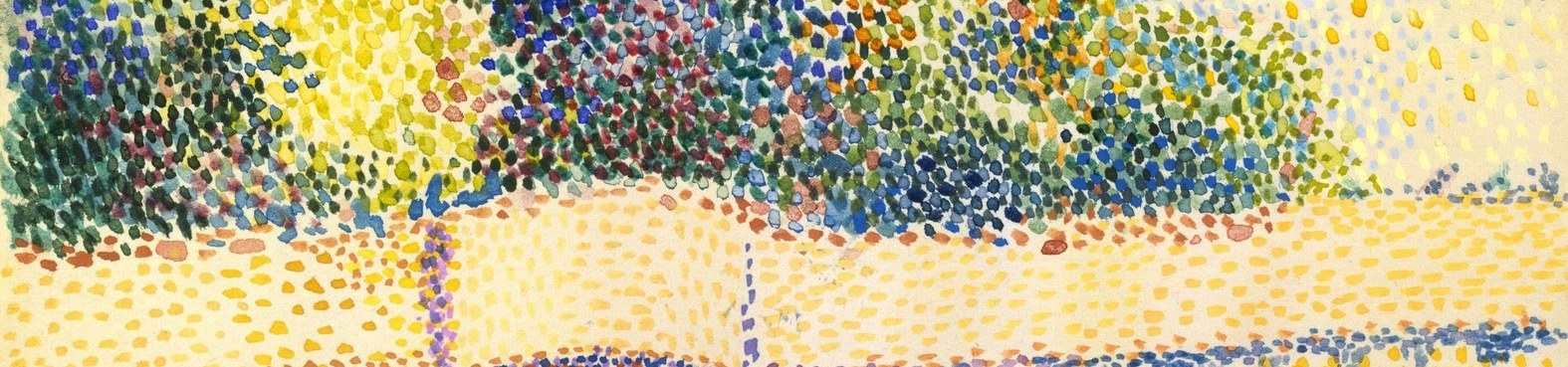
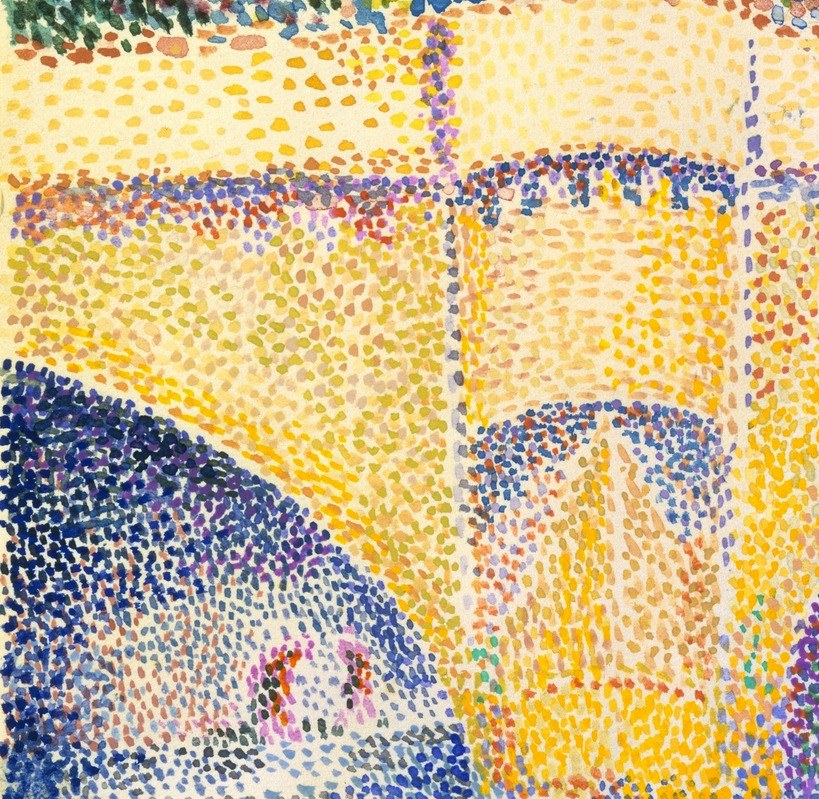
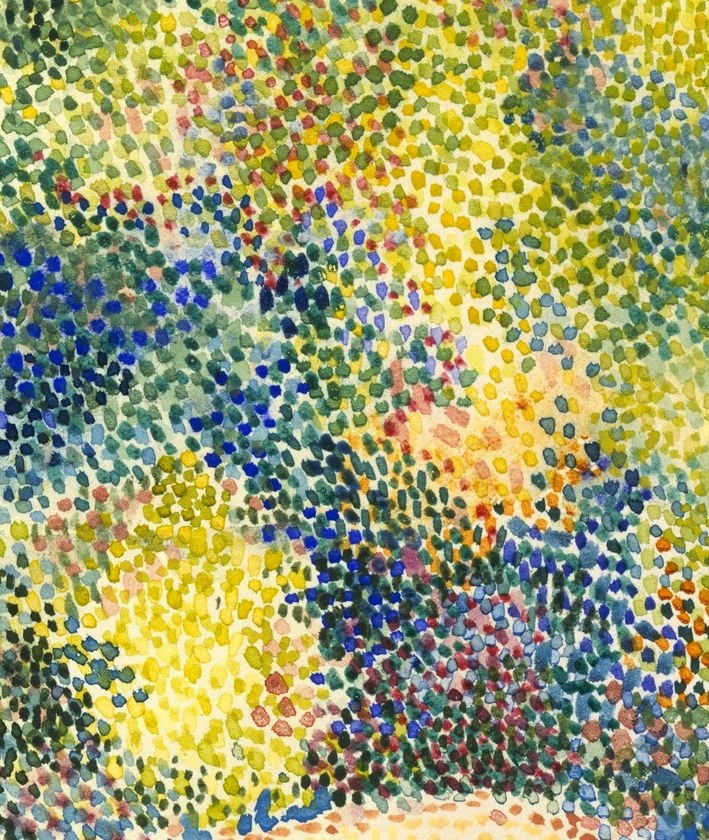
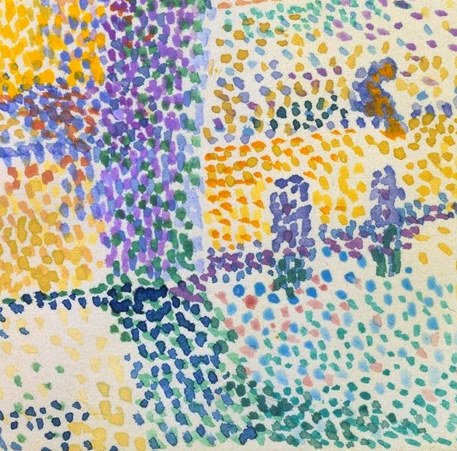
At first glance it is a calm Post-Impressionist postcard: the oldest bridge in Paris, a soft blue sky, a tree beginning to turn for autumn. Look at the stonework. It is built from thousands of separate dots of pure yellow and orange, each vibrating against the next. That vibration is the pointillist technique, and it demands extraordinary control, an ironic choice for a man whose life was falling apart.
Petitjean adopted pointillism after encountering Paul Signac's work, but his real trouble began with another painter, his partner. Their relationship soured and he took her to court, demanding the return of 17 canvases he claimed she kept unlawfully. She refused. The lawsuit dragged on while he painted this bridge, his systematic dots a world away from the mess in his private life.
He lost the case. His health collapsed, and when he died in 1929, the French art press barely noticed. The bridge outlasted him, and the lawsuit left no mark on the Seine, unless you know where to look.
Details
Transcript
In 1912, Hippolyte Petitjean sued his lover. She was also a painter. Their canvases traded hands for decades. The bridge looks calm. But look closer at the dots. Every stone is a separate color vibrating against the next. The judge ordered her to return 17 paintings. She refused. He painted this during the lawsuit. The pointillism hides the turmoil. He lost the case, his health failed, and he died forgotten by the art world.